

There’s no need to wait until your baby actually has teeth to lay the foundations for good oral or general health. In fact, good nutrition and oral hygiene can start right away. It is up to you to develop the routines that will help protect your child from tooth decay and other oral health problems. So let’s get started!

Gently clean your infant’s gums and newly erupting first teeth after each feeding with a water-soaked gauze pad to clean around the teeth and gums.

When your baby’s teeth begin to erupt, brush them gently with a small, soft-bristled toothbrush using no more than a thin smear of fluoridated toothpaste.

When your child turns 2, you can begin to teach your child proper brushing techniques with no more than a pea-sized amount of fluoridated toothpaste. You should follow up their efforts by gently brushing the teeth again. Modeling correct technique is important. When your child is about 6 years old, he/she should be developing the dexterity to do it alone. You can then introduce flossing.

Determine if the water supply that serves your home is fluoridated. If it is not, discuss supplement options with your dentist. Keep in mind that toothpastes and various foods may also contain fluoride.

Don’t let your child go to sleep with a pacifier or bottle filled with anything but water. When teeth are frequently exposed to sugar-containing fluids (including breast milk and formula) for long periods, the potential for decay increases dramatically.

Understand that if your child ingests sugars, it will take the saliva a minimum of 30 minutes to neutralize the acidity that is created by decay-producing bacteria. A sugary snack every hour can mean your child’s mouth is always acid, increasing the chances for tooth decay.
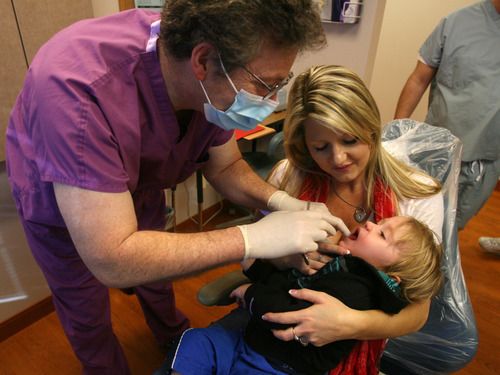
Your child should see a dentist around the time of his/her first birthday and then regularly thereafter. It is important to establish a dental home. Your pediatric or general dentist will teach you how to prevent dental disease, check for cavities in the primary teeth and watch for developmental problems, and set a positive precedent for future visits.
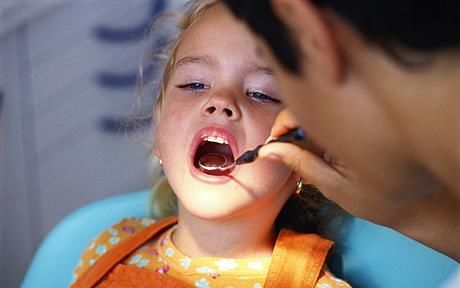
Ask your dentist about dental sealants and fluoride applications to protect your child’s teeth. Sealants can prevent food from getting stuck in the tiny grooves on the chewing surfaces and topical fluoride will strengthen the enamel against decay.