
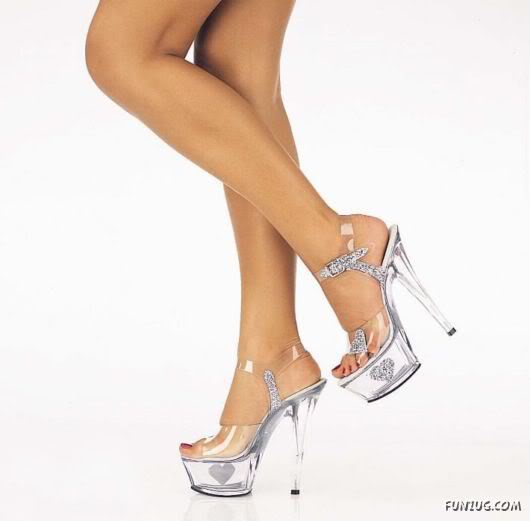
Women know high heels aren’t good for their feet, and they don’t deny that they’re uncomfortable. But the fact is, women would continue to wear high heels, even though they did not think them comfortable. Mark it up to the price of beauty.
Feet aren’t made for heels
Despite what you’re willing to tolerate as a lover of heels, you may be underestimating the damage that high heels can cause, beyond just having sore feet at the end of the day.
Not surprisingly, doctors of podiatric medicine (foot doctors) and orthopaedic surgeons see no value in high heels, which they generally define as pumps with heels of more than two inches.
You know those lovely curves you get with high heels? “It’s not a normal anatomical position,” says Teisha Chiarelli, a podiatrist in Glendale, Ariz.
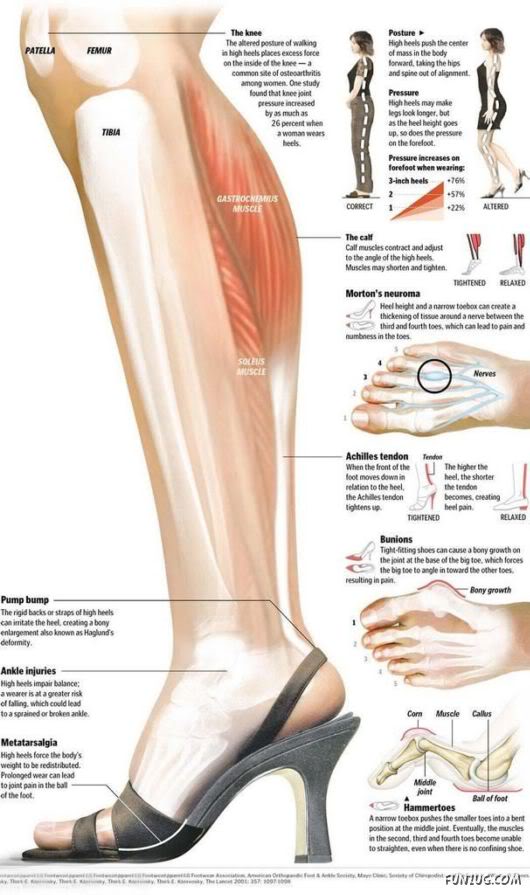
Physicians say high heels are “biomechanically and orthopedically unsound,” citing medical, postural and safety faults of such heels, according to the American Podiatric Medical Association. Among the litany of problems to which stilettos and their sister heels contribute are knee and back problems, disabling injuries in falls and shortened calf muscles, not to mention an awkward, unnatural gait.
Uncovering women’s footwear problems
While most high-heel fans aren’t so willing to totally abandon their high pumps, studies indicates that many might be willing to make some adjustments – to a point.
A study by the American Podiatric Medical Association, 39 percent of women still wear high heels daily. This is down from the 60 percent who wore high heels back in 1986. This same study showed that 42 percent of women would wear uncomfortable shoes and that 73 percent had shoe-related foot problems.
Common ailments from wearing high heels are:
* Calluses and heel pain were the top shoe-related foot ailments.
* Women also complain about such conditions as bunions, swelling of the joint at the base of the big toe; hammertoes, a permanent bend in the middle joint of a toe; neuromas, nerve problems that cause shooting pain into the toes; ingrown toenails; and even stress fractures.
Chiarelli says high heels are a particular cause of concern.
“I’ve got elderly women come in who swear they’ve worn high heel shoes all their lives and say they can’t wear a flat shoe. They get a physiologically shorter Achilles tendon. Over a period of time, we accommodate that position,” she says.
Typically, Chiarelli says feet swell throughout the day and poorly fitting shoes won’t accommodate that swelling. Sometimes the pain is achy, “almost a bone bruising,” she says, or a sharp pain between the bones in the ball of the foot.
“We’re looking at bony problems where the toes are starting to curl up from being in a narrow or pointed toe box,” she says. “Probably the patient with the ugliest feet is a dancer because she’s wearing toe shoes or high heels for dancing.”
“Bony problems” are such a big part of foot problems that podiatrists even have a high-heel nickname for one condition – a pump bump. “It’s a big old bump on the back of your heel,” Chiarelli says. “It’s like a callus of bone on the back of the heel from the shoe rubbing the bone.”
Nail problems also are common from the constant pressure of toes being pressed against the end of the shoe. That can cause the nail to thicken and promote the growth of foul-smelling fungus. Plus, if a person has curved toenails, it can induce or exacerbate painful in-grown nails.
Changing your heel habits
If you just can’t imagine life without heels, Chiarelli suggests choosing styles with squared-off toes and shorter, chunkier heels instead of stilettos. Limit the time you wear heels.
If a wide-heeled shoe isn’t you anyway, then follow some of Chiarelli’s other tips for female shoe shoppers:
* Look for thicker soles for absorbing shock better and putting less pressure on the foot as well as an upper material, such as leather or microfiber, that will give a little to allow the foot to swell without pinching. “Those will still look nice and not hurt so badly,” she says.
* If you simply must wear high heels, then limit the time you wear them. Alternate between high heel and low heel shoes to prevent the Achilles tendon from tightening. Wearing flatter shoes or tennis shoes for walking long distances, such as to and from the office and then changing into your heels once you get to work.
* Shop for shoes at the end of the day to accommodate the foot’s normal swelling.
* Give your feet a nice massage or soak them in lukewarm water at the end of the day. “If your foot has been put in that funny position all day, it feels like it’s stuck that way,” Chiarelli says. “Treat yourself.”
If you want to want to be good to your feet, then consider following the American Podiatric Medical Association’s recommendation on “perhaps the best shoe you can buy from an orthopedic point of view” – a walking shoe with ties (not a slip-on), a Vibram-type composition sole and a relatively wider heel, no more than a half or three-quarters of an inch in height.
Dull, yes, but safe.