

IS HISTORY JUSTIFIED?????
BBC says about Taj Mahal—Hidden Truth – Never say it is a Tomb
Aerial view of the Taj Mahal

The interior water well

Frontal view of the Taj Mahal and dome

Close up of the dome with pinnacle

Close up of the pinnacle

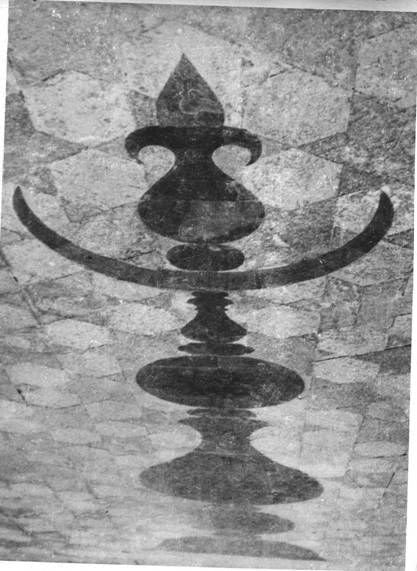
Inlaid pinnacle pattern in courtyard
Red lotus at apex of the entrance

Rear view of the Taj & 22 apartments

View of sealed doors & windows in back

Typical Vedic style corridors

The Music House–a contradiction

A locked room on upper floor

A marble apartment on ground floor

The OM in the flowers on the walls

Staircase that leads to the lower levels

300 foot long corridor inside apartments

One of the 22 rooms in the secret lower level

Interior of one of the 22 secret rooms

Interior of another of the locked rooms

Vedic design on ceiling of a locked room

Huge ventilator sealed shut with bricks

Secret walled door that leads to other rooms

Secret bricked door that hides more evidence

Palace in Barhanpur where Mumtaz died

Pavilion where Mumtaz is said to be buried

NOW READ THIS…….
No one has ever challenged it except Prof. P. N. Oak, who believes the
whole world has been duped. In his book Taj Mahal: The True Story, Oak says
the
Taj Mahal is not Queen Mumtaz’s tomb but an ancient Hindu temple palace of
Lord Shiva (then known as Tejo Mahalaya ) . In the course of his research O
ak discovered that the Shiva temple palace was usurped by Shah Jahan from
then Maharaja of Jaipur, Jai Singh. In his own court ch ronicle,
Badshahnama,
Shah Jahan admits that an exceptionally beautiful grand mansion in Agra
was taken from Jai SIngh for Mumtaz’s burial . The ex-Maharaja of Jaipur
still
retains in his secret collection two orders from Shah Jahan for
surrendering the Taj building. Using captured temples and mansions, as a
burial place for
dead courtiers and royalty was a common practice among Muslim rulers.
For example, Humayun,Akbar, Etmud-ud-Daula and Safdarjung are all buried
in such mansions. Oak’s inquiries began with the name of Taj Mahal. He says
the term ” Mahal ” has never been used for a building in any Muslim countries
from Afghanisthan to Algeria . “The unusual explanation that the term Taj
Mahal derives from Mumtaz Mahal was illogical in atleast two respects.
Firstly, her name was never Mumtaz Mahal but Mumtaz-ul-Zamani,” he writes.
Secondly, one cannot omit the first three letters ‘Mum’ from a woman’s
name to derive the remainder as the name for the building.”Taj Mahal, he
claims, is a corrupt version of Tejo Mahalaya, or Lord Shiva’s Palace . Oak
also says the love story of Mumtaz and Shah Jahan is a fairy tale cre ated
by
court sycophants, blundering historians and sloppy archaeologists Not a
single royal chronicle of Shah Jahan’s time corroborates the love story.
Furthermore, Oak cites several documents suggesting the Taj Mahal predates
Shah Jahan’s era, and was a temple dedicated to Shiva, worshipped by
Rajputs of Agra city. For example, Prof. Marvin Miller of New York took a
few
samples from the riverside doorway of the Taj. Carbon dating tests revealed
that the door was 300 years older than Shah Jahan. European traveler Johan
Albert Mandelslo,who visited Agra in 1638 (only seven years after Mumtaz’s
death), describes the life of the cit y in his memoirs. But he makes no
reference to the Taj Mahal being built. The writings of Peter Mundy, an
English visitor to Agra within a year of Mumtaz’s death, also suggest the
Taj was a noteworthy building well before Shah Jahan’s time.
Prof. Oak points out a number of design and architectural inconsistencies
that support the belief of the Taj Mahal being a typical Hindu temple
rather
than a mausoleum. Many rooms in the Taj ! Mahal have remained sealed
since Shah Jahan’s time and are still inaccessible to the public . Oak
asserts they contain a headless statue of Lord Shiva and other objects
commonly used for worship rituals in Hindu temples Fearing political
backlash, Indira Gandhi’s government t ried to have Prof. Oak’s book
withdrawn from the bookstores, and threatened the Indian publisher of the
first edition dire consequences . There is only one way to discredit or
validate Oak’s research.
The current government should open the sealed rooms of the Taj Ma hal under
U.N. supervision, and let international experts investigate.
Do circulate this to all you know and let them know about this reality…..

Probably there is no one who has been duped at least once in a life time. But can the whole world can be duped? This may seem impossible. But in the matter of indian and world history the world can be duped in many respects for hundreds of years and still continues to be duped. The world famous Tajmahal is a glaring instance. For all the time, money and energy that people over the world spend in visiting the Tajmahal, they are dished out of concoction. Contrary to what visitors are made to believe the Tajmahal is not a Islamic mausoleum but an ancient Shiva Temple known as Tejo Mahalaya which the 5th generation moghul emperor ShahjahanShahjahan commandeered from the then Maharaja of Jaipur. The Tajmahal, should therefore, be viewed as a temple palace and not as a tomb. That makes a vast difference. You miss the details of its size, grandeur, majesty and beauty when you take it to be a mere tomb. When told that you are visiting a temple palace you wont fail to notice its annexes, ruined defensive walls, hillocks, moats, cascades, fountains, majestic garden, hundreds of rooms archaded verendahs, terraces, multi stored towers, secret sealed chambers, guest rooms, stables, the trident (Trishul) pinnacle on the dome and the sacred, esoteric Hindu letter “OM” carved on the exterior of the wall of the sanctum sanctorum now occupied by the centotaphs. For detailed proof of this breath taking discovery,you may read the well known historian Shri. P. N. Oak’s celebrated book titled ” Tajmahal : The True Story”. But let us place before you, for the time being an exhaustive summary of the massive evidence ranging over hundred points:
NAME
1.The term Tajmahal itself never occurs in any mogul court paper or chronicle even in Aurangzeb’s time. The attempt to explain it away as Taj-i-mahal is therefore, ridiculous.
2.The ending “Mahal”is never muslim because in none of the muslim countries around the world from Afghanistan to Algeria is there a building known as “Mahal”.
3.The unusual explanation of the term Tajmahal derives from Mumtaz Mahal, who is buried in it, is illogical in at least two respects viz., firstly her name was never Mumtaj Mahal but Mumtaz-ul-Zamani and secondly one cannot omit the first three letters “Mum” from a woman’s name to derive the remainder as the name of the building.
4.Since the lady’s name was Mumtaz (ending with ‘Z’) the name of the building derived from her should have been Taz Mahal, if at all, and not Taj (spelled with a ‘J’).
5.Several European visitors of Shahjahan’s time allude to the building as Taj-e-Mahal is almost the correct tradition, age old Sanskrit name Tej-o-Mahalaya, signifying a Shiva temple. Contrarily Shahjahan and Aurangzeb scrupulously avoid using the Sanskrit term and call it just a holy grave.
6.The tomb should be understood to signify NOT A BUILDING but only the grave or centotaph inside it. This would help people to realize that all dead muslim courtiers and royalty including Humayun, Akbar, Mumtaz, Etmad-ud-Daula and Safdarjang have been buried in capture Hindu mansions and temples.
7.Moreover, if the Taj is believed to be a burial place, how can the term Mahal, i.e., mansion apply to it?
8.Since the term Taj Mahal does not occur in mogul courts it is absurd to search for any mogul explanation for it. Both its components namely, ‘Taj’ and’ Mahal’ are of Sanskrit origin.
TEMPLE TRADITION
9.The term Taj Mahal is a corrupt form of the sanskrit term TejoMahalay signifying a Shiva Temple. Agreshwar Mahadev i.e., The Lord of Agra was consecrated in it.
10.The tradition of removing the shoes before climbing the marble platform originates from pre Shahjahan times when the Taj was a Shiva Temple. Had the Taj originated as a tomb, shoes need not have to be removed because shoes are a necessity in a cemetery.
11.Visitors may notice that the base slab of the centotaph is the marble basement in plain white while its superstructure and the other three centotaphs on the two floors are covered with inlaid creeper designs. This indicates that the marble pedestal of the Shiva idol is still in place and Mumtaz’s centotaphs are fake.
12.The pitchers carved inside the upper border of the marble lattice plus those mounted on it number 108-a number sacred in Hindu Temple tradition.
13.There are persons who are connected with the repair and the maintainance of the Taj who have seen the ancient sacred Shiva Linga and other idols sealed in the thick walls and in chambers in the secret, sealed red stone stories below the marble basement. The Archaeological Survey of India is keeping discretely, politely and diplomatically silent about it to the point of dereliction of its own duty to probe into hidden historical evidence.
14.In India there are 12 Jyotirlingas i.e., the outstanding Shiva Temples. The Tejomahalaya alias The Tajmahal appears to be one of them known as Nagnatheshwar since its parapet is girdled with Naga, i.e., Cobra figures. Ever since Shahjahan’s capture of it the sacred temple has lost its Hindudom.
15.The famous Hindu treatise on architecture titled Vishwakarma Vastushastra mentions the ‘Tej-Linga’ amongst the Shivalingas i.e., the stone emblems of Lord Shiva, the Hindu deity. Such a Tej Linga was consecrated in the Taj Mahal, hence the term Taj Mahal alias Tejo Mahalaya.
16.Agra city, in which the Taj Mahal is located, is an ancient centre of Shiva worship. Its orthodox residents have through ages continued the tradition of worshipping at five Shiva shrines before taking the last meal every night especially during the month of Shravan. During the last few centuries the residents of Agra had to be content with worshipping at only four prominent Shiva temples viz., Balkeshwar, Prithvinath, Manakameshwar and Rajarajeshwar. They had lost track of the fifth Shiva deity which their forefathers worshipped. Apparently the fifth was Agreshwar Mahadev Nagnatheshwar i.e., The Lord Great God of Agra, The Deity of the King of Cobras, consecrated in the Tejomahalay alias Tajmahal.
17.The people who dominate the Agra region are Jats. Their name of Shiva is Tejaji. The Jat special issue of The Illustrated Weekly of India (June 28,1971) mentions that the Jats have the Teja Mandirs i.e., Teja Temples. This is because Teja-Linga is among the several names of the Shiva Lingas. From this it is apparent that the Taj-Mahal is Tejo-Mahalaya, The Great Abode of Tej.
DOCUMENTARY EVIDENCE
18. Shahjahan’s own court chronicle, the Badshahnama, admits (page 403, vol 1) that a grand mansion of unique splendor, capped with a dome (Imaarat-a-Alishan wa Gumbaze) was taken from the Jaipur Maharaja Jaisigh for Mumtaz’s burial, and the building was known as Raja Mansingh’s palace.
19. The plaque put the archealogy department outside the Tajmahal describes the edifice as a mausoleum built by Shahjahan for his wife Mumtaz Mahal , over 22 years from 1631 to 1653. That plaque is a specimen of historical bungling. Firstly, the plaque sites no authority for its claim. Secondly the lady’s name was Mumtaz-ulZamani and not Mumtazmahal. Thirdly, the period of 22 years is taken from some mumbo jumbo noting by an unreliable French visitor Tavernier, to the exclusion of all muslim versions, which is an absurdity.
20. Prince Aurangzeb’s letter to his father,emperor Shahjahan,is recorded in atleast three chronicles titled `Aadaab-e-Alamgiri’ , `Yadgarnama’ , and the `Muruqqa-i-Akbaraba di’ (edited by Said Ahmed, Agra, 1931, page 43, footnote 2). In that letter Aurangzeb records in 1652 A.D itself that the several buildings in the fancied burial place of Mumtaz were seven storeyed and were so old that they were all leaking, while the dome had developed a crack on the northern side.Aurangzeb, therefore, ordered immediate repairs to the buildings at his own expense while recommending to the emperor that more elaborate repairs be carried out later. This is the proof that during Shahjahan’s reign itself that the Taj complex was so old as to need immediate repairs.
21. The ex-Maharaja of Jaipur retains in his secret personal `KapadDwara’ collection two orders from Shahjahan dated Dec 18, 1633 (bearing modern nos. R.176 and 177) requestioning the Taj building complex. That was so blatant a usurpation that the then ruler of Jaipur was ashamed to make the document public.
22. The Rajasthan State archives at Bikaner preserve three other firmans addressed by Shahjahan to the Jaipur’s ruler Jaising ordering the latter to supply marble (for Mumtaz’s grave and koranic grafts) from his Makranna quarris, and stone cutters. Jaisingh was apparently so enraged at the blatant seizure of the Tajmahal that he refused to oblige Shahjahan by providing marble for grafting koranic engravings and fake centotaphs for further desecration of the Tajmahal. Jaising looked at Shahjahan’s demand for marble and stone cutters, as an insult added to injury. Therefore, he refused to send any marble and instead detained the stone cutters in his protective custody.
23. The three firmans demanding marble were sent to Jaisingh within about two years of Mumtaz’s death. Had Shahjahan really built the Tajmahal over a period of 22 years, the marble would have needed only after 15 or 20 years not immediately after Mumtaz’s death.
24. Moreover, the three mention neither the Tajmahal, nor Mumtaz, nor the burial. The cost and the quantity of the stone also are not mentioned. This proves that an insignificant quantity of marble was needed just for some supercial tinkering and tampering with the Tajmahal. Even otherwise Shahjahan could never hope to build a fabulous Tajmahal by abject dependence for marble on a non cooperative Jaisingh.
EUROPEAN VISITOR’S ACCOUNTS
25. Tavernier, a French jeweller has recorded in his travel memoirs that Shahjahan purposely buried Mumtaz near the Taz-i-Makan (i.e.,`The Taj building’) where foriegners used to come as they do even today so that the world may admire. He also adds that the cost of the scaffolding was more than that of the entire work. The work that Shahjahan commissioned in the Tejomahalaya Shiva temple was plundering at the costly fixtures inside it, uprooting the Shiva idols, planting the centotaphs in their place on two stories, inscribing the koran along the arches and walling up six of the seven stories of the Taj. It was this plunder, desecrating and plunderring of the rooms which took 22 years.
26. Peter Mundy, an English visitor to Agra recorded in 1632 (within only a year of Mumtaz’s death) that `the places of note in and around Agra, included Taj-e-Mahal’ s tomb, gardens and bazaars’.He, therefore, confirms that that the Tajmahal had been a noteworthy building even before Shahjahan.
27. De Laet, a Dutch official has listed Mansingh’s palace about a mile from Agra fort, as an outstanding building of pre shahjahan’s time. Shahjahan’s court chronicle, the Badshahnama records, Mumtaz’s burial in the same Mansingh’s palace.
28. Bernier, a contemporary French visitor has noted that non muslim’s were barred entry into the basement (at the time when Shahjahan requisitioned Mansingh’s palace) which contained a dazzling light. Obviously, he reffered to the silver doors, gold railing, the gem studded lattice and strings of pearl hanging over Shiva’s idol. Shahjahan comandeered the building to grab all the wealth, making Mumtaz’s death a convineant pretext.
29. Johan Albert Mandelslo, who describes life in agra in 1638 (only 7 years after mumtaz’s death) in detail (in his `Voyages and Travels to West-Indies’ , published by John Starkey and John Basset, London), makes no mention of the Tajmahal being under constuction though it is commonly erringly asserted or assumed that the Taj was being built from 1631 to 1653.
SANSKIRT INSCRIPTION
30. A Sanskrit inscription too supports the conclusion that the Taj originated as a Shiva temple. Wrongly termed as the Bateshwar inscription (currently preserved on the top floor of the Lucknow museum), it refers to the raising of a “crystal white Shiva temple so alluring that Lord Shiva once enshrined in it decided never to return to Mount Kailash his usual abode”. That inscription dated 1155 A.D. was removed from the Tajmahal garden at Shahjahan’s orders. Historicians and Archeaologists have blundered in terming the insription the `Bateshwar inscription’ when the record doesn’t say that it was found by Bateshwar. It ought, in fact, to be called `The Tejomahalaya inscription’ because it was originally installed in the Taj garden before it was uprooted and cast away at Shahjahan’s command.
A clue to the tampering by Shahjahan is found on pages 216-217, vol. 4, of Archealogiical Survey of India Reports (published 1874) stating that a “great square black balistic pillar which, with the base and capital of another pillar….now in the grounds of Agra,…it is well known, once stood in the garden of Tajmahal”.
MISSING ELEPHANTS
31. Far from the building of the Taj, Shahjahan disfigured it with black koranic lettering and heavily robbed it of its Sanskrit inscription, several idols and two huge stone elephants extending their trunks in a welcome arch over the gateway where visitors these days buy entry tickets. An Englishman, Thomas Twinning, records (pg.191 of his book “Travels in India A Hundred Years ago”) that in November 1794 “I arrived at the high walls which enclose the Taj-e-Mahal and its circumjacent buildings. I here got out of the palanquine and…..mounted a short flight of steps leading to a beautiful portal which formed the centre of this side of the `COURT OF ELEPHANTS” as the great area was called.”
KORANIC PATCHES
32. The Taj Mahal is scrawled over with 14 chapters of the Koran but nowhere is there even the slightest or the remotest allusion in that Islamic overwriting to Shahjahan’s authorship of the Taj. Had Shahjahan been the builder he would have said so in so many words before beginning to quote Koran.
33. That Shahjahan, far from building the marble Taj, only disfigured it with black lettering is mentioned by the inscriber Amanat Khan Shirazi himself in an inscription on the building. A close scrutiny of the Koranic lettering reveals that they are grafts patched up with bits of variegated stone on an ancient Shiva temple.
CARBON 14 TEST
34. A wooden piece from the riverside doorway of the Taj subjected to the carbon 14 test by an American Laboratory, has revealed that the door to be 300 years older than Shahjahan,since the doors of the Taj, broken open by Muslim invaders repeatedly from the 11th century onwards, had to b replaced from time to time. The Taj edifice is much more older. It belongs to 1155 A.D, i.e., almost 500 years anterior to Shahjahan.
ARCHITECHTURAL EVIDENCE
35. Well known Western authorities on architechture like E.B.Havell, Mrs.Kenoyer and Sir W.W.Hunterhave gone on record to say that the TajMahal is built in the Hindu temple style. Havell points out the ground plan of the ancient Hindu Chandi Seva Temple in Java is identical with that of the Taj.
36. A central dome with cupolas at its four corners is a universal feature of Hindu temples.
37. The four marble pillars at the plinth corners are of the Hindu style. They are used as lamp towers during night and watch towers during the day. Such towers serve to demarcate the holy precincts. Hindu wedding altars and the altar set up for God Satyanarayan worship have pillars raised at the four corners.
38. The octagonal shape of the Tajmahal has a special Hindu significance because Hindus alone have special names for the eight directions, and celestial guards assigned to them. The pinnacle points to the heaven while the foundation signifies to the nether world. Hindu forts, cities, palaces and temples genrally have an octagonal layout or some octagonal features so that together with the pinnacle and the foundation they cover all the ten directions in which the king or God holds sway, according to Hindu belief.
39. The Tajmahal has a trident pinncle over the dome. A full scale of the trident pinnacle is inlaid in the red stone courtyard to the east of the Taj. The central shaft of the trident depicts a “Kalash” (sacred pot) holding two bent mango leaves and a coconut. This is a sacred Hindu motif. Identical pinnacles have been seen over Hindu and Buddhist temples in the Himalayan region. Tridents are also depicted against a red lotus background at the apex of the stately marble arched entrances on all four sides of the Taj. People fondly but mistakenly believed all these centuries that the Taj pinnacle depicts a Islamic cresent and star was a lighting conductor installed by the British rulers in India. Contrarily, the pinnacle is a marvel of Hindu metallurgy since the pinnacle made of non rusting alloy, is also perhaps a lightning deflector. That the pinnacle of the replica is drawn in the eastern courtyard is significant because the east is of special importance to the Hindus, as the direction in which the sun rises. The pinnacle on the dome has the word `Allah’ on it after capture. The pinnacle figure on the ground does not have the word Allah.
INCONSISTENCIES
40. The two buildings which face the marble Taj from the east and west are identical in design, size and shape and yet the eastern building is explained away by Islamic tradition, as a community hall while the western building is claimed to be a mosque. How could buildings meant for radically different purposes be identical? This proves that the western building was put to use as a mosque after seizure of the Taj property by Shahjahan. Curiously enough the building being explained away as a mosque has no minaret. They form a pair af reception pavilions of the Tejomahalaya temple palace.
41. A few yards away from the same flank is the Nakkar Khana alias DrumHouse which is a intolerable incongruity for Islam. The proximity of the Drum House indicates that the western annex was not originally a mosque. Contrarily a drum house is a neccesity in a Hindu temple or palace because Hindu chores,in the morning and evening, begin to the sweet strains of music.
42. The embossed patterns on the marble exterior of the centotaph chamber wall are foilage of the conch shell design and the Hindu letter “OM”. The octagonally laid marble lattices inside the centotaph chamber depict pink lotuses on their top railing. The Lotus, the conch and the OM are the sacred motifs associated with the Hindu deities and temples.
43. The spot occupied by Mumtaz’s centotaph was formerly occupied by the Hindu Teja Linga a lithic representation of Lord Shiva. Around it are five perambulatory passages. Perambulation could be done around the marble lattice or through the spacious marble chambers surrounding the centotaph chamber, and in the open over the marble platform. It is also customary for the Hindus to have apertures along the perambulatory passage, overlooking the deity. Such apertures exist in the perambulatories in the Tajmahal.
44. The sanctom sanctorum in the Taj has silver doors and gold railings as Hindu temples have. It also had nets of pearl and gems stuffed in the marble lattices. It was the lure of this wealth which made Shahjahan commandeer the Taj from a helpless vassal Jaisingh, the then ruler of Jaipur.
45. Peter Mundy, a Englishman records (in 1632, within a year of Mumtaz’s death) having seen a gem studded gold railing around her tomb. Had the Taj been under construction for 22 years, a costly gold railing would not have been noticed by Peter mundy within a year of Mumtaz’s death. Such costl fixtures are installed in a building only after it is ready for use. This indicates that Mumtaz’s centotaph was grafted in place of the Shivalinga in the centre of the gold railings. Subsequently the gold railings, silver doors, nets of pearls, gem fillings etc. were all carried away to Shahjahan’s treasury. The seizure of the Taj thus constituted an act of highhanded Moghul robery causing a big row between Shahjahan and Jaisingh.
46. In the marble flooring around Mumtaz’s centotaph may be seen tiny mosaic patches. Those patches indicate the spots where the support for the gold railings were embedded in the floor. They indicate a rectangular fencing.
47. Above Mumtaz’s centotaph hangs a chain by which now hangs a lamp. Before capture by Shahjahan the chain used to hold a water pitcher from which water used to drip on the Shivalinga.
48. It is this earlier Hindu tradition in the Tajmahal which gave the Islamic myth of Shahjahan’s love tear dropping on Mumtaz’s tomb on the full moon day of the winter eve.
TREASURY WELL
49. Between the so-called mosque and the drum house is a multistoried octagonal well with a flight of stairs reaching down to the water level. This is a traditional treasury well in Hindu temple palaces. Treasure chests used to be kept in the lower apartments while treasury personnel had their offices in the upper chambers. The circular stairs made it difficult for intruders to reach down to the treasury or to escape with it undetected or unpursued. In case the premises had to be surrendered to a besieging enemy the treasure could be pushed into the well to remain hidden from the conquerer and remain safe for salvaging if the place was reconquered. Such an elaborate multistoried well is superflous for a mere mausoleum. Such a grand, gigantic well is unneccesary for a tomb.
BURIAL DATE UNKNOWN
50. Had Shahjahan really built the Taj Mahal as a wonder mausoleum, history would have recorded a specific date on which she was ceremoniously buried in the Taj Mahal. No such date is ever mentioned. This important missing detail decisively exposes the falsity of the Tajmahal legend.
51. Even the year of Mumtaz’s death is unknown. It is variously speculated to be 1629, 1630, 1631 or 1632. Had she deserved a fabulous burial, as is claimed, the date of her death had not been a matter of much speculation. In an harem teeming with 5000 women it was difficult to keep track of dates of death. Apparently the date of Mumtaz’s death was so insignificant an event, as not to merit any special notice. Who would then build a Taj for her burial?
BASELESS LOVE STORIES
52. Stories of Shahjahan’s exclusive infatuation for Mumtaz’s are concoctions. They have no basis in history nor has any book ever written on their fancied love affairs. Those stories have been invented as an afterthought to make Shahjahan’s authorship of the Taj look plausible.
COST
53. The cost of the Taj is nowhere recorded in Shahjahan’s court papers because Shahjahan never built the Tajmahal. That is why wild estimates of the cost by gullible writers have ranged from 4 million to 91.7 million rupees.
PERIOD OF CONSTRUCTION
54. Likewise the period of construction has been guessed to be anywhere between 10 years and 22 years. There would have not been any scope for guesswork had the building construction been on record in the court papers.
ARCHITECTS
55. The designer of the Tajmahal is also variously mentioned as Essa Effendy, a Persian or Turk, or Ahmed Mehendis or a Frenchman, Austin deBordeaux, or Geronimo Veroneo, an Italian, or Shahjahan himself.
RECORDS DON’T EXIST
56. Twenty thousand labourers are supposed to have worked for 22 years during Shahjahan’s reign in building the Tajmahal. Had this been true, there should have been available in Shahjahan’s court papers design drawings, heaps of labour muster rolls, daily expenditure sheets, bills and receipts of material ordered, and commisioning orders. There is not even a scrap of paper of this kind.
57. It is, therefore, court flatterers,blunderi ng historians, somnolent archeologists, fiction writers, senile poets, careless tourists officials and erring guides who are responsible for hustling the world into believing in Shahjahan’s mythical authorship of the Taj.
58. Description of the gardens around the Taj of Shahjahan’s time mention Ketaki, Jai, Jui, Champa, Maulashree, Harshringar and Bel. All these are plants whose flowers or leaves are used in the worship of Hindu deities. Bel leaves are exclusively used in Lord Shiva’s worship. A graveyard is planted only with shady trees because the idea of using fruit and flower from plants in a cemetary is abhorrent to human conscience. The presence of Bel and other flower plants in the Taj garden is proof of its having been a Shiva temple before seizure by Shahjahan.
59. Hindu temples are often built on river banks and sea beaches. The Taj is one such built on the bank of the Yamuna river an ideal location for a Shiva temple.
60. Prophet Mohammad has ordained that the burial spot of a muslim should be inconspicous and must not be marked by even a single tombstone. In flagrant violation of this, the Tajamhal has one grave in the basement and another in the first floor chamber both ascribed to Mumtaz. Those two centotaphs were infact erected by Shahjahan to bury the two tier Shivalingas that were consecrated in the Taj. It is customary for Hindus to install two Shivalingas one over the other in two stories as may be seen in the Mahankaleshwar temple in Ujjain and the Somnath temple raised by Ahilyabai in Somnath Pattan.
61. The Tajmahal has identical entrance arches on all four sides. This is a typical Hindu building style known as Chaturmukhi, i.e.,four faced.
THE HINDU DOME
62. The Tajmahal has a reverberating dome. Such a dome is an absurdity for a tomb which must ensure peace and silence. Contrarily reverberating domes are a neccesity in Hindu temples because they create an ecstatic dinmultiplying and magnifying the sound of bells, drums and pipes accompanying the worship of Hindu deities.
63. The Tajmahal dome bears a lotus cap. Original Islamic domes have a bald top as is exemplified by the Pakistan Embassy in Chanakyapuri, New Delhi, and the domes in the Pakistan’s newly built capital Islamabad.
64. The Tajmahal entrance faces south. Had the Taj been an Islamic building it should have faced the west.
TOMB IS THE GRAVE,NOT THE BUILDING
65. A widespread misunderstanding has resulted in mistaking the building for the grave.Invading Islam raised graves in captured buildings in every country it overran. Therefore, hereafter people must learn not to confound the building with the grave mounds which are grafts in conquered buildings. This is true of the Tajmahal too. One may therefore admit (for arguments sake) that Mumtaz lies buried inside the Taj. But that should not be construed to mean that the Taj was raised over Mumtaz’s grave.
66. The Taj is a seven storied building. Prince Aurangzeb also mentions this in his letter to Shahjahan. The marble edifice comprises four stories including the lone, tall circular hall inside the top, and the lone chamber in the basement. In between are two floors each containing 12 to 15 palatial rooms. Below the marble plinth reaching down to the river at the rear are two more stories in red stone. They may be seen from the river bank. The seventh storey must be below the ground (river) level since every ancient Hindu building had a subterranian storey.
67. Immediately bellow the marble plinth on the river flank are 22 rooms in red stone with their ventilators all walled up by Shahjahan. Those rooms, made uninhibitably by Shahjahan, are kept locked by Archealogy Department of India. The lay visitor is kept in the dark about them. Those 22 rooms still bear ancient Hindu paint on their walls and ceilings. On their side is a nearly 33 feet long corridor. There are two door frames one at either end ofthe corridor. But those doors are intriguingly sealed with brick and lime.
68. Apparently those doorways originally sealed by Shahjahan have been since unsealed and again walled up several times. In 1934 a resident of Delhi took a peep inside from an opening in the upper part of the doorway. To his dismay he saw huge hall inside. It contained many statues huddled around a central beheaded image of Lord Shiva. It could be that, in there, are Sanskrit inscriptions too. All the seven stories of the Tajmahal need to be unsealed and scoured to ascertain what evidence they may be hiding in the form of Hindu images, Sanskrit inscriptions, scriptures, coins and utensils.
69. Apart from Hindu images hidden in the sealed stories it is also learnt that Hindu images are also stored in the massive walls of the Taj. Between 1959 and 1962 when Mr. S.R. Rao was the Archealogical Superintendent in Agra, he happened to notice a deep and wide crack in the wall of the central octagonal chamber of the Taj. When a part of the wall was dismantled to study the crack out popped two or three marble images. The matter was hushed up and the images were reburied where they had been embedded at Shahjahan’s behest. Confirmation of this has been obtained from several sources. It was only when I began my investigation into the antecedents of the Taj I came across the above information which had remained a forgotten secret. What better proof is needed of the Temple origin of the Tajmahal? Its walls and sealed chambers still hide in Hindu idols that were consecrated in it before Shahjahan’s seizure of the Taj.
PRE-SHAHJAHAN REFERENCES TO THE TAJ
70. Apparently the Taj as a central palace seems to have an chequered history. The Taj was perhaps desecrated and looted by every Muslim invader from Mohammad Ghazni onwards but passing into Hindu hands off and on, the sanctity of the Taj as a Shiva temple continued to be revived after every muslim onslaught. Shahjahan was the last muslim to desecrate the Tajmahal alias Tejomahalay.
71. Vincent Smith records in his book titled `Akbar the Great Moghul’ that `Babur’s turbulent life came to an end in his garden palace in Agra in 1630′. That palace was none other than the Tajmahal. 72. Babur’s daughter Gulbadan Begum in her chronicle titled `Humayun Nama’ refers to the Taj as the Mystic House.
73. Babur himself refers to the Taj in his memoirs as the palace captured by Ibrahim Lodi containing a central octagonal chamber and having pillars on the four sides. All these historical references allude to the Taj 100 years before Shahjahan.
74. The Tajmahal precincts extend to several hundred yards in all directions. Across the river are ruins of the annexes of the Taj, the bathing ghats and a jetty for the ferry boat. In the Victoria gardens outside covered with creepers is the long spur of the ancient outer wall ending in a octagonal red stone tower. Such extensive grounds all magnificently done up, are a superfluity for a grave.
75. Had the Taj been specially built to bury Mumtaz, it should not have been cluttered with other graves. But the Taj premises contain several graves atleast in its eastern and southern pavilions.
76. In the southern flank, on the other side of the Tajganj gate are buried in identical pavilions queens Sarhandi Begum, and Fatehpuri Begum and a maid Satunnisa Khanum. Such parity burial can be justified only if the queens had been demoted or the maid promoted. But since Shahjahan had commandeered (not built) the Taj, he reduced it general to a muslim cemetary as was the habit of all his Islamic predeccssors, and buried a queen in a vacant pavillion and a maid in another idenitcal pavilion.
77. Shahjahan was married to several other women before and after Mumtaz. She, therefore, deserved no special consideration in having a wonder mausoleum built for her.
78. Mumtaz was a commoner by birth and so she did not qualify for a fairyland burial.
79. Mumtaz died in Burhanpur which is about 600 miles from Agra. Her grave there is intact. Therefore ,the centotaphs raised in stories of the Taj in her name seem to be fakes hiding in Hindu Shiva emblems.
80. Shahjahan seems to have simulated Mumtaz’s burial in Agra to find a pretext to surround the temple palace with his fierce and fanatic troops and remove all the costly fixtures in his treasury. This finds confirmation in the vague noting in the Badshahnama which says that the Mumtaz’s (exhumed) body was brought to Agra from Burhanpur and buried `next year’. An official term would not use a nebulous term unless it is to hide some thing.
81. A pertinent consideration is that a Shahjahan who did not build any palaces for Mumtaz while she was alive, would not build a fabulous mausoleum for a corpse which was no longer kicking or clicking.
82. Another factor is that Mumtaz died within two or three years of Shahjahan becoming an emperor. Could he amass so much superflous wealth in that short span as to squander it on a wonder mausoleum?
83. While Shahjahan’s special attachment to Mumtaz is nowhere recorded in history his amorous affairs with many other ladies from maids to mannequins including his own daughter Jahanara, find special attention in accounts of Shahjahan’s reign. Would Shahjahan shower his hard earned wealth on Mumtaz’s corpse?
84. Shahjahan was a stingy, usurious monarch. He came to throne murdering all his rivals. He was not therefore, the doting spendthrift that he is made out to be.
85. A Shahjahan disconsolate on Mumtaz’s death is suddenly credited with a resolve to build the Taj. This is a psychological incongruity. Grief is a disabling, incapacitating emotion.
86. A infatuated Shahjahan is supposed to have raised the Taj over the dead Mumtaz, but carnal, physical sexual love is again a incapacitating emotion. A womaniser is ipso facto incapable of any constructive activity. When carnal love becomes uncontrollable the person either murders somebody or commits suicide. He cannot raise a Tajmahal. A building like the Taj invariably originates in an ennobling emotion like devotion to God, to one’s mother and mother country or power and glory.
87. Early in the year 1973, chance digging in the garden in front of the Taj revealed another set of fountains about six feet below the present fountains. This proved two things. Firstly, the subterranean fountains were there before Shahjahan laid the surface fountains. And secondly that those fountains are aligned to the Taj that edifice too is of pre Shahjahan origin. Apparently the garden and its fountains had sunk from annual monsoon flooding and lack of maintenance for centuries during the Islamic rule.
89. The stately rooms on the upper floor of the Tajmahal have been striped of their marble mosaic by Shahjahan to obtain matching marble for raising fake tomb stones inside the Taj premises at several places. Contrasting with the rich finished marble ground floor rooms the striping of the marble mosaic covering the lower half of the walls and flooring of the upper storey have given those rooms a naked, robbed look. Since no visitors are allowed entry to the upper storey this despoilation by Shahjahan has remained a well guarded secret. There is no reason why Shahjahan’s loot of the upper floor marble should continue to be hidden from the public even after 200 years of termination of Moghul rule.
90. Bernier, the French traveller has recorded that no non muslim was allowed entry into the secret nether chambers of the Taj because there are some dazzling fixtures there. Had those been installed by Shahjahan they should have been shown the public as a matter of pride. But since it was commandeered Hindu wealth which Shahjahan wanted to remove to his treasury, he didn’t want the public to know about it.
91. The approach to Taj is dotted with hillocks raised with earth dugout from foundation trenches. The hillocks served as outer defences of the Taj building complex. Raising such hillocks from foundation earth, is a common Hindu device of hoary origin. Nearby Bharatpur provides a graphic parallel.
Peter Mundy has recorded that Shahjahan employed thousands of labourers to level some of those hillocks. This is a graphic proof of the Tajmahal existing before Shahjahan.
93. At the backside of the river bank is a Hindu crematorium, several palaces, Shiva temples and bathings of ancient origin. Had Shahjahan built the Tajmahal, he would have destroyed the Hindu features.
94. The story that Shahjahan wanted to build a Black marble Taj across the river, is another motivated myth. The ruins dotting the other side of the river are those of Hindu structures demolished during muslim invasions and not the plinth of another Tajmahal. Shahjahan who did not even build the white Tajmahal would hardly ever think of building a black marble Taj. He was so miserly that he forced labourers to work gratis even in the superficial tampering neccesary to make a Hindu temple serve as a Muslim tomb.
95. The marble that Shahjahan used for grafting Koranic lettering in the Taj is of a pale white shade while the rest of the Taj is built of a marble with rich yellow tint. This disparity is proof of the Koranic extracts being a superimposition.
96. Though imaginative attempts have been made by some historians to foist some fictitious name on history as the designer of the Taj others more imaginative have credited Shajahan himself with superb architechtural proficiency and artistic talent which could easily concieve and plan the Taj even in acute bereavment. Such people betray gross ignorance of history in as much as Shajahan was a cruel tyrant ,a great womaniser and a drug and drink addict.
97. Fanciful accounts about Shahjahan commisioning the Taj are all confused. Some asserted that Shahjahan ordered building drawing from all over the world and chose one from among them. Others assert that a man at hand was ordered to design a mausoleum amd his design was approved. Had any of those versions been true Shahjahan’s court papers should have had thousands of drawings concerning the Taj. But there is not even a single drawing. This is yet another clinching proof that Shahjahan did not commision the Taj.
98. The Tajmahal is surrounded by huge mansions which indicate that several battles have been waged around the Taj several times.
99. At the south east corner of the Taj is an ancient royal cattle house. Cows attached to the Tejomahalay temple used to reared there. A cowshed is an incongruity in an Islamic tomb.
100. Over the western flank of the Taj are several stately red stone annexes. These are superflous for a mausoleum.
101. The entire Taj complex comprises of 400 to 500 rooms. Residential accomodation on such a stupendous scale is unthinkable in a mausoleum.
102. The neighbouring Tajganj township’s massive protective wall also encloses the Tajmahal temple palace complex. This is a clear indication that the Tejomahalay temple palace was part and parcel of the township. A street of that township leads straight into the Tajmahal. The Tajganj gate is aligned in a perfect straight line to the octagonal red stone garden gate and the stately entrance arch of the Tajmahal. The Tajganj gate besides being central to the Taj temple complex, is also put on a pedestal. The western gate by which the visitors enter the Taj complex is a camparatively minor gateway. It has become the entry gate for most visitors today because the railway station and the bus station are on that side.
103. The Tajmahal has pleasure pavillions which a tomb would never have.
104. A tiny mirror glass in a gallery of the Red Fort in Agra reflects the Taj mahal. Shahjahan is said to have spent his last eight years of life as a prisoner in that gallery peering at the reflected Tajmahal and sighing in the name of Mumtaz. This myth is a blend of many falsehoods. Firstly,old Shajahan was held prisoner by his son Aurangzeb in the basement storey in the Fort and not in an open,fashionable upper storey. Secondly, the glass piece was fixed in the 1930’s by Insha Allah Khan, a peon of the archaelogy dept.just to illustrate to the visitors how in ancient times the entire apartment used to scintillate with tiny mirror pieces reflecting the Tejomahalay temple a thousand fold. Thirdly, a old decrepit Shahjahan with pain in his joints and cataract in his eyes, would not spend his day craning his neck at an awkward angle to peer into a tiny glass piece with bedimmed eyesight when he could as well his face around and have full,direct view of the Tjamahal itself. But the general public is so gullible as to gulp all such prattle of wily, unscrupulous guides.
105. That the Tajmahal dome has hundreds of iron rings sticking out of its exterior is a feature rarely noticed. These are made to hold Hindu earthen oil lamps for temple illumination.
106. Those putting implicit faith in Shahjahan authorship of the Taj have been imagining Shahjahan-Mumtaz to be a soft hearted romantic pair like Romeo and Juliet. But contemporary accounts speak of Shahjahan as a hard hearted ruler who was constantly egged on to acts of tyranny and cruelty, by Mumtaz.
107. School and College history carry the myth that Shahjahan reign was a golden period in which there was peace and plenty and that Shahjahan commisioned many buildings and patronized literature. This is pure fabrication. Shahjahan did not commision even a single building as we have illustrated by a detailed analysis of the Tajmahal legend. Shahjahn had to enrage in 48 military campaigns during a reign of nearly 30 years which proves that his was not a era of peace and plenty.
108. The interior of the dome rising over Mumtaz’s centotaph has a representation of Sun and cobras drawn in gold. Hindu warriors trace their origin to the Sun. For an Islamic mausoleum the Sun is redundant. Cobras are always associated with Lord Shiva.
FORGED DOCUMENTS
109. The muslim caretakers of the tomb in the Tajmahal used to possess a document which they styled as “Tarikh-i-Tajmahal” . Historian H.G. Keene has branded it as `a document of doubtful authenticity’ . Keene was uncannily right since we have seen that Shahjahan not being the creator of the Tajmahal any document which credits Shahjahn with the Tajmahal, must be an outright forgery. Even that forged document is reported to have been smuggled out of Pakistan. Besides such forged documents there are whole chronicles on the Taj which are pure concoctions.
110. There is lot of sophistry and casuistry or atleast confused thinking associated with the Taj even in the minds of proffesional historians, archaelogists and architects. At the outset they assert that the Taj is entirely Muslim in design. But when it is pointed out that its lotus capped dome and the four corner pillars etc. are all entirely Hindu those worthies shift ground and argue that that was probably because the workmen were Hindu and were to introduce their own patterns. Both these arguments are wrong because Muslim accounts claim the designers to be Muslim,and the workers invariably carry out the employer’s dictates.
The Taj is only a typical illustration of how all historic buildings and townships from Kashmir to Cape Comorin though of Hindu origin have been ascribed to this or that Muslim ruler or courtier.
It is hoped that people the world over who study Indian history will awaken to this new finding and revise their erstwhile beliefs.
Those interested in an indepth study of the above and many other revolutionary rebuttals may read this author’s other research books.