

Difference Between War and Battle
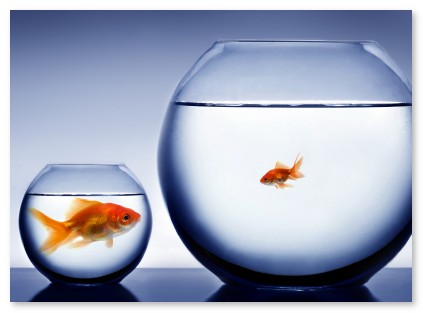
Battle: –
An encounter between opposing forces: an important battle in the Pacific campaign.
Armed fighting; combat: wounded in battle.
A match between two combatants: trial by battle.
A protracted controversy or struggle: won the battle of the budget.
An intense competition: a battle of wits.
War: –
A state of open, armed, often prolonged conflict carried on between nations, states, or parties.
The period of such conflict.
The techniques and procedures of war; military science.
A condition of active antagonism or contention: a war of words; a price war.
A concerted effort or campaign to combat or put an end to something considered injurious: the war against acid rain.
Difference Between Then and Than
Then is used to indicate time, as in:
I will go to the store, then I will come home.
Than is used to make a comparison, as in:
I like chocolate more than vanilla.
Difference Between Football and Soccer
Football is one of the most popular sports in the whole world. We know how enthralled the whole world is when the Football World Cup starts. But then what is soccer? Many say that both words refer to the same game, while some say that both are different games. The truth is that both the games are different while having some similarities.
Football is actually the common name of all those sport which involve the use of the foot and ball to score goals. This term can be applied to any form of football. Some of the different types of football games are association football, gridiron football, Australian football, rugby, and Gaelic football. The game association football is what is commonly known as soccer.
Usually in football, there are two teams of 11 to 18 players, who play within a specified area. To score points, each team has to move the ball over to the opponent teamâ??s field end, either over a specific line or in to a goal area. In soccer, similar to most of the football games, it is played on a field with two teams. The ball has to be moved into the opponent teamâ??s goal area by kicking it. Sometimes, in a game, the use of torso or head to move the ball is used. In this game, only the goalkeepers have the right to use the hands and arm to stop the ball.
For each game there is a certain conduct in which the ball is to be moved. It can be by carrying, kicking, using the whole body, or passing the ball. Soccer uses the method of kicking the ball into the goal area. It is not allowed in the game for the players to use their hands to move the ball.
The scoring nature of the different games in football is common. The team which scores the maximum goals at the end of a match is declared the winner. And if there is a tie, penalty shootouts can be given to the teams or declare the game a draw.
The shape of the ball also differs in the games. In soccer, the ball used is a sphere. This kind of ball is used in Gaelic football also. In other football games like rugby and American football, the ball has more rounded ends. The ball for Canadian and American Football has two pointed ends.
In the United Kingdom, the terms football and soccer refer to the same thing while in United States, soccer and football are two different games. The football there is more like the rugby and the players wear the armor to protect themselves from getting hurt. And in soccer, the teams use the feet to kick the ball around, and do not wear any armors.
Summary:
1. Football is the term used for many common games under the umbrella, while soccer is just one among them.
2. In different football games, the players can use the hands, feet, or whole body to move the ball, while in soccer only the feet can be used.
3. Soccer uses sphere balls, while other football games used rounded or pointed balls depending on the format of the game.
Difference Between Skill and Quality
A quality is something that is ours, is part of our personality, it comes naturally to us. For example, someone may say ‘oh, she is always very kind’. Being kind is a characteristic or quality that a person has.
Other qualities people can have, honest, relaible, hard-working, trurhful, calm, able to get on with others or even the ability to cope with difficult situations. Whereas a skill is something that you have learned to do.
Difference Between Occupation and Profession
The words occupation and profession are interchangeable. Profession and occupation are almost the same, with only minor differences between them.
The difference between occupation and profession can be stated with a simple example: Designing a building would be called a profession, whereas, constructing a building is an occupation.
A profession needs extensive training and specialized knowledge. On the other hand, an occupation does not need any extensive training. A person with an occupation need not have specialized knowledge of his trade.
Difference Between Rat and Mouse
Rat and mouse are actually not scientific classifications. These words are common names for rodents that look alike to the casual eye.
Rat is used to describe medium-sized rodents with long thin tails. There are many species of rodent that are called rats — kangaroo rats, cotton rats, Norway rats, black rats, African pouched rats, naked mole rats, wood rats, pack rats, Polynesian rats, and many others. These different rodent species may not be closely related to each other at all!
Mouse is used to describe tiny, sparrow-sized rodents with long thin tails. As with rats, there are many species of rodents called mice which may or may not be closely related to each other: house mice, field mice, deer mice, smoky mice, spiny mice, and dormice are all called mice.
Difference Between Mind and Brain
A computer required hardware to perform its function. And the hardware need software to make it run. Without software, hardware would be useless and without hardware, software can not be used. Brain is like the hardware and mind is like the software. But in reality, the difference between brain mind are more complicated than software and hardware.
In our culture we sometimes use the words brain and mind interchangeably even though they really do refer to separate, although often overlapping, concepts. The brain is an organ but the mind isn’t. The brain is the physical place where the mind resides. It is a vessel in which the electronic impulses that create thought are contained. With the brain you coordinate your moves, your organism, your activities and transmit impulses. But you use the mind to think. You can muse at what happened, what is scheduled and what maybe will happen.
The mind is the manifestations of thought, perception, emotion, determination, memory and imagination that takes place within the brain. Mind is often used to refer especially to the thought processes of reason. The mind is the awareness of consciousness we know, the ability to control what we do, and know what we are doing and why. It is the ability to understand. Animal are able to interpret their environments, but not understand them. whereas human are able to understand what happens around them, even if not the scientific reasoning for it, and therefore adapt.
The mind made humans capable to solve complex logical problem which differentiates us than other living beings. Logic makes us understand that things are not as what they seem. Our ability to analyze situations makes it possible to develop solutions to problems and lead us toward practical solutions. We may not be able to see in the ultraviolet range, but we may design instruments to do so. We may not be able to see atoms, but we can design experiments that enable us to know their properties. Each stage of scientific advancement has usually been made by trying to reach a logical conclusion consistent with our observations. We no longer believe in demons as the cause of disease. We now believe in viruses, bacteria, genetic defects, and environmental pollution as the real causes of disease. Our irrational and unfounded "superstitions" have given way to "knowledge".
Difference Between Lending and Financing
Lets deal with lending first. A bank or even your neighbour can lend you money. You may or may not have to put up collateral to secure the loan. Say you borrow $100 from your mate and promise to repay the $100 in 2 weeks time. He may ask you to give him something of similar value that he can "hold" until you repay him, this is collateral. He is not interested in why you want the $100. He just wants his money back in 2 weeks or he will sell your collateral and recover his $100 loan to you.
In financing, you buy a specific item usually with a specific interst rate over usually a specific time frame. The best example here may be a car or house or similar asset. If you default (miss payments) before the end of the payment period, the person / bank that financed your specific asset can (within reason) take away the specific asset that you financed and sell it to recover his / their debt.
So in a nutshell, financing (often called asset based financing) is the funding for a specific item and lending is generally non specific i.e. simply a loan
Difference Between LCD and TFT
Liquid Crystal Displays or LCDs were created as an alternative to big and bulky CRT displays. They were energy efficient, thin, and light. But problems plagued earlier LCD models and made them far too inferior to CRT displays. As a remedy, traditional LCD construction methods were adapted to improve the performance of these diplays. TFT or Thin Film Transistor was the solution they found. Instead of the traditional method of producing silicon transistors in wafers, TFT elements are deposited directly to the glass substrate.
The new method of producing the screen had a few immediate improvements. TFT made it possible to reduce the crosstalk between individual pixels resulting in a significant improvement in image quality. Crosstalk is when the signal of adjacent pixels affect the operation of the pixel. This deviates the brightness of pixels, making it brighter or dimmer than it was intended to be. TFT also solved, or at least minimized, the inherent problem of LCD that made it unusable for a lot of applications. LCD screens used to have a very high response time and it was not capable of reproducing fast motion. This problem made gaming and watching movies on these displays pretty terrible. The small transistor elements in a TFT display requires a smaller amount of charge to change its state. The lower charge needed translates directly to a faster response time. As development continued on TFT displays, the response time became lower and lower until LCDs were almost competitive with CRTs with respect to response time.
TFT was so successful that it became the standard in producing LCD screens. Today, all the LCDs being made are built with TFT. Even the newer screens being developed that use LEDs still utilize a TFT layer to drive the display. TFT might be totally replaced in the future by a superior technology but for now, it is the dominant element in all LCDs.
Summary:
1.LCD is a class of displays that uses transistors to create an image while TFT is one of the methods of creating an LCD
2.Instead of the traditional semiconductor creation process, TFT elements are directly deposited into a substrate that is usually made of glass
3.Displays made with TFT produces better images and are less prone to crosstalk compared to traditional LCD
4.TFT elements require a smaller amount of charge to activate allowing faster screen redraws
5.All LCD displays being produced today are now made with TFT
Difference Between King and Emperior
We all know that Kings and Emperors are rulers. But there are some differences which make them get the different titles.
An Emperor is known as the â??king of kingsâ??. So king is lower in designation to an emperor. Often in the histories and epics, the emperor is a very powerful person in comparison to a king. The major difference in power is due to the number of countries being ruled by the person. The king rules one country or a group of states, while an emperor rules many countries. So the emperor is considered mightier than the king in this respect.
Difference Between Knowledge and Information
The human mind’s content is based on the kinds of things that one interacts with on a daily basis. Many a time people perceive things based on either what they have seen, experienced, heard, read, learned or inferred after some experimentation. These perceptions are then categorized in the mind as data, information, knowledge, understanding or wisdom. Unlike wisdom, information and knowledge perceptions are as a result of what the brain has recorded in the past. That said, we need to know how knowledge differs from information (if it does) and if one can exist without the other.
Information refers to data that has been given some meaning by way of relational connection. In computing terms it is data that has been processed. The â??meaning’ applied to the data may not necessarily be useful. For instance, data stored in a database can be processed by a procedure or a program to give information about something, for example a banking application can determine how a particular account balance increased by returning the record of the credit that occurred to that account using data stored in a database somewhere, so â??information’ would have been retrieved about that transaction. It is important to know that without information, you will not have knowledge.
So what is knowledge?
Knowledge is the concise and appropriate collection of information in a way that makes it useful. Knowledge refers to a deterministic process where patterns within a given set of information are ascertained. We can also positively say that when a person memorizes some information about something, then they have knowledge about it. That knowledge will have some useful and even applicable use to them but even if that’s the case, that knowledge doesn’t in itself provide for integration such as would infer further knowledge. Take the example of elementary school kids who memorize knowledge of the multiplication table (times table), for instance like the result of 3 times 3 is 9(3*3=9), because they have amassed knowledge of the table. However, the kids will not be able to respond positively when asked the result of 2300*150 as that entry isn’t in the table. It takes true analytical ability and the ability to reduce it to empirical factual knowledge, not just some memorized set of knowledge.
Summary:
1. Information is processed data whereas knowledge is information that is modeled to be useful.
2. You need information to be able to get knowledge.
3. Information deals with the way data is related while knowledge examines patterns within a given set of information.
4. To get knowledge you need some cognitive and analytical ability while for information you do not need cognitive ability.
Difference Between Rate and Price
Market value, or agreed exchange value, that will purchase a definite quantity, weight, or other measure of a good or service. As the consideration given in exchange for transfer of ownership, price forms the essential basis of commercial transactions. It may be fixed by a contract (such as sale of goods contract), left to be determined by an agreed upon formula at a future date, or discovered or negotiated during the course of dealings between the parties involved. In commerce, it boils down to what (1) a buyer is willing to pay, (2) a seller is willing to accept, and (3) the competition is allowing to be charged. With product, promotion, and place of marketing mix, it is one of the business variables over which a firm can exercise some degree of control. It is a criminal offense to manipulate prices (see price fixing) in collusion with other suppliers, and to give a misleading indication of price such as charging for items that are reasonably expected to be included in the advertised, list, or quoted price. Called also sale price and selling price.
Rate is to Judge something with respect to its value, specially against a suitable scale.
For Example: "they travelled at a rate of 55 miles per hour "
Difference Between Development and Growth
Growth mean increase in physical structure with reference to age of an object while development means increasing of other factors such as mental, social, and secondary sexual character in an object, at which, we say person has some maturity.
Difference Between Immigration and Emigration
Emigration is the act and the phenomenon of leaving one’s native country to settle in another country. It is the same as immigration but from the perspective of the country of origin.
Immigration is the movement of people from one nation-state to another. While human migration has existed throughout human history, immigration implies long-term permanent residence (and often eventual citizenship) by the immigrants: tourists and short-term visitors are not considered immigrants.
Difference Between Jungle and Forest
Forest: area with a large number of trees
Jungle: wilderness full of plant and animal life
Difference Between Judo and Karate
1. Judo is a soft martial art mainly involving body maneuvers against an opponent. Karate can be termed as a hard martial art where are blows are landed on an opponent’s body.
2. As a sport Karate involves earning points for kicking and punching, whereas in Judo points are to be had for grappling and throwing your opponent as one would in wrestling
3. Karate is an attacking and aggressive form of martial art, whereas Judo is purely a defensive form of martial art.
Difference Between Drug and Medicine
From chemistry point of view, there is no distinction between the terms drugs and medicines, i.e., all drugs are medicines and all medicines are drugs. However, our society and law make a clear-cut distinction between these two terms as follow:
A medicine is a chemical substance which cures the disease, is safe to use, has negligible toxicity and does not addiction. In contrast, a drug is a chemical substance which also cures the disease but is habit forming, causes addiction and has serious side effects
Difference Between Ice and Snow
Though ice and snow are both made up of water, there is a difference between the two. Snow is nothing but the frozen atmospheric vapour which falls in winters on earth as light flakes whereas ice is simply frozen water. Another difference is that snow fall can be seen only in winters at areas of high altitudes and places near the Polar regions whereas ice can be seen in any season of the year in our refrigerator.
Difference Between Duty and Responsibility
Duty is a moral commitment to something or someone, whereas responsibility is a condition of being responsible.
According to Cicero, duties come from four sources. Duty is a result of human beings, one’s particular place, one’s character and one’s own moral expectations. His philosophy of duty has been depicted in his famous work On duty.
As duty refers to moral commitment, it denotes an active feeling for doing something. Once a person engages himself with some duty or if he has been entrusted with a duty, then that person fully commits himself to it. In the case of duty, the person will be involved in activity without any self-interest. As a citizen of a country, a person has many duties to perform. It is his duty to adhere to the constitution.
Responsibility can be termed as an ability to act at one’s own will, without any supervision. It is the obligation to successfully complete an assigned task. In responsibility, a person takes upon the duty to compete the task and to make the task a success.
In responsibility, a person is solely responsible for the entire task and its outcome. In case of responsibility, he takes the ownership of the entire task. Responsibility can also be explained as a set of instructions in life that one has to follow. It is the responsibility of the parents to give good education to their children.
Difference Between Chef and Cook
The terms cook and chef are used so often interchangeably that their demarcating line has become somewhat blurred. But technically speaking, a chef is someone who necessarily obtains a professional degree and prepares food in a professional setting. A cook, on the other hand, may not be professionally trained and may or may not be working in a professional setting.
A cook can be a member of a household staff who prepares food and manages the kitchen staff. Often, big households employ a cook-housekeeper. A chef, on the other hand, is likely to be heading a team of cooks in a restaurant or hotel
Difference Between Climate and Weather
The difference between weather and climate is a measure of time. Weather is what conditions of the atmosphere are over a short period of time, and climate is how the atmosphere "behaves" over relatively long periods of time.
When we talk about climate change, we talk about changes in long-term averages of daily weather. Today, children always hear stories from their parents and grandparents about how snow was always piled up to their waists as they trudged off to school. Children today in most areas of the country haven’t experienced those kinds of dreadful snow-packed winters, except for the Northeastern U.S. in April 2011. The change in recent winter snows indicate that the climate has changed since their parents were young.
Difference Between Curriculum and Syllabus
Curriculum is a focus of study, consisting of various courses all designed to reach a particular proficiency or qualification. For instance some high schools offer a college-prep curriculum, which is designed to prepare a student for the rigors of college study. Emphasis will be on the humanities (history, English, etc.) and sciences (biology, math, chemistry, physics, etc.). On the other hand, some high schools offer a vocational-prep curriculum, which includes specific skill-building courses (cosmetology, construction trades, electronics, computer science, etc.).
A syllabus is simply an outline and time line of a particular course. It will typically give a brief overview of the course objectives, course expectations, list reading assignments, homework deadlines, and exam dates. It is typically available on the first day of a college course, and a student is expected to know what is in the syllabus throughout the course. The purpose of the syllabus is to allow the student to work their schedule for their own maximum efficiency and effectiveness. It helps to avoid conflicts with other courses, and it prevents someone from accusing a professor of unfairly adding assignments mid-term.
Difference Between Jihad and Terrorism
Jihad is an Islamic term used to describe one’s duty towards Islam. Terrorism on the other hand is the act of trying to instill feelings of terror in the general population by acts or deeds.
Jihad as per Islam stands for struggle. This struggle can be to protect one’s country, religion, family, or to save someone else’s life. Jihad can even be one’s struggle to make himself a better human being. This has been called as the greater jihad by some. Terrorism, however, is never to protect. The sole purpose of terrorism is to cause enough harm, pain and agony to someone to make him feel insecure. The word Terrorism would normally be used when referring to systematic episodes of mass destruction or killings. It would not be normally used to petty crimes. It has nothing to do with religion as neither Islam nor any other religion in the world preaches destruction and killings.
Terrorism is often fueled by materialistic or territorial goals generally with no regard to religion whereas a jihad is the struggle in the path of god and has no other goal apart from this.
Terrorism is always directed towards the killing of innocent civilians and may be by way of explosions, attacks, etc, while, jihad is not permitted against innocent.
Both these terms are vastly misused. While politicians the world over have often discredit their political rivals by calling or classifying them as terrorists and their struggles as terrorism, terrorists on the other hand have always tried to justify their acts and deeds by calling and categorizing them as jihad, however, there is no reference in Islam or any other religion where jihad justifies the killing of innocent people or damage to property.
Summary
1. Jihad is the term used to describe one’s duty towards Islam while terrorism is an act committed to instill fear in the population.
2. Jihad need not always be violent however terrorism is always violent.
3. Jihad is always performed for God, while terrorism always has materialistic goals.
4. Terrorism is always directed to harm innocent civilians while Jihad does not permit this.
Difference Between Fruit and Vegetable
A fruit is the matured ovary of a plant, which means that it contains seeds, while a vegetable is a plant part, which does not contain seeds, although some vegetables may be used in plant reproduction.
Some examples of fruits include well-known specimens like apricots, cherries, blueberries, and apples, but tomatoes, pumpkins, cucumbers, and zucchini are also considered to be fruits botanically, even though many people refer to these fruits as ?vegetables? because they are savory, rather than sweet. This is the result of convenience labeling used in the grocery industry, where fruits and vegetables are differentiated on the basis of whether they are sweet or savory, rather than with the use of any firm botanical criteria
A vegetable, on the other hand, is simply a plant part like a flower, stem, root, or leaf. Broccoli, for example is a vegetable which appears in the form of a flower, while celery is a stalk vegetable, and celeriac is a root vegetable. Vegetables like potatoes are technically tubers, not roots, meaning that they are specially designed plant structures which store nutrients for the parent plant; tubers are also capable of budding into new plants. Some examples of leaf vegetables include spinach, cabbage, and lettuce
Difference Between Brand and Product
In marketing, product is anything that can be offered to the market that may satisfy the need, want, and demand of a certain individual or market. It is also called as goods or service. Product is more than just a material object. It is also an inclusive package of benefits or satisfactions that the consumer or buyer may achieve upon purchase or usage. A product is the total amount of all physical, psychological, symbolic, and service attributes. Several examples of products are the following: hamburger, fries, and soft drink.
On the other hand, brand is a symbolic manifestation of all the information connected with a company, product, or service. A brand is typically composed of a name, logo, and other visual elements such as images, colors, and icons. It is believe that a brand puts an impression to the consumer on what to expect to the product or service being offered. In other application, brand may be referred as a trademark, which is legally an appropriate term. In summary, a ‘brand’ is a symbol of a product (Coca-Cola), service (Eurostar trains), company (Campari) or even an individual (Michael Jordan) to identify what it is. Specifically, an example of brand is McDonald’s fast food restaurant, which carries the world’s most popular Golden Arches.
Difference Between CV and Resume
The primary differences between a resume and a curriculum vitae (CV) are the length, what is included and what each is used for. A resume is a one or two page summary of your skills, experience and education. While a resume is brief and concise – no more than a page or two, a Curriculum Vitae is a longer (at least two page) and more detailed synopsis.
A Curriculum Vitae includes a summary of your educational and academic backgrounds as well as teaching and research experience, publications, presentations, awards, honors, affiliations and other details. In Europe, the Middle East, Africa, or Asia, employers may expect to receive a curriculum vitae.
In the United States, a curriculum vitae is used primarily when applying for academic, education, scientific or research positions. It is also ap
Difference Between Attitude
And Behavior
Attitude is how you think and feel about things, behavior is the way you act. Attitude can reflect in behavior, but there are some people who can act very differently than what they feel.
Difference Between Reward and Award
Awards are tokens of appreciation, which are given to individuals for their achievements. It can be called as symbol of recognition to an individual for their personal achievements. Rewards on the other hand are also recognition but it is a kind of acknowledgment to an individuals contributions. Rewards can also be said to be an encouragement to an individual.
Awards can also be called as a prize that is given away to individuals for their noteworthy activities. By getting an award, people approve that you have done something great. Awards can come in form of commemorative plaques, medals, trophies, certificates, titles, badges, pins and cash. Rewards most of time is associated with money or a promotion or like that.
You may be rewarded for finding and returning some one?s valuable things. The police normally give away rewards on valuable information. Rewards can be termed as a compensation that you get for helping others. But you only get award and not reward for writing a novel. Well, the award can be called as a reward for an individual?s effort
Awards are publicly presented. Rewards, on the other hand, are only private or personal affairs.
Difference Between Wait and Await
Wait
To stay in one place because you expect or hope that something will happen.
e.g. Shery said: she?d be waiting in the lobby.
Await
1. To wait for something that you expect to happen
e.g. They were awaiting the birth of their first child.
2. To wait for something that is the next stage in a process
The draft law is still awaiting parliamentary approval.
Difference Between Sell and Sale
sale = noun
sell = verb
Definition
A sale is somewhere where you sell things in a lower price.
A sell is something when u offer a certain item for a fixed price.
For Example:
There is a sale at the market, let’s go shopping.
<<Here Sale means that goods are selling for less the normal price>>
I will sell you this radio for $5.
<<Here sell means to give something for a certain amount of money>>
Difference Between In
and At
IN : used as a function word to indicate inclusion, location, or position within limits
<in the lake> <wounded in the leg> <in the house>
AT : used as a function word to indicate presence or occurrence in, on, or near
<staying at a hotel> <at a party> <sick at heart>
For Example:
"Samand is in the house."
We know from this sentence that Samand is inside the house.
"Samand is at the house."
We cannot tell from this sentence if Samand is inside the house or outside the house but we know he is somewhere at the house.
Difference Between Art and Craft
Art is a form of work that is the expression of emotions. Craft is a form of work, which results in a tangible output.
Another thing that can be seen is that one can create duplicate craft forms, which is not possible with art. It can also be seen that art forms move people on an emotional level whereas crafts attract people.
For example, a piece of painting can create emotions in a person whereas a piece of jewelery can be an attraction.
Unlike craft, art is known to come out of the heart and soul. Crafts come out of the mind and need considerable practice to come out with world-class forms.
Difference Between Appeal and Review
An appeal is a formal question as to the correctness of a ruling of a presiding officer. If the appeal is found to be unsatisfactory or not correct, a reexamination by a higher authority will be conducted.. It is the process of going over the subject again
Difference Between Wind and Air
Air is the part of the Earth’s atmosphere that humans breathe. It is made up of 78% nitrogen, 21% oxygen and 1% other substances.
When Air is moving then the Moving-Air is termed as Wind.
It means, that moving air is called "wind" and the mixture of gases present in atmosphere is called "air"
Difference Between Aims and Objectives
Aims are actually GOALS, which you set for yourself in your life to achieve while Objectives are the measures, which you take to achieve your aim.
Difference Between Life Insurance and Life Assurance
Most people do not understand the important difference between Life Assurance and Life Insurance but it?s quite simple.
Life Insurance insures you for a specific period of time. Then if you die whilst the policy is in force, the insurance company pays the claim. However, if you survive to the end of the term, the policy is finished and has no residual value whatsoever. Even whilst the Life Insurance policy is in force it only has any value if you have a claim ? in that context it?s just like your home insurance!
Life Assurance is different. With Life Assurance you have an important investment element. A Life Assurance policy joins a guaranteed insured sum with a none guaranteed investment, the value of the investment being directly related to the size of the guaranteed sum on your policy, the number of years the policy has been in force and Insurance Company?s investment performance.
If you were to die during a Life Assurance policy?s term, the policy pays out the guaranteed sum (just as with Life Insurance) or the value of the annual investment bonuses that had been added to the policy by the Insurance Company to date, whichever is the larger. Therefore, as the years go by the Life Assurance policy increases in value as the bonuses attached to it, build up.
However, if you survive to the end of the policy, your investment value is increased. You then get the annual bonuses plus a terminal bonus.
When a Life Assurance policy has earned an investment value via its annual bonuses, you can cash it in with the insurance company. However, most people get a far higher price for their policy by selling it to a specialist investment broker. You?ll find a number of investment brokers on the Internet who wish to buy life assurance policies.
In recent years, the investment returns on Life Assurance policies have dropped very significantly reflecting investment conditions. Furthermore, most insurance companies have placed penalties for cashing in policies early. This has similarly reduced the resale value for Life Assurance policies.
Life Insurance is much cheaper than Life Assurance and, in our experience, Life Insurance is what most people need.
Difference Between Contract and Agreement
A Contract is enforceable by law while an Agreement may not be enforceable by law.
Difference Between Act and Ordinance
An "Act" is procedurally adopted and duly assented by the head of the state/nation and is placed on the statute as a permanent law.
Ordinance is a temporary law, promulgated by the President or Governor, when the legislature is not in session, It has to be ratified by the legislature within six months.
Difference Between Wheel and Tyre
A Wheel is a device that allows heavy objects to be moved easily through rotating on an axle through its center, facilitating movement or transportation while supporting a load (mass), or performing labor in machines.
While Tyre is the outer part of the Wheel made-up with Rubber and mostly use in vehicles for smooth movement.
Difference Between Bacteria and Virus
1. Viruses are the smallest and simplest life form known. They are 10 to 100 times smaller than bacteria.
2. The biggest difference between viruses and bacteria is that viruses must have a living host – like a plant or animal – to multiply, while most bacteria can grow on non-living surfaces.
3. Bacteria are intercellular organisms(i.e. they live in-between cells); whereas viruses are intracellular organisms (they infiltrate the host cell and live inside the cell). They change the host cell’s genetic material from its normal function to producing the virus itself.
4. There are some useful bacteria but all viruses are harmful.
5. Antibiotics can kill bacteria but not viruses.
6. An example of a disease caused by bacteria is strep throat and an example of an affliction caused by a virus is the flu.
Difference Between Laptop and Notebook
The Notebook Computer
A notebook computer is designed to provide mobile computing that won’t break your back yet still offer all the power the mobile users requires for work and some leisure pursuits. This portability normally comes at a price. The level of minituarization involved comes at a cost and high end notebooks can prove to be quite expensive. A standard notebook has the following features:
1. Ultralight. Less weight is better.
2. 4 – 5 hour battery life.
3. No internal floppy drive.
4. Minimal graphics subsystem.
5. No internal DVD or CD system.
6. 12" – 14" TFT screen.
7. Low profile (thin).
8. Integrated modem and network connection.
9. Smallest possible keyboard that retains functionality.
10. Low power consumption Celeron/Centrino or Sempron style processor.
The Laptop Computer
Now for the laptop computer. Again look at the name. A laptop is designed to sit on your lap and you can therefore expect it to be quite large and loaded down with features and power. The standard laptop computer would have some ,if not all, of the following features:
1. 14" – 17" (widescreen) TFT screen.
2. Nvidia GeForce or ATI Radeon graphics subsystem.
3. Internal DVD-ROM or DVD-RW drive
4. Large full featured keyboard.
5. 3 hour+ battery life.
6. Upgradeable.
7. Integrated modem, network, Bluetooth and Wi-Fi capabilities.
8. High quality integrate audio and speaker system.
9. Low power consumption, high performance Intel Centrino style processor.
From reading the above information you’ll see that the notebook is the exact opposite of the laptop. Notebooks offer reasonable power and extreme portability. Laptops are designed to be capable of replacing an entire desktop PC if necessary whilst still offering desktop performance in a mobile platform.
Difference Between Zakat and Tax
Zakat and Tax are two completely different concepts. Tax is collected from every person of a country or area by the government of the country or area. If the person is rich he needs to pay tax and if he is poor even then he need to pay the tax on the items or things on which Tax is applied by the government. Tax is forced by the government. Tax is used for development of the country or particular area from where the Tax was collected.
But Zakat is a different concept. Zakat is applied on the people how can pay it. There are some Nisab (rules) applied on the payer of Zakat. If some body satisfies those Nisab (rules), he is eligible to pay the Zakat. If somebody has 85 Grams Gold or 595 Grams Silver or if he has some currency equal to the above written quantity of Gold, he has to pay the Zakat on it. Zakat is payable after one Lunar (moon) year if the above written quantity of gold, silver or money is kept by any person. The Ratio of Zakat is 2.5% (Approx. 1/40). Zakat is used to help the poor people of the country or the area. Zakat cannot be spent on the people who are not eligible for the Zakat.
Difference Between Curd and Yogurt
Yogurt is a dairy product of Turkish origin,produced by bacterial fermentation of milk.It is the fermentation of milk sugar called lactose into lactic acid that gives yogurt in gel like texture and characteristic tang.
Curd is also a dairy product obtained by curdling milk with rennet or an edible acidic substance such as lemon juice or vinegar and then draining off the liquid portion.The increased acidity causes the milk proteins tangle into solid masses or curds.
Difference Between Current and Voltage
Current and Voltage are two different but related aspects of electricity. Voltage is the electrical potential difference between two points while current is the flow of electric charge across a certain element.
Difference Between Image and Picture
IMAGE – An image of your self or anyone (Usually taken through Camera)
PICTURE – A Picture is to draw something in the computer/real life.
Difference Between 1G, 2G, 2.5G, 3G, Pre-4G and 4G
1G is the first generation celullar network that existed in 1980s. It transfer data (only voice) in analog wave, it has limitation because there are no encryption, the sound quality is poor and the speed of transfer is only at 9.6kbps.
2G is the second one, improved by introducing the concept of digital modulation, which means converting the voice(only) into digital code(in your phone) and then into analog signals(imagine that it flys in the air). Being digital, they overcame some of the limitations of 1G, such as it omits the radio power from handsets making life more healthier, and it has enhanced privacy.
2.5G is a transition of 2G and 3G. In 2.5G, the most popular services like SMS (short messaging service), GPRS, EDGE, High Speed Circuit switched data, and more had been introduced.
3G is the current generation of mobile telecommunication standards. It allows simultaneous use of speech and data services and offers data rates of up to 2 Mbps, which provide servcies like video calls, mobile TV, mobile Internet and downloading. There are a bunch of technologies that fall under 3G, like WCDMA, EV-DO, and HSPA and others.
In telecommunications, 4G is the fourth generation of cellular wireless standards. It is a successor to the 3G and 2G families of standards. In 2008, the ITU-R organization specified the IMT-Advanced (International Mobile Telecommunications Advanced) requirements for 4G standards, setting peak speed requirements for 4G service at 100 Mbit/s for high mobility communication (such as from trains and cars) and 1 Gbit/s for low mobility communication (such as pedestrians and stationary users)
A 4G system is expected to provide a comprehensive and secure all-IP based mobile broadband solution to laptop computer wireless modems, smartphones, and other mobile devices. Facilities such as ultra-broadband Internet access, IP telephony, gaming services, and streamed multimedia may be provided to users.
PRE-4G technologies such as mobile WiMAX and Long term evolution (LTE) have been on the market since 2006 and 2009 respectively, and are often branded as 4G. The current versions of these technologies did not fulfill the original ITU-R requirements of data rates approximately up to 1 Gbit/s for 4G systems. Marketing materials use 4G as a description for LTE and Mobile-WiMAX in their current forms.