

STS-126 Begins!
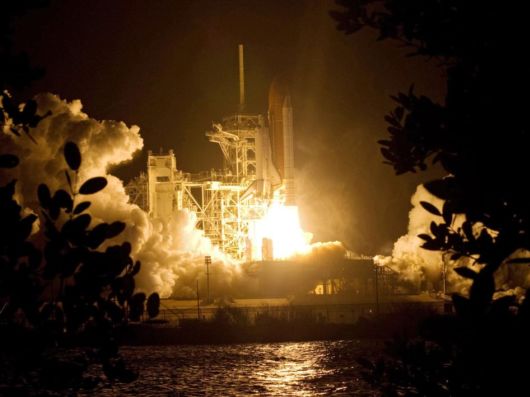
Endeavour Lifts Off!
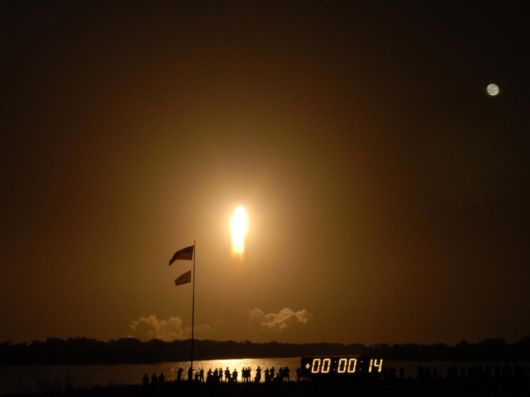
Kennedy Space Center in Florida.
Illusion and Evolution
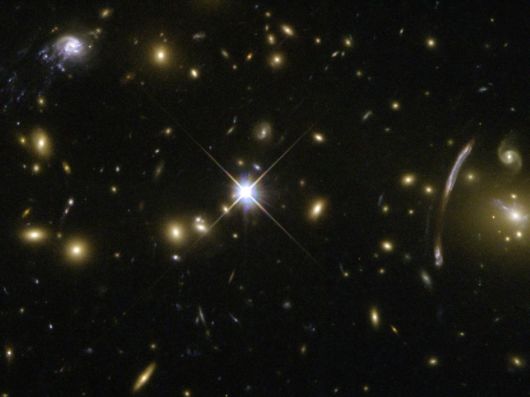
To start, most of the yellowish objects in the above image from the Hubble Space Telescope are galactic members of a massive cluster of galaxies known as Abell 2667. The distortion of the galaxy on the upper left is real.. As the galaxy plows through the intercluster medium, gas is stripped out and condenses to form bright new knots of stars. This detailed image helps astronomers understand why so many galaxies today have so little gas.
The distortion of the galaxy on the far right, however, is an illusion. This nearly normal galaxy is actually far behind the massive galaxy cluster.. Light from this galaxy is gravitationally lensed by Abell 2667, appearing much like a distant person would appear through a wine glass. Each distorted galaxy gives scientists important clues about how galaxies and clusters of galaxies evolve.
Neither Perpendicular nor Parallel
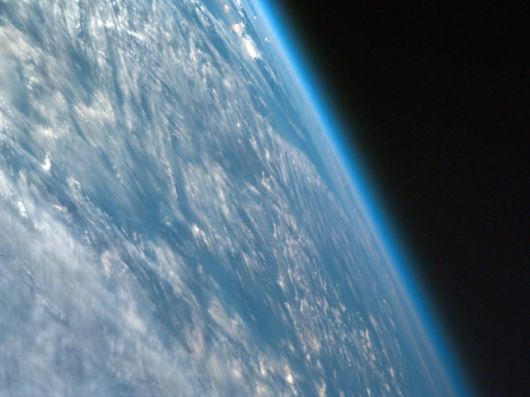
The Earth’s atmosphere is composed of 78 percent nitrogen, 21 percent oxygen and 1 percent other constituents, and it shields us from nearly all harmful radiation coming from the sun and other stars. It also protects us from meteors, most of which burn up before they can strike the planet. Affected by changes in solar activity, the upper atmosphere contributes to weather and climate on Earth.
Happy Halloween From Cassini
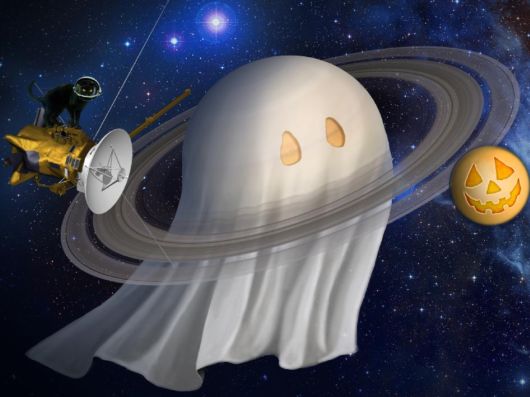
The Cassini program is an international cooperative effort involving NASA, the European Space Agency and the Italian space agency, Agenzia Spaziale Italiana. In the United States, the mission is managed by the Jet Propulsion Laboratory.
Doomed Moon of Mars
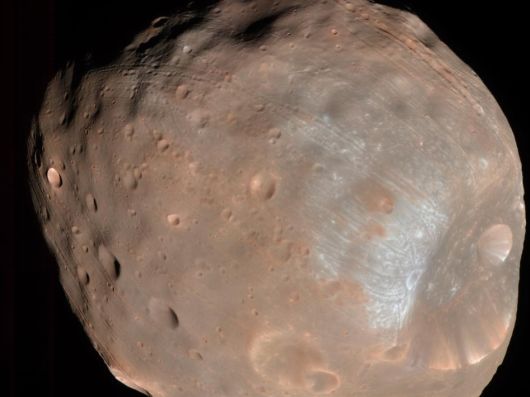
The larger moon, Phobos, is a cratered, asteroid-like object in this stunning color image from the Mars Reconnaissance Orbiter. Phobos orbits so close to Mars that gravitational tidal forces are dragging it down. In 100 million years or so, Phobos likely will be shattered by stress caused by the relentless tidal forces, the debris forming a decaying ring around Mars.
Cratered Mercury
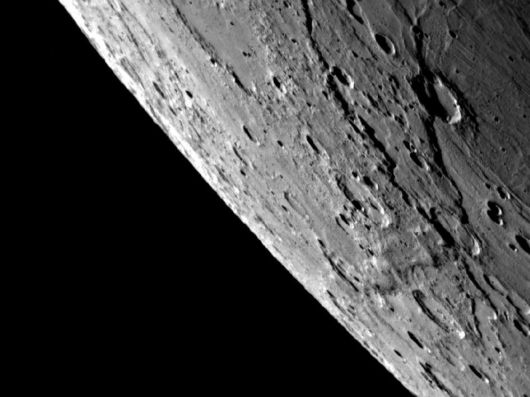
The features in the foreground, near the right side of the image, are close to the terminator, the line between the sunlit dayside and dark night side of the planet, making the shadows long and prominent. Two very long scarps, or cliffs, are visible in this region, and the scarps appear to crosscut each other. The easternmost scarp also cuts through a crater, showing that it formed after the impact that created the crater.
Expedition 18 Lifts Off!
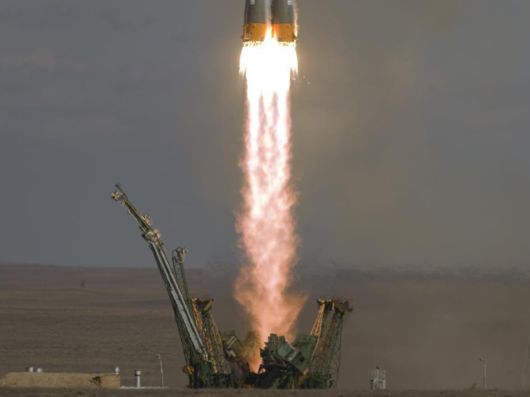
The three crew members are scheduled to dock with the International Space Station on Oct. 14. Fincke and Lonchakov will spend six months on the station, while Garriott will return to Earth Oct. 24, 2008, with two of the Expedition 17 crew currently aboard the International Space Station.
Mirror Images
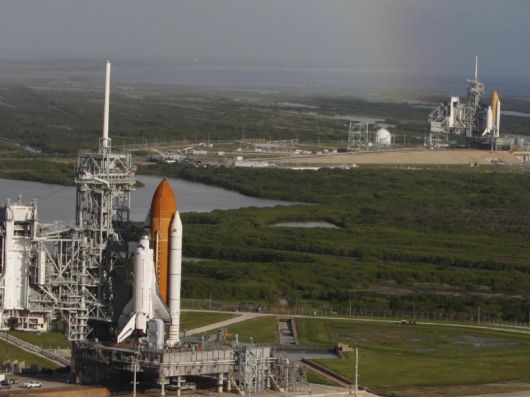
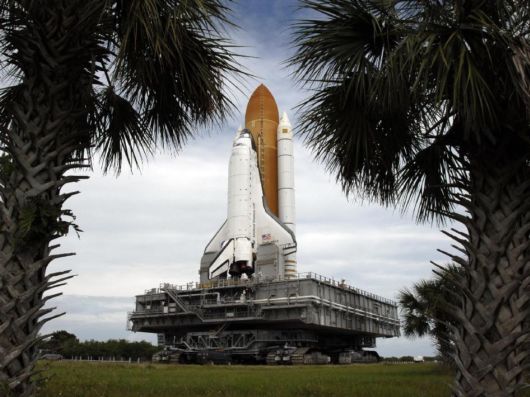
For the first time since July 2001, two shuttles are on the launch pads at the same time. Endeavour will stand by at pad B in the unlikely event that a rescue mission is necessary during Atlantis’ upcoming STS-125 mission to repair NASA’s Hubble Space Telescope. The missions is slated to launch Oct. 10.
After Endeavour is cleared from its duty as a rescue spacecraft, it will be moved to Launch Pad 39A for its STS-126 mission to the International Space Station. That flight is targeted for launch Nov. 12.
Phoenix Provides a Panorama of Mars
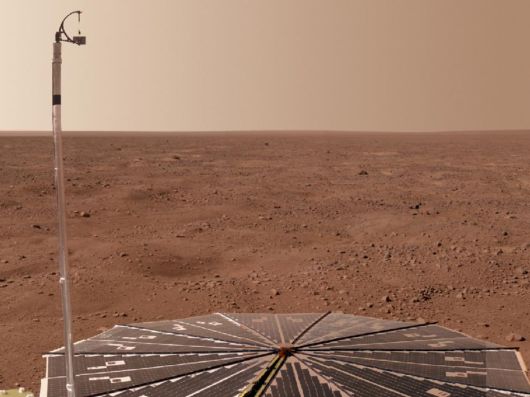
The full-circle panorama in approximately true color shows the polygonal patterning of ground at the landing area, similar to patterns in permafrost areas on Earth. The center of the image is the westward part of the scene. Trenches where Phoenix’s robotic arm has been exposing subsurface material are visible in the right half of the image. The spacecraft’s meteorology mast, topped by the telltale wind gauge, extends into the sky portion of the panorama.
This view comprises more than 100 different camera pointings, with images taken through three different filters at each pointing.
Morning Frost on the Surface of Mars
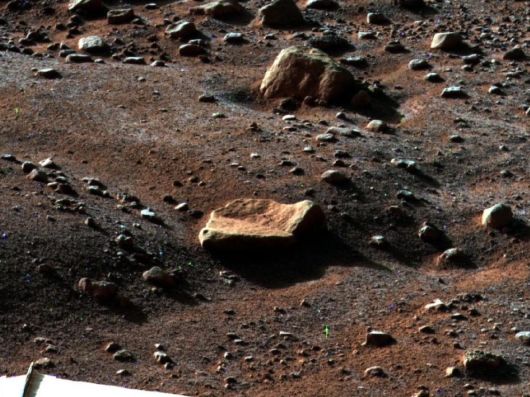
The sun was about 22 degrees above the horizon when the image was taken, enhancing the detail of the polygons, troughs and rocks around the landing site.
This view looks east-southeast with the lander’s eastern solar panel visible in the bottom left-hand corner of the image.
This false color image has been enhanced to show color variations.