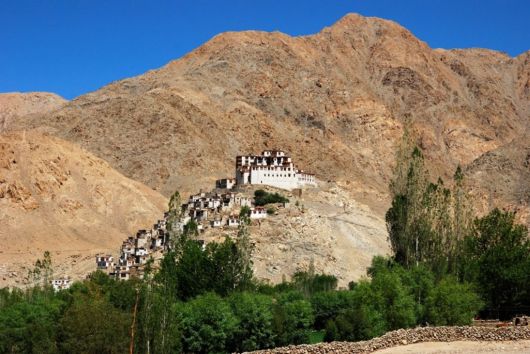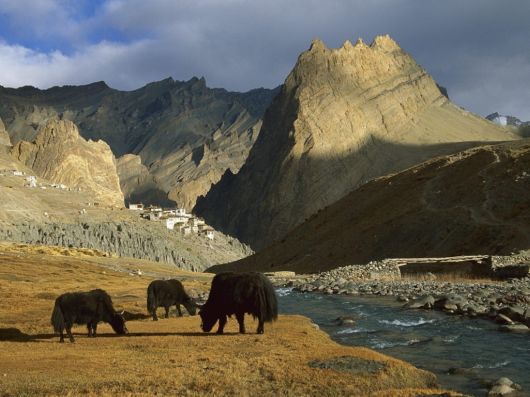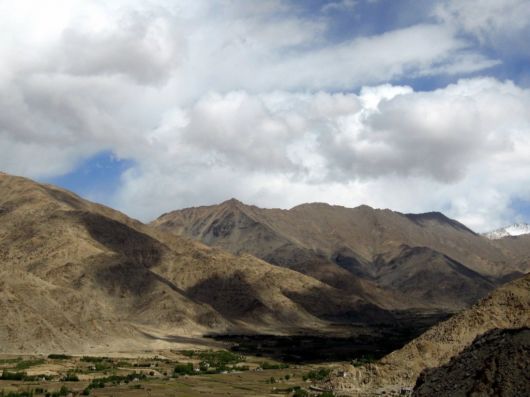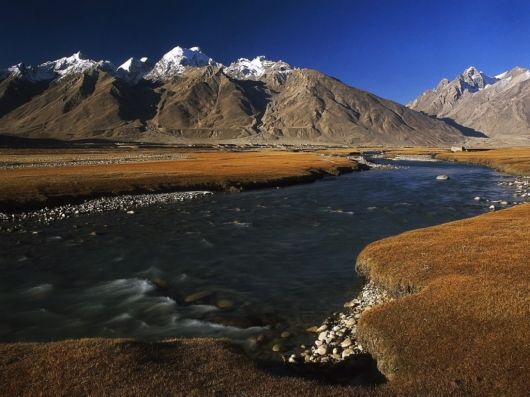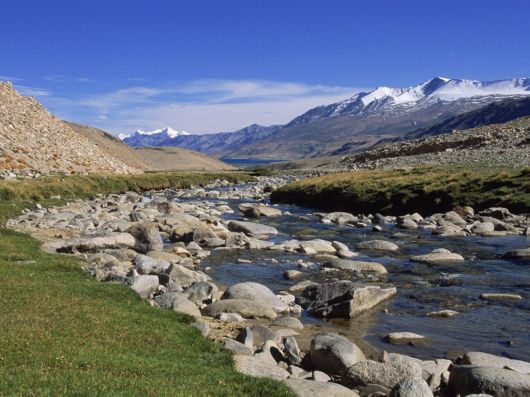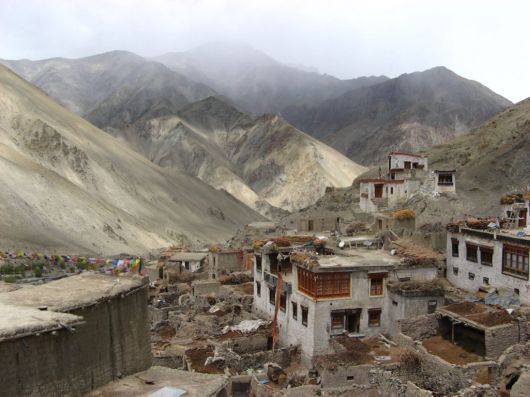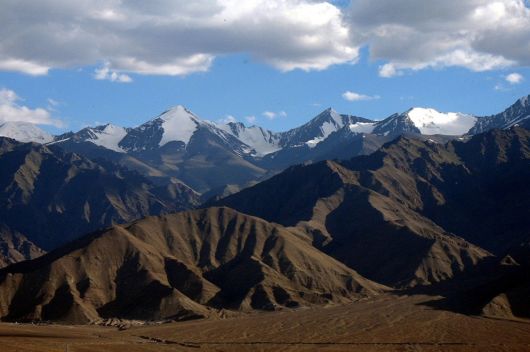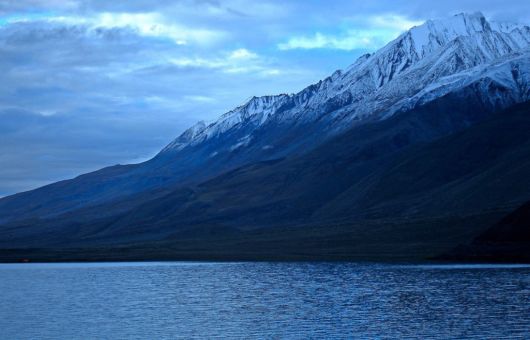

If you?re a fan of adventure, then Ladakh is the place for you. One of the most exciting ways to explore the landscape wonders as well as the remote areas of Ladakh. Crossing the Khardungla pass, considered to be one of the highest motor able roads in the world is a high like never before. Moreover, Ladakh is also a paradise for trekking and mountaineering due to its high peaks and mountains. You can also take part in and enjoy a number of fairs and festivals like the Losar festival, Hemis, Ladakh festival and tak-tok festival.
Ladakh is a part of Jammu & Kashmir in the north of India. It consists of two districts Leh and Kargil.
The district headquarters is based in Leh. Leh district consists of Leh town and 112 inhabited villages and one un-inhabited village. The total population of Leh district is 1.17 lacs. It is the second least populated district of Jammu and Kashmir, after Kargil.
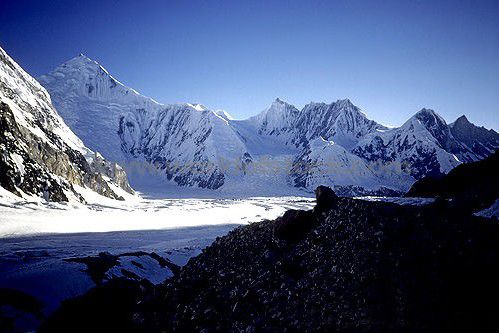
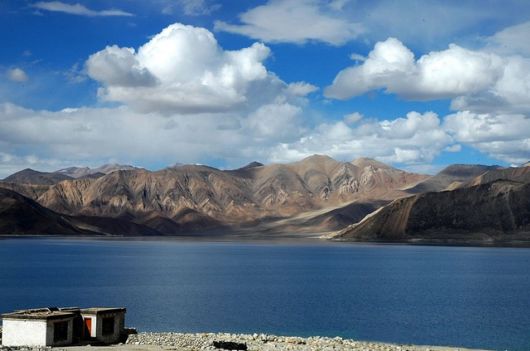
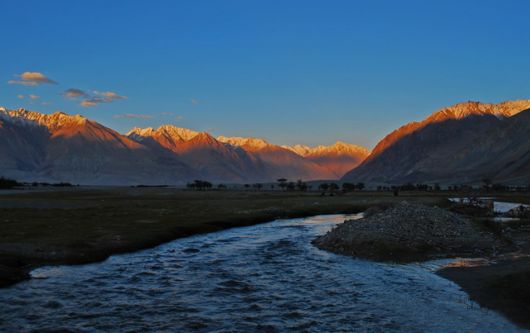
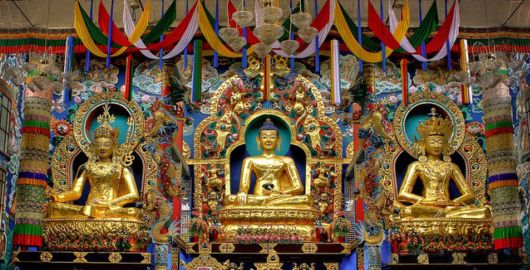
There are several ways of reaching Leh but it depends on the route that would be open. Srinagar and Manali are the two major gateways to Leh Ladakh. Ladakh was under the administration of Leh until the 1st of July, 1979, when the Kargil and Ladakh administrative districts were created. Religion had been the cause of a lot of distress between Buddhists and Muslims since the late 20th century and was one of the main contributors of this division. Tibetan and Buddhist cultures have prevailed for centuries now in these two places of India. A lot of Buddhist monasteries are prominent pilgrimage centers in the country. Its colorful gompas have attracted devout Buddhists from all over the world.
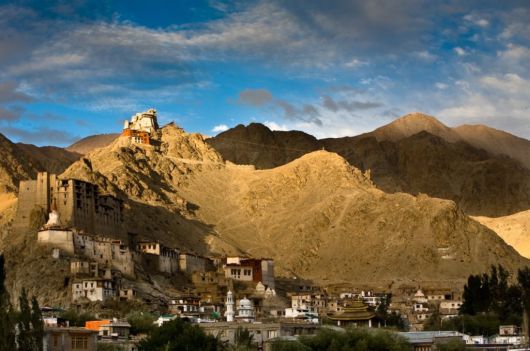
Travelers flock to this beautiful destination from all over the globe. It has plenty to experience and explore. The most impressive is the royal palace known as Leh Palace. The palace, which overlooks Leh, has a certain mystery to it. It was constructed by King Sengge Namgyal in the 17th century. According to history, it was later abandoned as the Kashmiri armies surrounded in the mid 19th century and the royal family that was residing here earlier moved to Stok Palace on the southern bank of the Indus. The palace comprises of nine stories of which the upper floors are meant for the royal families whereas the lower floors function as stables and store rooms. Exploring the palace from the inside will make you reminiscent of the days gone by.
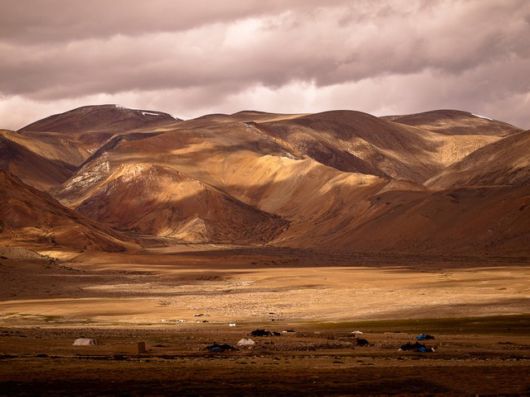
Leh is the second largest district in the country with an area of 45, 100 square kilometers. It is at an altitude of 3524 meters. The district is constrained by Pakistan occupying Kashmir in the west and Ghanche district, China in the north. Aksai Chin and Tibet are to the east, Kargil district to the west and Lahul and Spiti of Himachal Pradesh to the south.
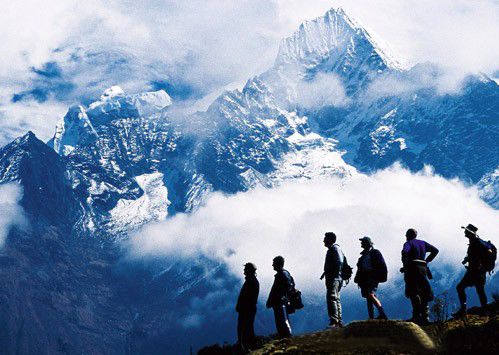
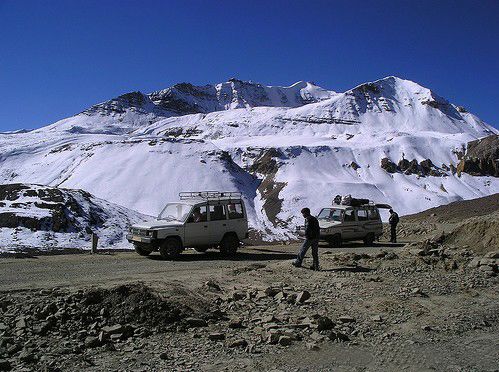
Leh-Ladakh is truly a voyage into the most magnificent peak and religious zone of the world. The best time to visit Lakadh is from the months of June to September which are its summer months.
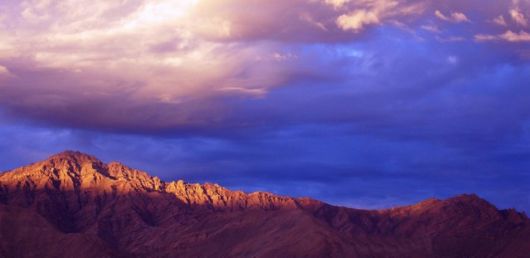
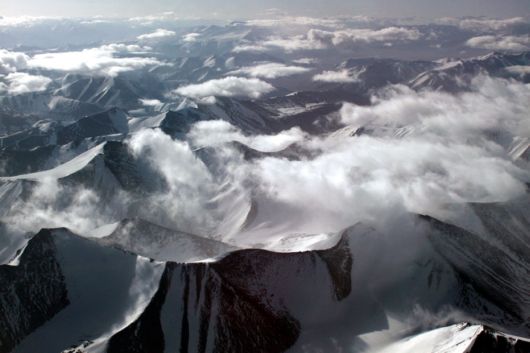
1. An aerial view of the Himalayas as the flight from New Delhi prepares to land in Leh.
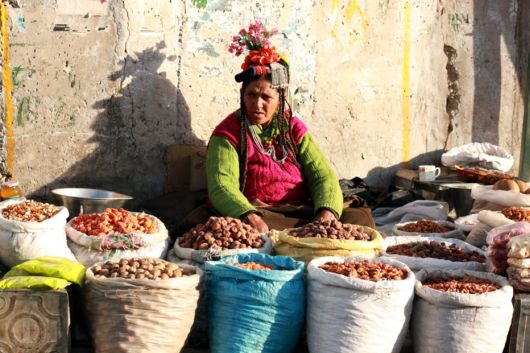
2. A vendor of dried fruit and nuts sits at the Leh market wearing the traditional Brokpa costume and headgear, waiting for customers.
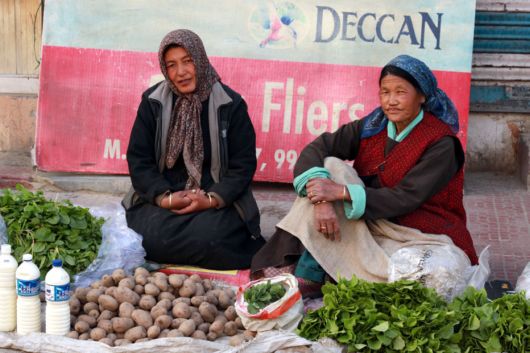
3. Vegetable vendors display their wares in the main market of Leh. During the harsh winter months, supply of fresh vegetables and poultry to Ladakh is completely cut off.
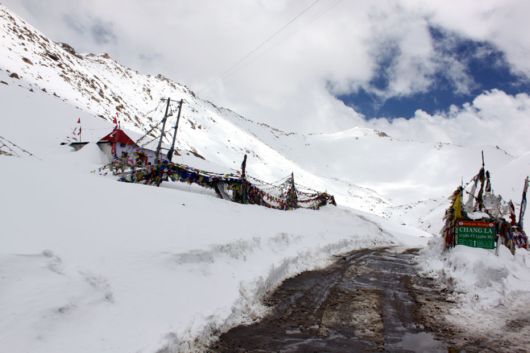
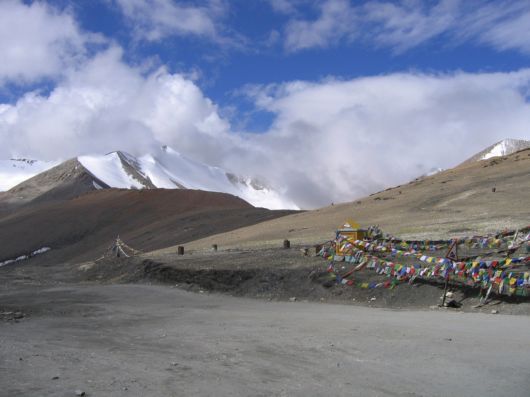
4. Changla Pass, at 5,360 meters, is proudly proclaimed the third-highest motorable pass in the world.
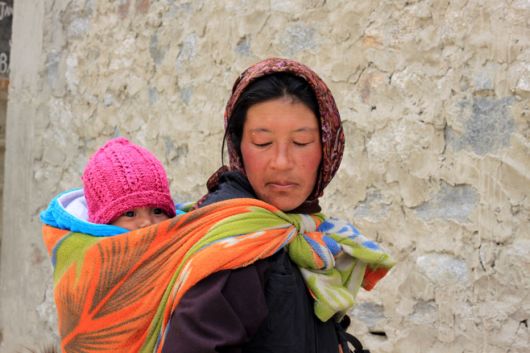
5. A young Ladakhi woman carries her small daughter in the customary manner.
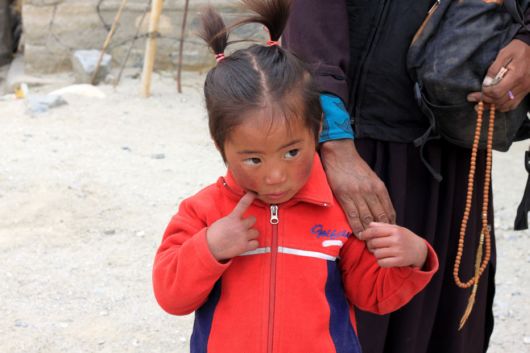
6. This little Ladakhi girl smiles from a distance but is shy when it comes to posing for the camera.
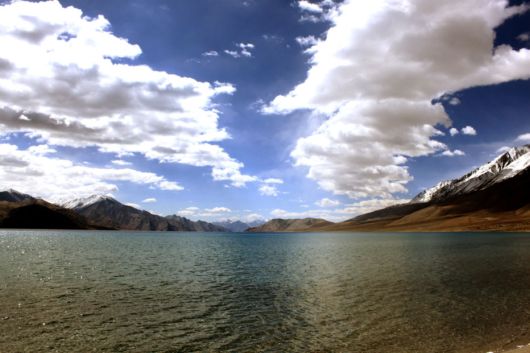
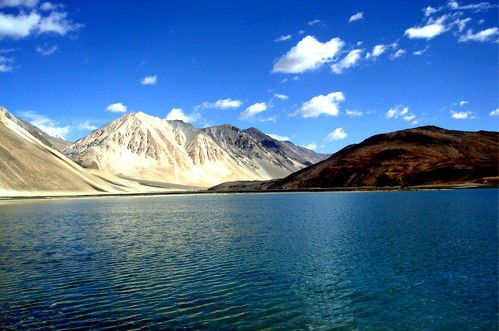
7. Cloudscapes at Pangong Lake, situated at an elevation of 4,250 meters and stretching 134km only a third of the lake is in India, with the rest in Tibet.
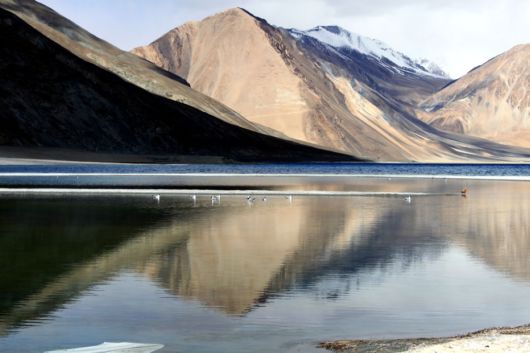
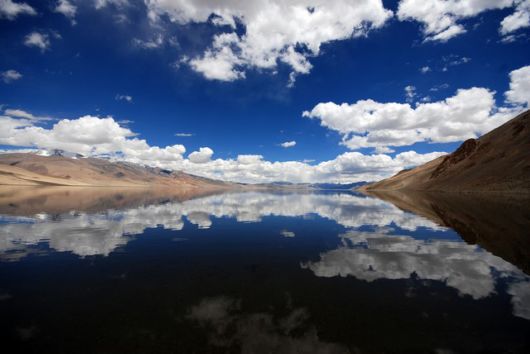
8. Reflections of the mountains on a dull grey morning near Pangong Lake.
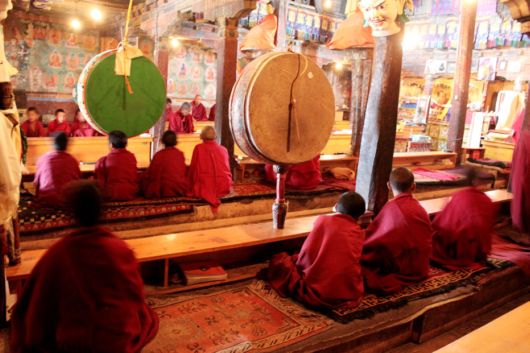
9. Young monks in training during an early morning prayer session at the Thiksey monastery near Leh.
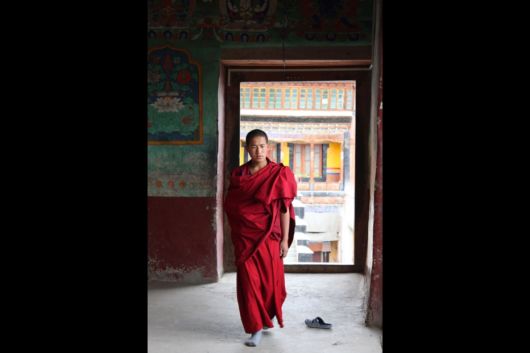
10. A solitary monk walks in for his morning prayers at the Thiksey monastery.
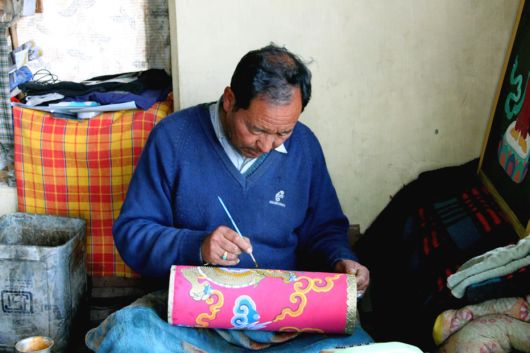
11. Traditional painter Norboo Sonam works at his home in Likir, a couple hours? drive from Leh.
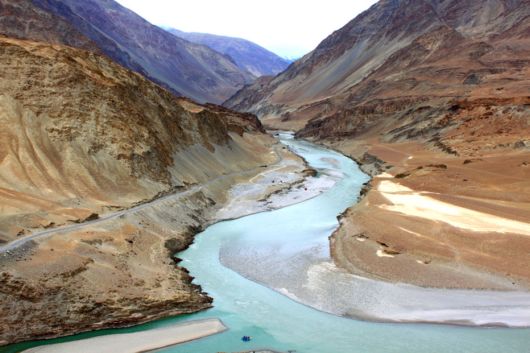
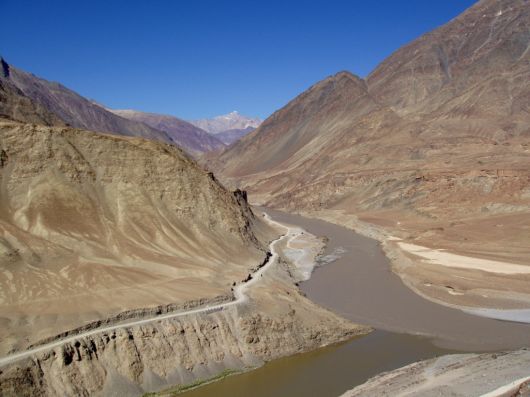
12. At the confluence of the Zanskar and Indus rivers, near the village of Nimmo, an hours drive from Leh. From here the blue green waters flow to Pakistan.
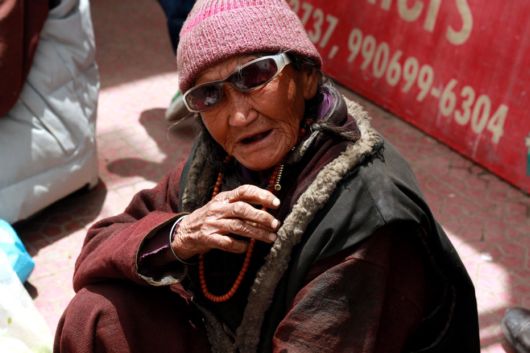
13. An old woman wearing protective sunglasses against the harsh mountain light at the main market in Leh.
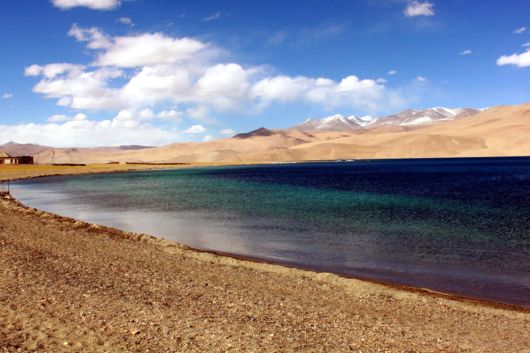
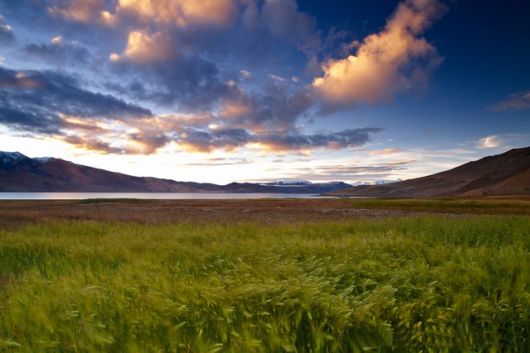
14. The other high-altitude lake of Ladakh, Tso Moriri, whose waters change color with the whims of the sunlight.
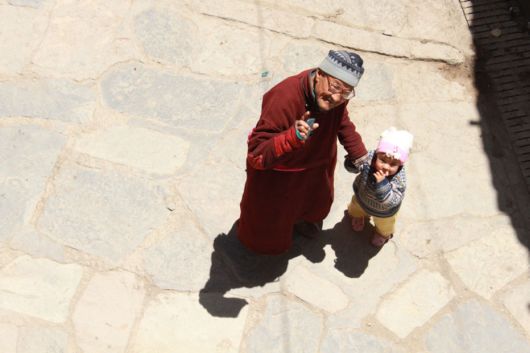
15. A Ladakhi grandfather walks with his young grandson on the streets of Leh.