

Two Bright Planets, One Early Alarm: Spot Mars and Jupiter from India
The Mars and Jupiter conjunction will bring two bright planets unusually close in the eastern sky before sunrise on November 15 and 16. NASA says they will sit about 1.2 degrees apart, close enough to appear as a striking pair to the unaided eye. For viewers in India, the best plan is simple: find a clear southeast horizon and step outside before dawn.
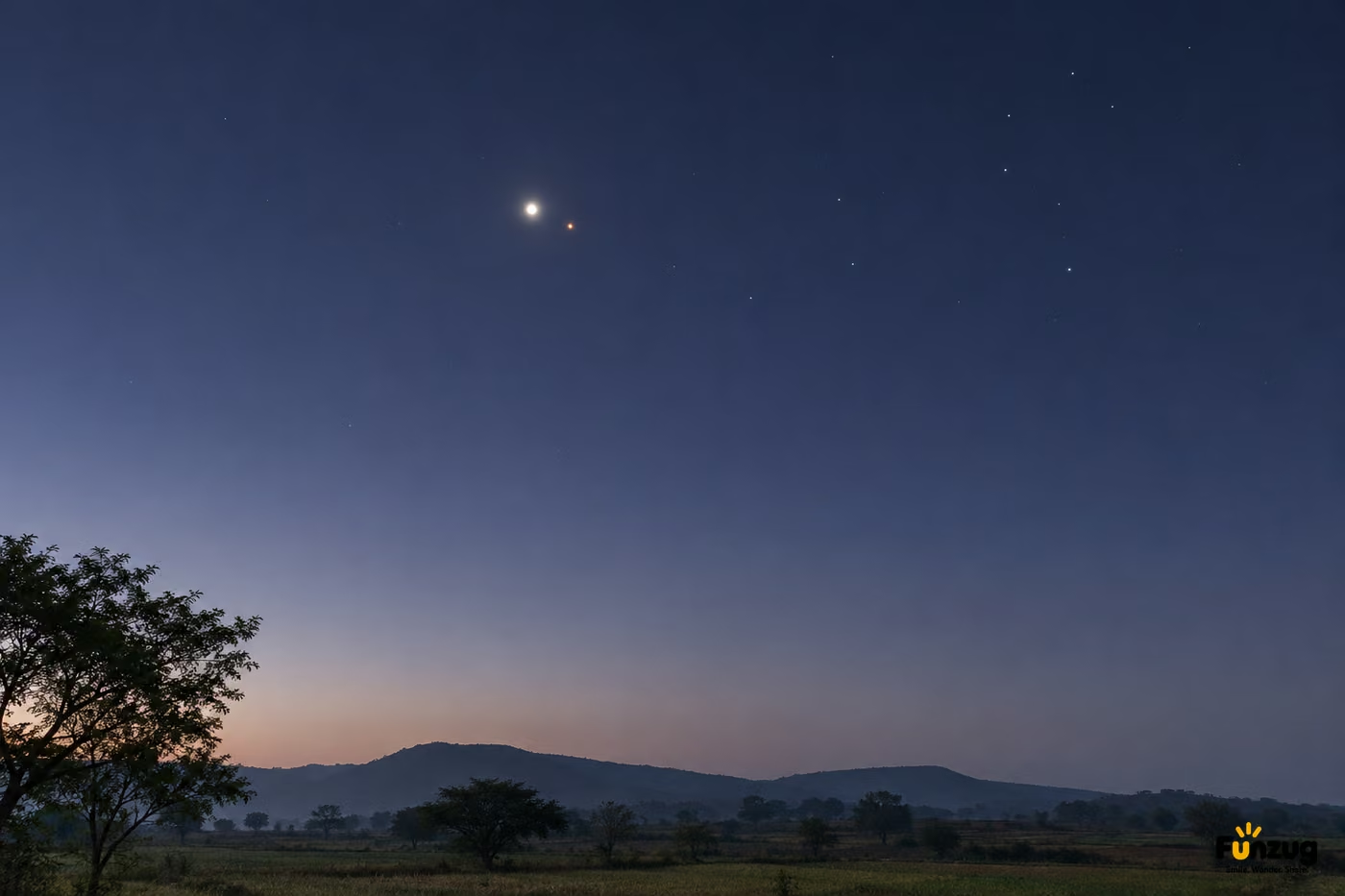
When to see the Mars and Jupiter conjunction from India
Set an alarm for both mornings if the weather allows. The planets are expected to be closest in appearance on November 15 and 16. Look southeast during the hour before local sunrise, while the sky is still dark enough to show the planets. Sunrise times vary across India, so check the local forecast and sunrise time for your city rather than relying on a single national clock time.
Choose a rooftop, open ground, beach or hill with a wide view toward the southeast. Buildings, trees, haze and bright street lighting can hide low objects. If you are in a city, move to a place where the horizon is not blocked. Give your eyes a few minutes to adjust and avoid looking at the rising Sun as daylight begins.
How to tell the planets apart
Jupiter will be the brighter point of light. Mars will appear nearby with a subtler reddish tint. Neither planet should twinkle as sharply as many stars, although haze close to the horizon can make them shimmer. NASA estimates their apparent separation at roughly 1.2 degrees, a little wider than two full Moon widths placed side by side.
The Mars and Jupiter conjunction is a line-of-sight effect. The two planets are nowhere near each other in space; they only share a small patch of our sky from Earth’s point of view. Watch on consecutive mornings and their positions will shift against the background stars as the planets continue along their separate orbits.
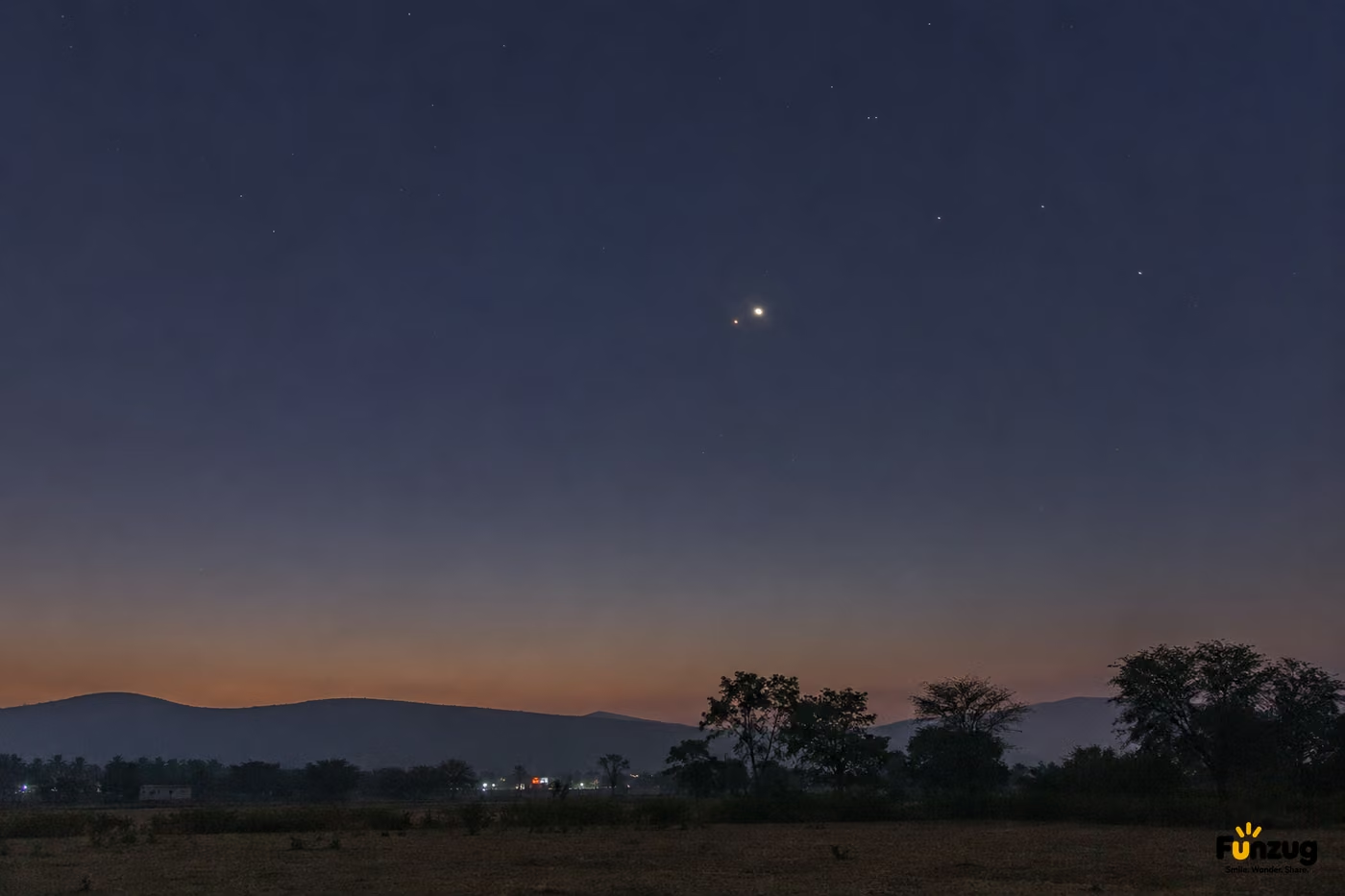
Can you see it without equipment?
Yes. Both planets should be visible to the naked eye in a clear sky, so a telescope is not necessary. Binoculars can help you pick them out if the horizon is bright, but keep them pointed away from the Sun once dawn approaches. A phone camera may record the scene more easily if you include a skyline, tree or rooftop for context. The planets themselves will look like tiny points, not large discs.
For a simple photograph, brace the phone against a railing, tap the brighter planet on screen and lower the exposure slightly if the sky turns pale. Take a few frames rather than expecting a perfect image on the first try. If clouds cover the pair on one morning, try the next. NASA’s November 2026 skywatching guide lists the dates and provides a chart showing where the planets appear.
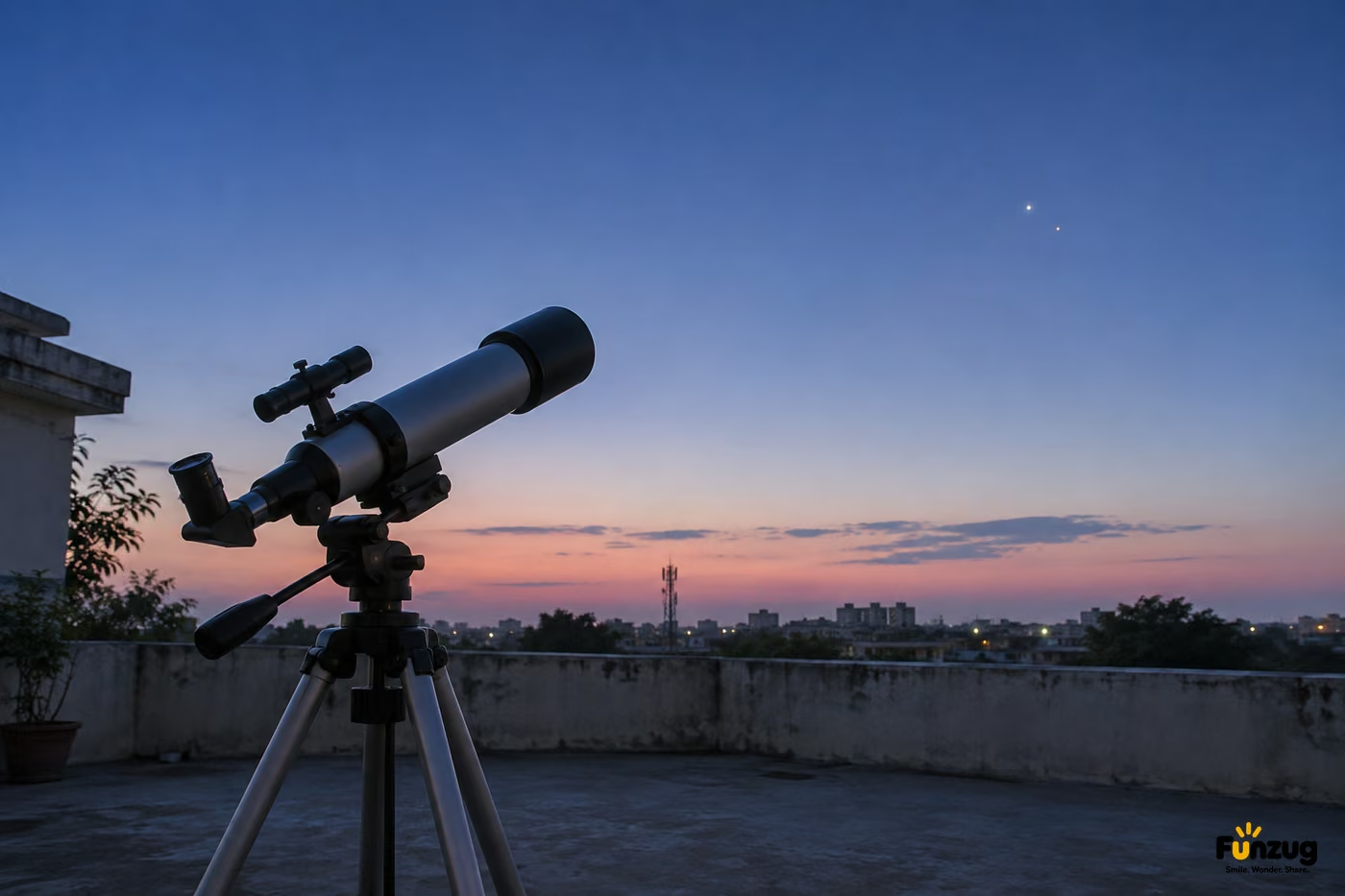
A small sky event worth slowing down for
The Mars and Jupiter conjunction is an easy event for beginners because both planets are bright enough to find without specialist gear. It also shows how quickly the night sky changes. Make a note of where the planets sit relative to a rooftop or tree, then compare the view the following morning. You can also browse these space photographs shared by astronaut Douglas Wheelock for another view of the planet we watch from below.
For India, the key is a clear southeast view before sunrise on November 15 or 16. Even a few minutes outside can be enough to catch Jupiter’s bright glow and Mars beside it before dawn washes the scene away.
Weather matters more than equipment. A thin layer of cloud or pollution near the horizon can hide a planet even when the rest of the sky looks clear. Check local conditions shortly before heading out, and choose a safe place with an unobstructed view. If the first morning is cloudy, the second gives you another chance to compare their positions.


