

The November Supermoon Is Coming: How to Photograph It from India
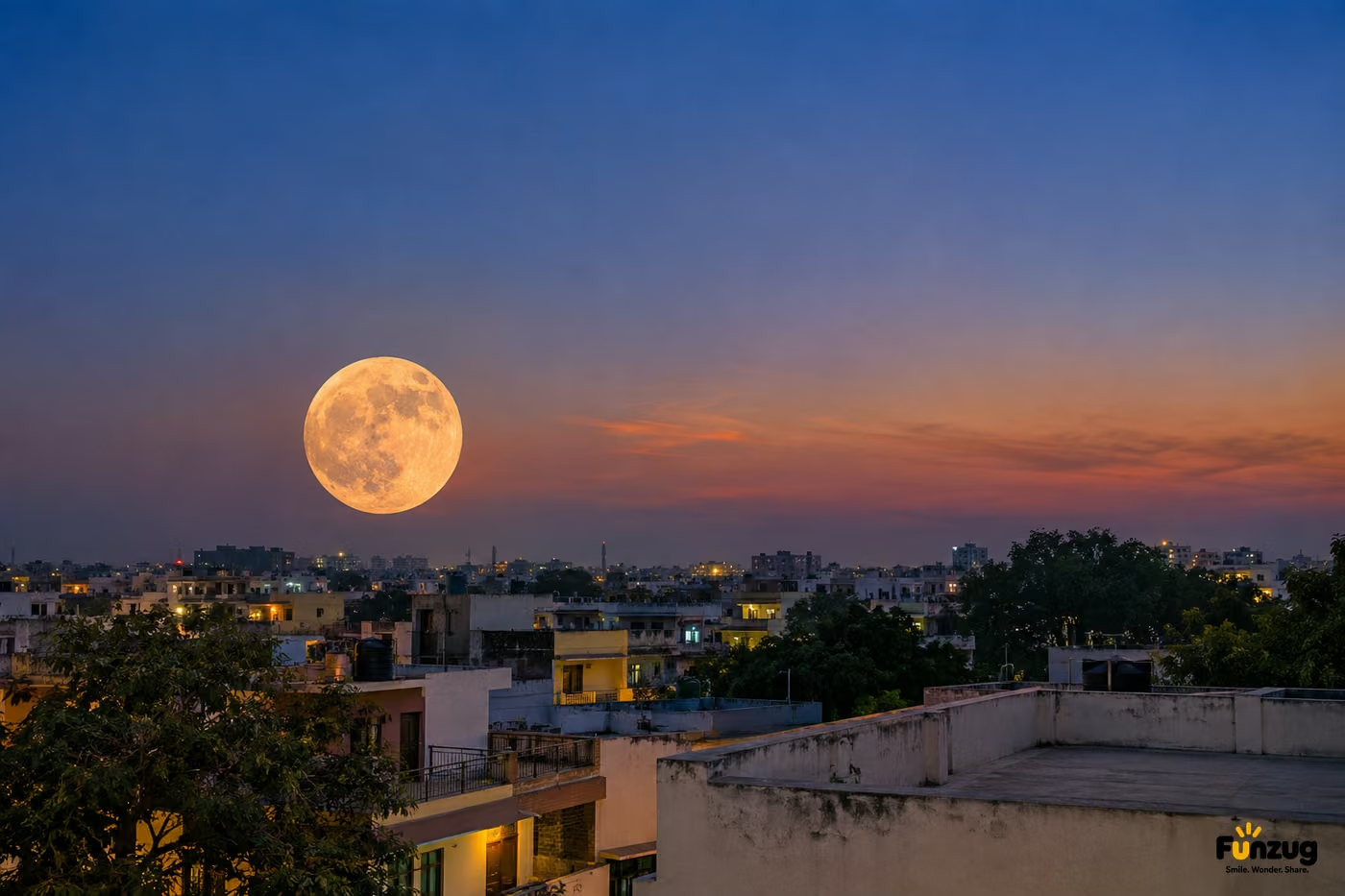
Photographers across India can plan for the November 2026 supermoon on Tuesday, November 24. The full Moon reaches its exact phase at 8:24 pm IST, but the best pictures may come earlier, near local moonrise, when the Moon sits above buildings, trees or a distant ridge. The hour around sunset also gives phone cameras more light to work with than a dark night sky.
What makes this Moon a supermoon?
NASA lists the November full Moon as a supermoon because it occurs close to the Moon’s nearest point in its orbit around Earth. “Supermoon” is not an official astronomy term. Under a common definition, it describes a full Moon that occurs within 90 percent of perigee. The change in apparent size is real but modest. NASA says a full Moon at its closest can look up to 14 percent larger than the faintest full Moon of the year, a difference many people may not notice without a direct comparison.
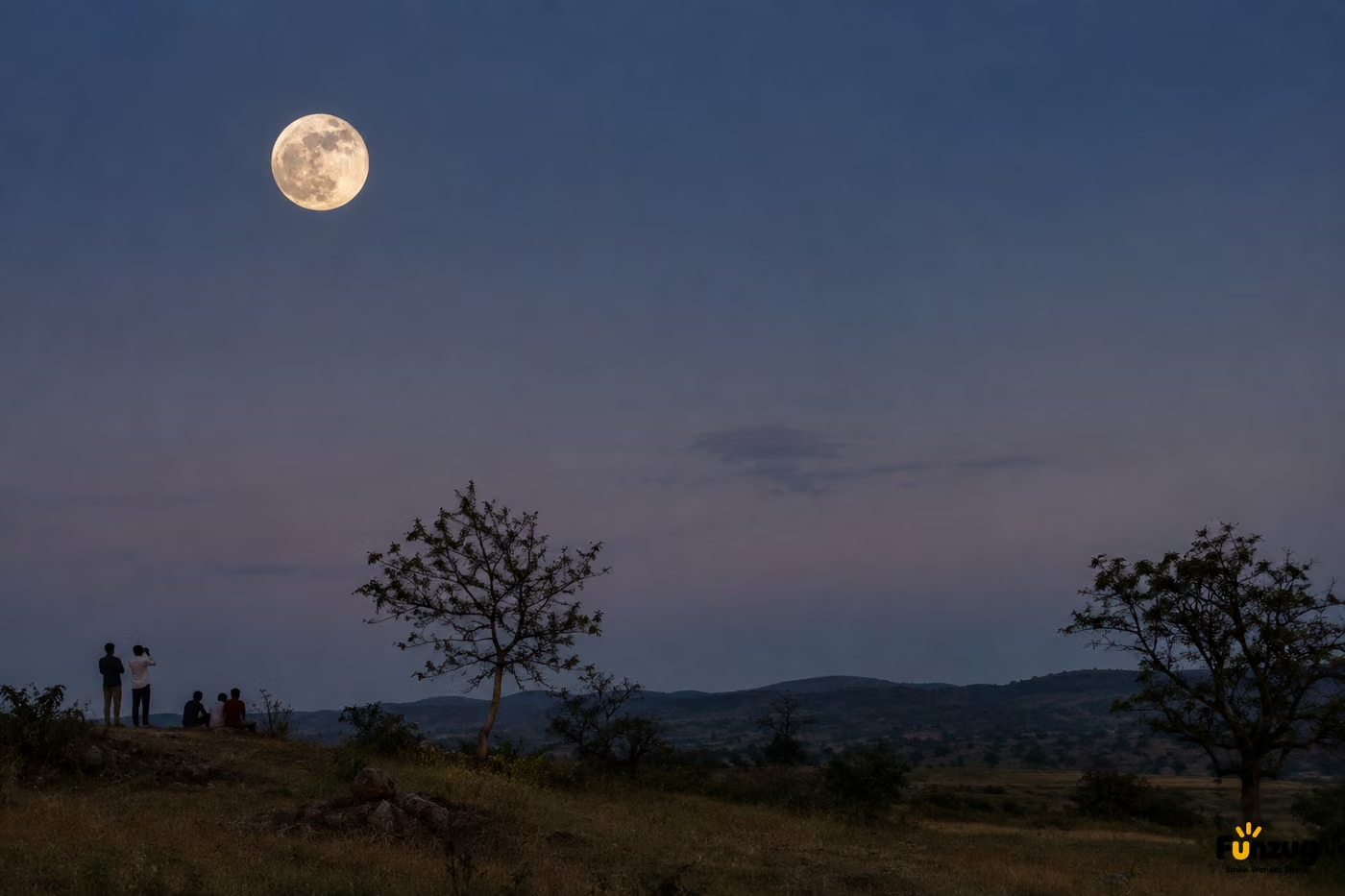
That is why composition matters more than chasing an exaggerated Moon. A landmark, tree line, temple roof or person in silhouette can give the image scale and a sense of place. The Moon illusion can also make it seem larger when it sits near the horizon, even though a camera measurement shows little change in its apparent diameter.
Find your local moonrise
Moonrise changes by location, so check a local calendar for your city and arrive 20 to 30 minutes early. NASA’s November skywatching guide recommends looking east around sunset. In Delhi, for example, timeanddate lists the Moon rising at about 4:56 pm on November 24. Other cities will have different times and directions, so use the calendar for your own location. Choose a clear eastern horizon, check cloud and haze forecasts, and avoid spots where buildings block the first part of the rise.
For the November 2026 supermoon, pick a location with room to move sideways as the Moon rises. A small shift can place the disc beside a rooftop, tower or tree without changing your camera settings. Check access and lighting at the site before you go, and keep a backup location in mind if the eastern horizon is blocked.
How to photograph the November 2026 supermoon
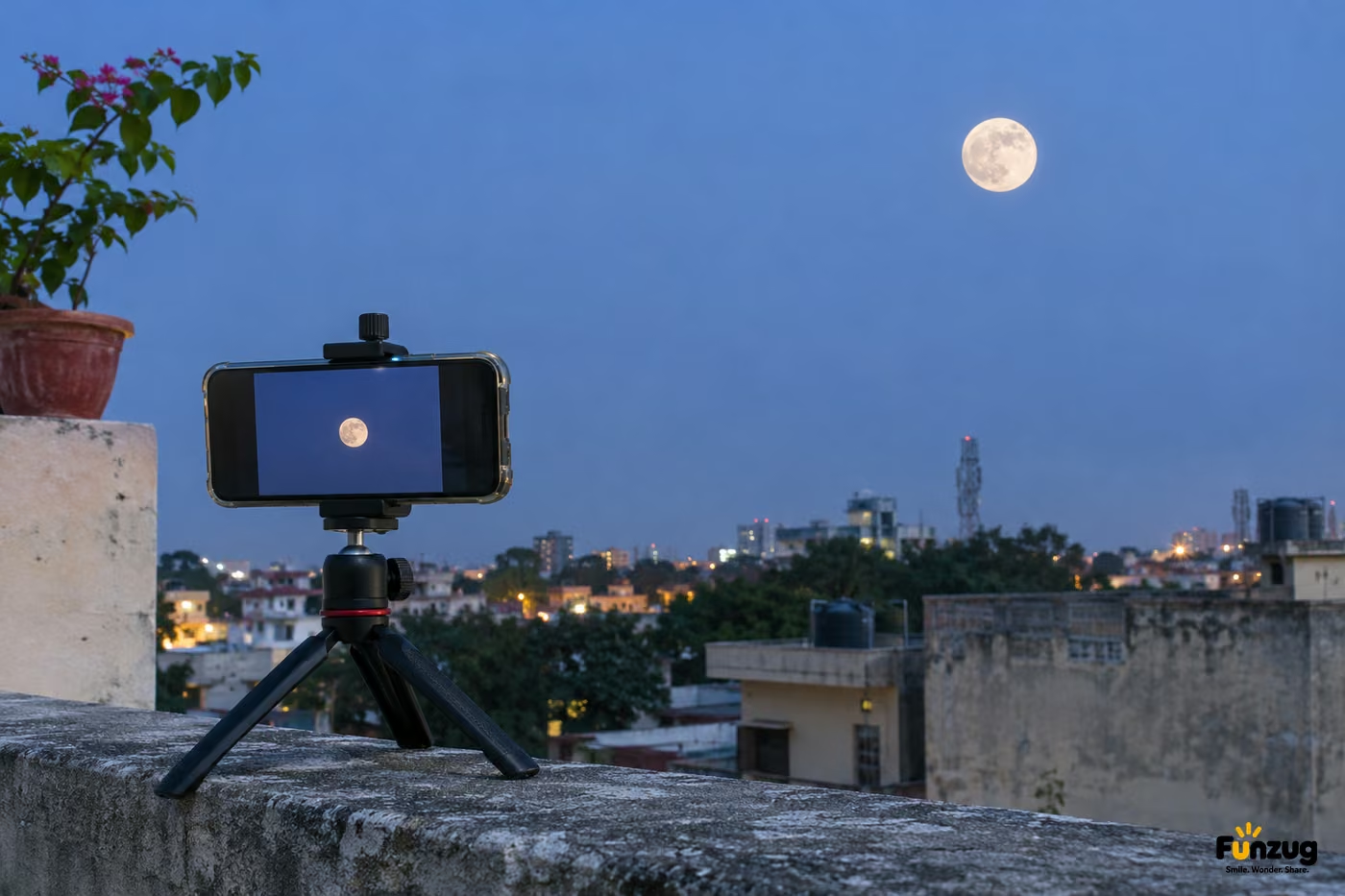
Clean the lens, steady the phone against a railing or use a small tripod, and turn off flash. Tap the Moon on screen to focus, then lower the exposure until the bright disc is not a featureless white patch. If your phone lets you control shutter speed and ISO, start with a low ISO and a faster shutter than night mode normally chooses. Try modest optical zoom if your phone has it. Heavy digital zoom often enlarges blur rather than adding detail.
Use the timer so a finger press does not shake the phone. Take several frames and adjust focus and exposure between them. NASA’s lunar photography guide recommends focusing on the Moon, lowering brightness when needed and trying multiple shots. For a dramatic landscape, make one exposure for the Moon and another for the foreground. The bright lunar disc and a dark street or building can be too far apart in brightness for one phone exposure to hold detail in both.
Using a DSLR or mirrorless camera
Use a tripod and a telephoto lens if you want the lunar surface to occupy more of the frame. Manual exposure gives more control over the bright Moon. NASA describes the “Looney 11” rule as a starting point: set the aperture near f/11 and use an exposure time close to one divided by the ISO number. It is only a guide, so check the histogram and take test images. Lower ISO helps reduce noise, while a short shutter speed limits blur from camera movement and the Moon’s motion.
For a skyline portrait, use a longer lens and stand farther from the foreground subject. This changes the framing and can make the Moon look more prominent beside a landmark. Plan the position ahead of time, since the Moon moves steadily and the alignment may last only a few minutes.
Keep the expectation realistic
The November 2026 supermoon is a reason to make a simple plan, not a guarantee of a giant Moon or clear skies. A stable phone and thoughtful foreground usually matter more than buying equipment. If the weather turns, try again the following evening; the Moon will still appear nearly full. For more celestial imagery, see Funzug’s gallery of photographs from space.
NASA’s supermoon calendar lists the November 24 event at 14:54 UTC, which is 8:24 pm in India. The November 2026 supermoon will remain nearly full the following evening. Use local moonrise time for your camera plan, then keep shooting as the Moon climbs into the evening sky.


