

Close Enough to Surprise You: Inside CUPOTY’s 2026 Photo Shortlist
The CUPOTY 2026 shortlist turns familiar animals into miniature worlds. The newly announced CUPOTY 8 shortlist does exactly that, moving from a bat dipping into a waterhole to an insect carrying prey and a nautilus hitching a ride beneath the sea. The 2026 selection spans 11 categories, and the overall winners are due in January 2027, according to the competition’s official site.
The scale is part of the appeal. Close-up Photographer of the Year, known as CUPOTY, welcomes macro and micro photography as well as wider close-ups. DPReview reports that 15,388 photographs were submitted across the categories this year. The shortlist rewards more than magnification: it brings together patient observation, unusual behaviour, strong composition and a sense of discovery.
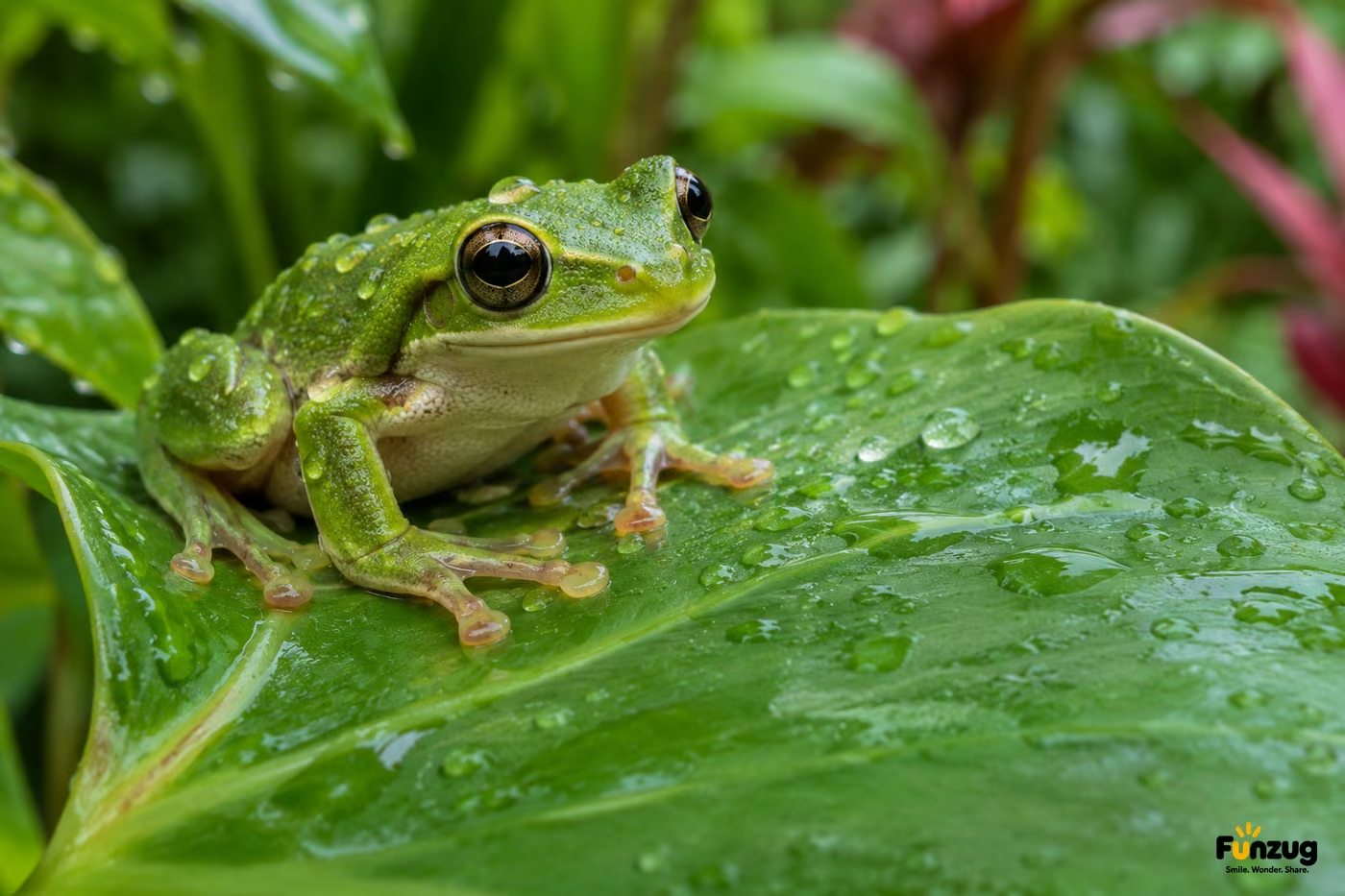
CUPOTY 2026 shortlist: small scenes with a story
Among the animal entries, Hira Punjabi’s “Bat Bath” catches bats visiting a waterhole at Kenya’s Shompole Conservancy. The moment is both practical and unexpectedly charming: the animals use the water to cool off during hot weather. The image asks viewers to pause over a behaviour that might otherwise pass unseen.
Indian photographer Sarthak Agrawal found a different kind of drama on a quiet road outside Aurangabad, Maharashtra. In “Golden Dust,” a Eurasian hoopoe takes a dust bath, with low sunlight illuminating the particles around it. The scene feels almost theatrical, but it records a useful part of the bird’s routine. Dust bathing helps birds maintain their feathers and can reduce parasites.
Another Indian photographer, Bidyut Kalita, is shortlisted in the arachnid category for “Stilled for Survival.” The photograph follows a solitary wasp subduing a spider. Rather than killing its prey outright, the wasp paralyses it and carries it to a nest, where it will provide food for its young. The behaviour is unsettling at first glance, yet it shows how closely a predator’s actions are tied to the next generation.
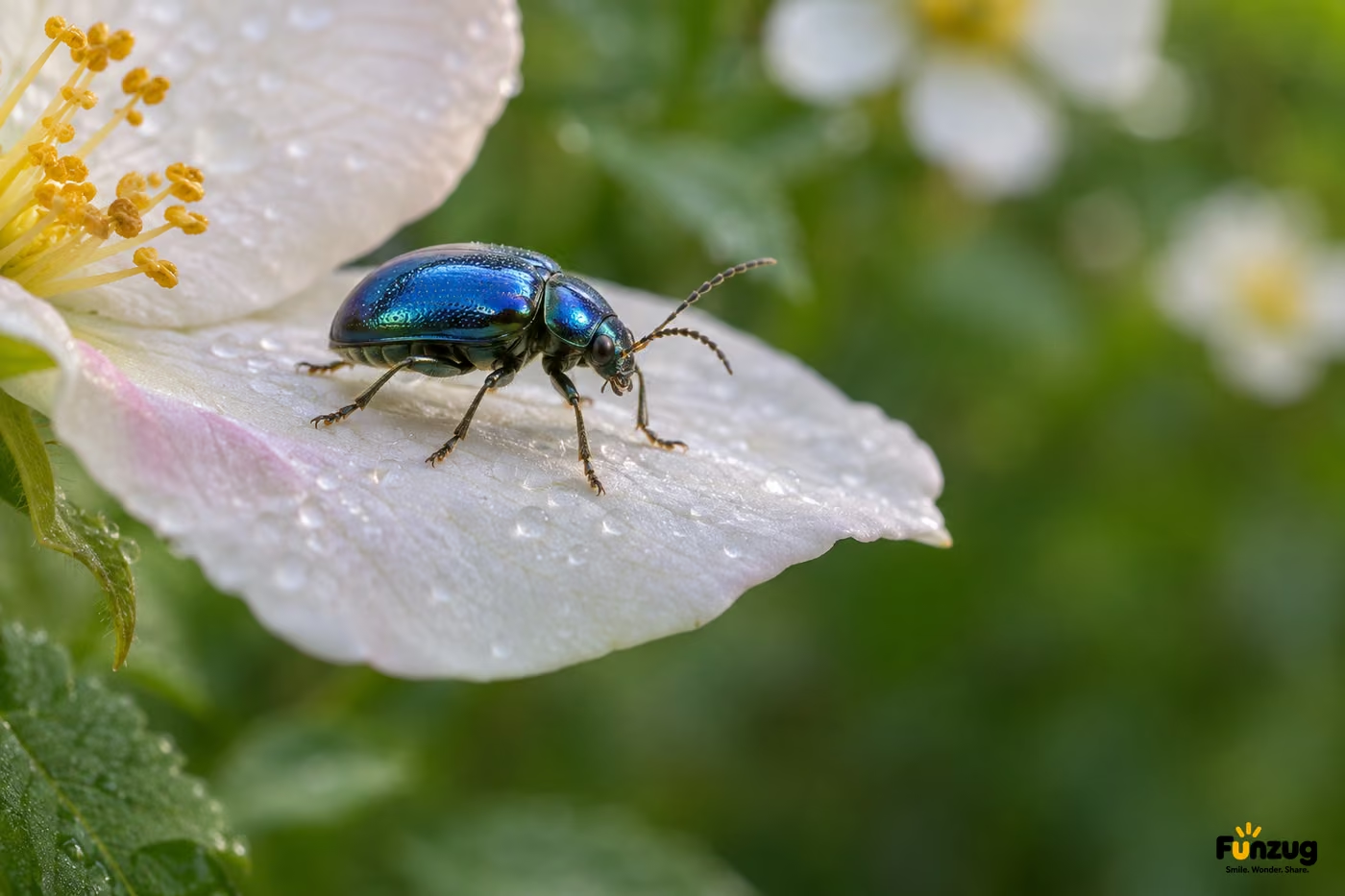
From sea life to a puffin’s pose
Some shortlist pictures make their impact through shape and timing. James Rogerson’s “Cloaked Auk” frames an Atlantic puffin resting on the cliffs of Shetland, its bill tucked into its feathers. The arrangement gives the bird a neatly folded silhouette, while the cliff habitat keeps the portrait grounded in place.
Underwater photographer Alexei Magai’s “Paper Nautilus” looks at a very different kind of journey. Paper nautiluses can use floating objects, including jellyfish, as transport. The image turns that odd partnership into a compact visual story about life in the open water.
These entries also show why a strong wildlife image does not need to explain everything at once. A gesture, a reflection or a small shift in light can invite a second look. For more animal surprises, Funzug readers can revisit this gallery of unusual animals.
What to look for in the shortlist
The official CUPOTY shortlist is arranged across subjects including insects, plants, fungi, underwater life, intimate landscapes and studio art. That range helps the competition avoid treating macro photography as a single look. Some images are scientific in their detail; others use colour, shape or perspective to make a tiny subject feel unfamiliar.
When viewing the galleries, notice where the photographer places the subject, how the background directs attention and whether the picture shows a behaviour or simply a striking form. Those choices are often what separate a technically sharp close-up from an image that stays in the mind.
The full finalist galleries are available through the CUPOTY website. Its 2026 winners will be announced in January, giving viewers time to explore the shortlisted work and choose their own favourites.
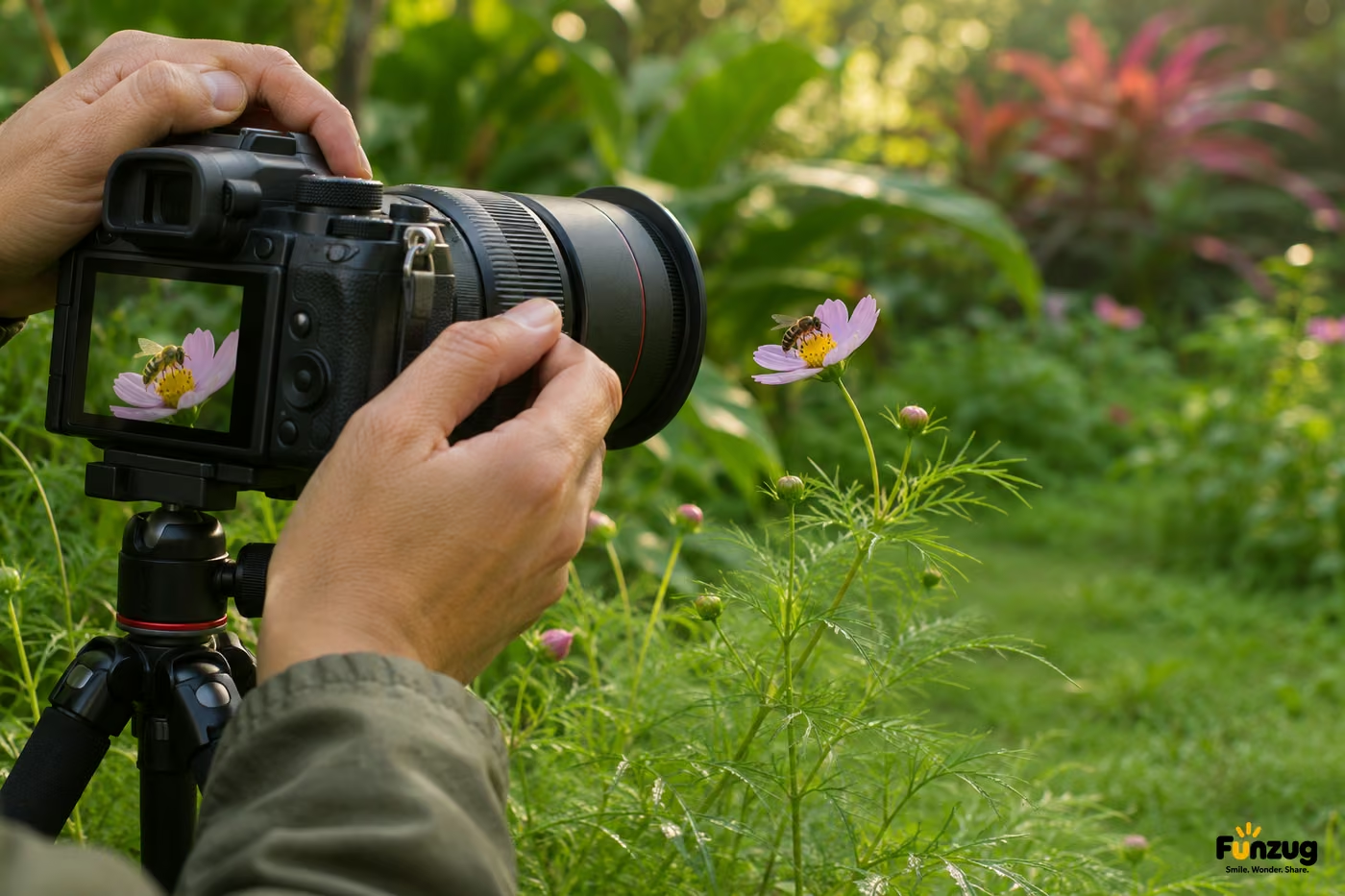
How the close-up changes the story
Photographers working at this scale often wait for a narrow window. A bat may visit a waterhole for only seconds, and a wasp carrying prey can disappear into vegetation. The photographer has to anticipate movement while also managing depth of field, light and a background that does not distract from the subject. In macro work, even a slight change in angle can alter the whole picture.
That technical challenge is only one part of the result. The best images give viewers enough context to understand what they are seeing, while leaving room for surprise. A familiar species can appear strange when seen close, and a tiny animal can seem monumental when its eyes, wings or habitat fill the frame. This is why the CUPOTY 2026 shortlist moves easily between natural history and visual storytelling.
The CUPOTY 2026 shortlist’s category galleries make a useful viewing route. Readers can compare how each photographer approaches light, scale and behaviour. Start with animals and insects for behaviour, then move to underwater photographs and fungi for colour and texture. The intimate landscape and studio art sections widen the idea of close-up photography even further. By the time the winners are announced in January, viewers will have plenty of reasons to return to the shortlist and compare their own favourites.


