

Inside Pradasphere: How Prada Turned Its Milan Archive Into an Exhibition
Pradasphere Milan is Prada’s permanent exhibition inside the city’s Galleria Vittorio Emanuele II. It traces the house’s history from its 1913 beginnings to the present. Spread across eight rooms, the display places archive pieces beside objects shaped by the brand’s links with art, architecture, film, culture and sport. A spacesuit prototype points toward future collaborations, while the surrounding rooms show how a fashion label can build its own archive into a visitor experience.
Pradasphere Milan is designed as a cultural stop as much as a display of fashion history, with a route through objects and collaborations that shaped the house.
The exhibition sits above Marchesi 1824, the historic Milanese pastry shop, as part of the larger Prada Galleria project. The Prada Group announcement describes Pradasphere as the first permanent exhibition dedicated to the company. The Associated Press’s report from the opening details a visit that moves from archive fashion to a subterranean passage, with objects including silver-covered bags, signature shoes and an Axiom spacesuit prototype.
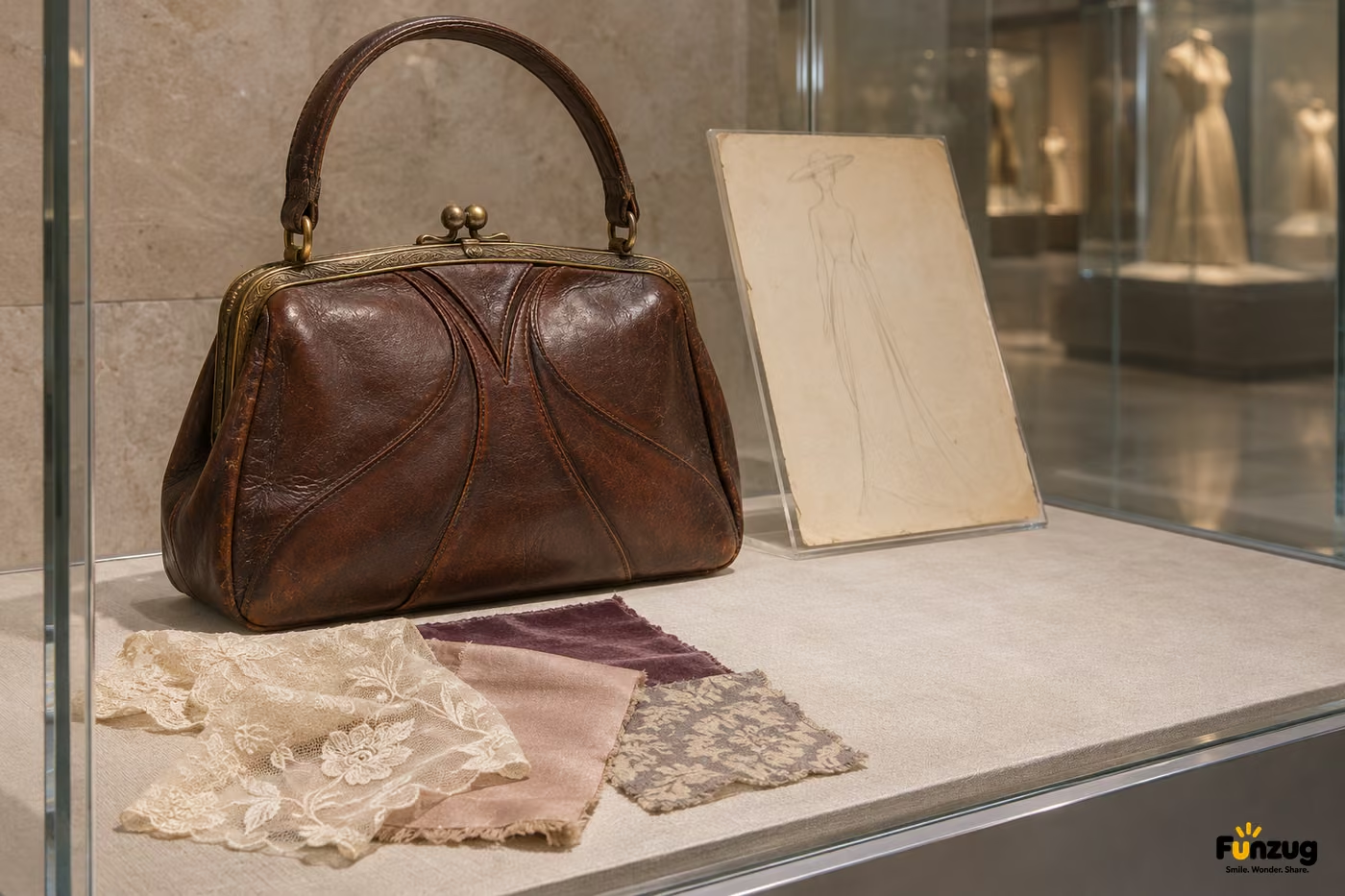
Pradasphere Milan: an archive designed for visitors
Fashion archives often sit behind the scenes, where they support research, exhibitions and the design process. Pradasphere makes selected pieces part of a public-facing story. The visitor does not encounter a simple timeline of collections. Instead, rooms connect garments and accessories to wider cultural references, showing how the house has worked across disciplines over more than a century.
The setting matters. The Galleria is one of Milan’s best-known historic shopping arcades and the site of Fratelli Prada’s original store. The exhibition is woven into a contemporary retail and hospitality destination, with boutiques, Marchesi 1824 and other spaces sharing the complex. The arrangement makes the visit part of the city’s everyday centre rather than a trip to a separate museum district.
That mix of heritage and commerce raises a question worth considering: what happens when a brand tells its own history? The company can bring together objects that might otherwise be scattered across private archives, and it can explain the design decisions behind them. The presentation is also curated by the brand, so visitors are seeing a story shaped by Prada’s own choices about what belongs in the frame.
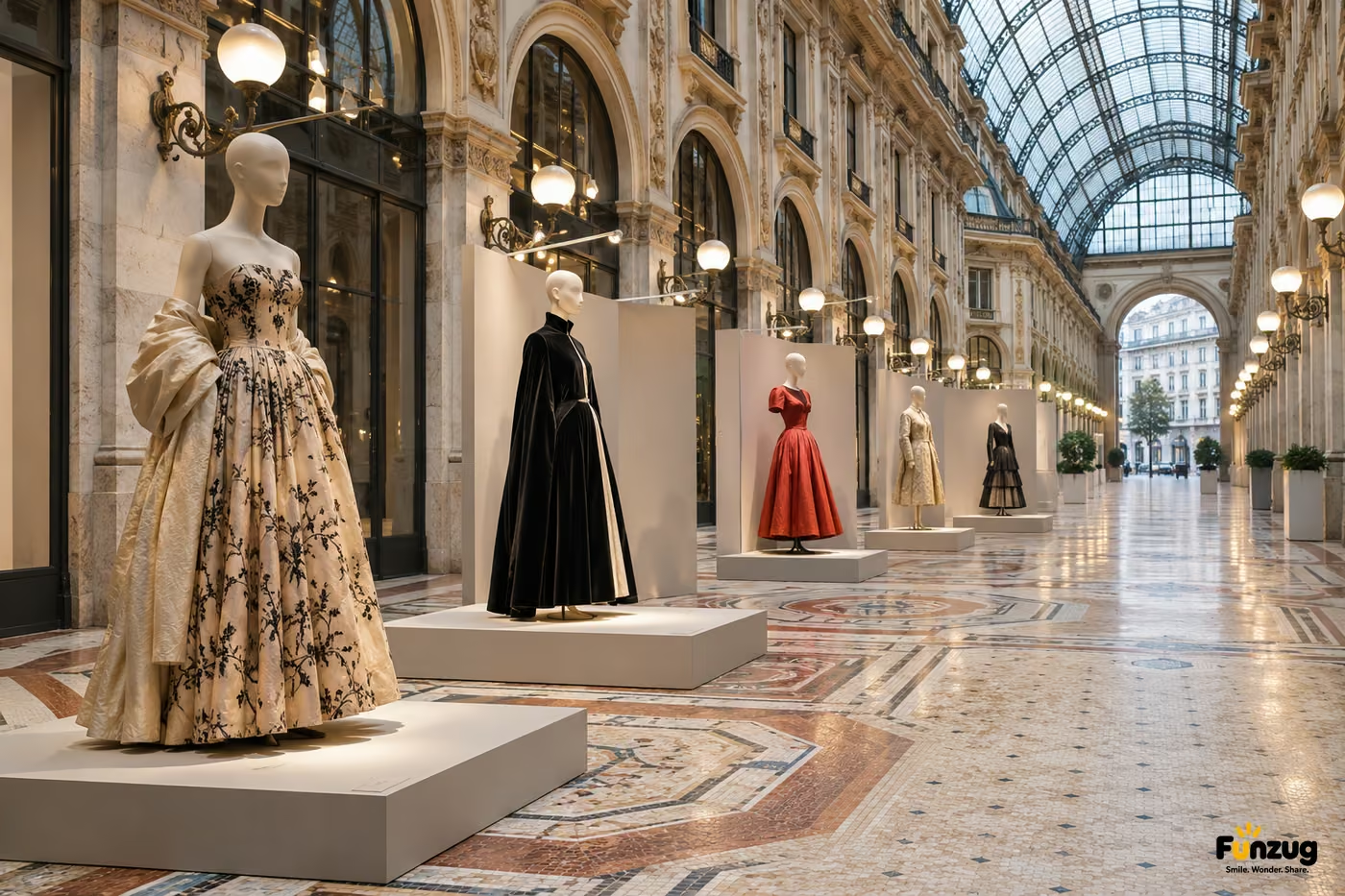
From archival fashion to the future
Some of the display’s most memorable details are visual. A-line skirts suspended above visitors turn clothing into an architectural feature. Silver surfaces catch the light in a passage below the main rooms. The Axiom spacesuit prototype, intended for the Artemis IV mission, links the company’s design work to a future-facing collaboration rather than a familiar runway season.
These objects help explain why fashion exhibitions can attract visitors who are not following every collection. Clothing carries clues about technology, materials, taste and the era in which it was made. An accessory can show a shift in construction; a film or photograph can reveal how a design was presented to the public. A carefully staged exhibition makes those connections easier to see.
For readers interested in how fashion objects become part of museum history, Funzug has previously looked at the handbag museum in Seoul, where the collection spans centuries of design. Pradasphere takes a different route by centring one house and its changing identity, but both settings treat accessories as more than products.
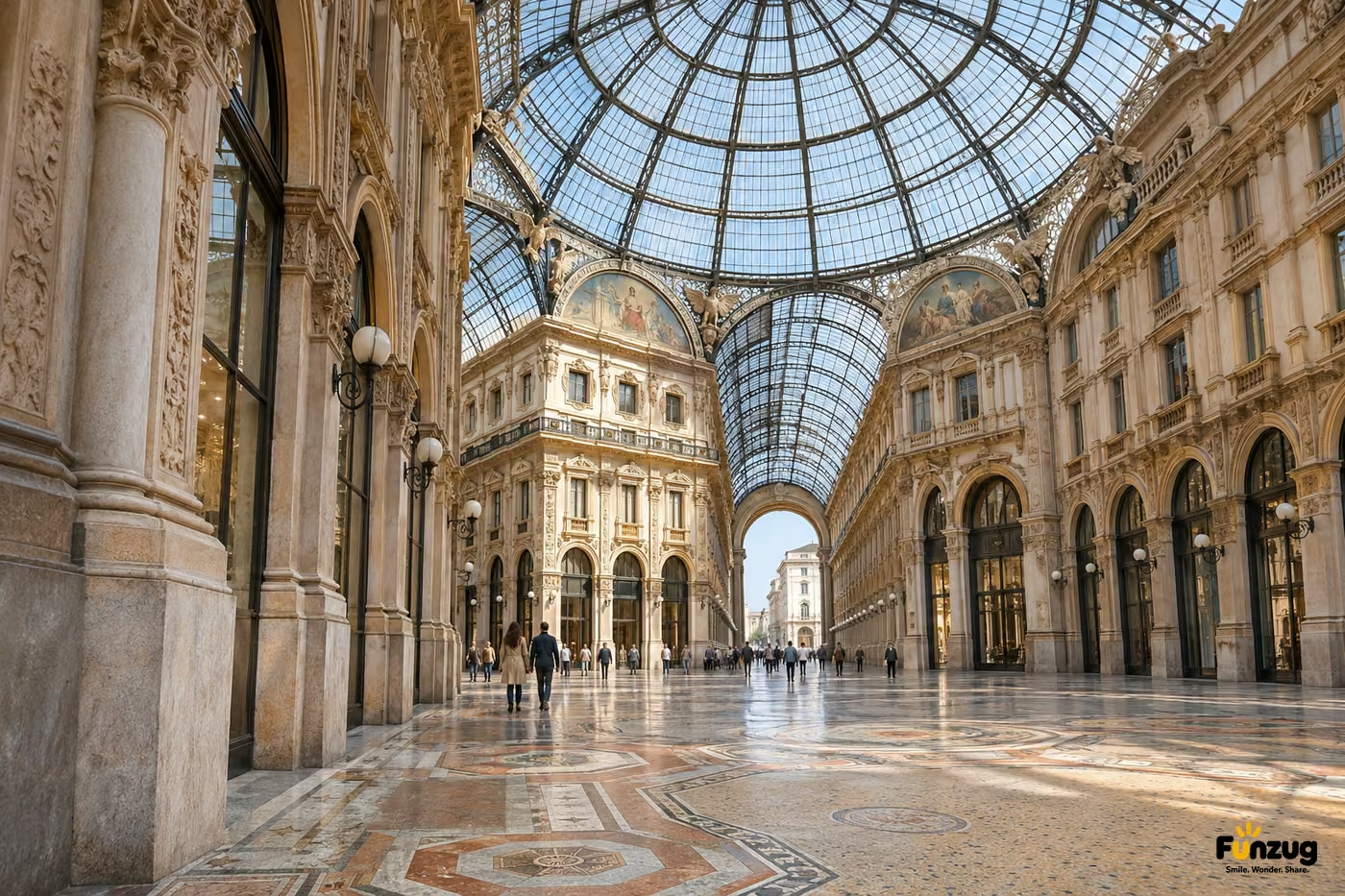
Planning a visit
Pradasphere is located within Prada Galleria in the Galleria Vittorio Emanuele II. Prada Group says the exhibition is accessible upon registration. Visitors should check the official Pradasphere page for current entry details before making plans, since access and booking availability can change.
The exhibition’s permanence gives it room to evolve while keeping the archive in public view. Its most interesting promise is not simply a look back at famous designs. It is the chance to watch a fashion house frame a century of work, set its own history against a changing city and show how its next chapter might be imagined.
What the setting adds
The exhibition’s address gives the story a useful point of reference. The Galleria’s glass roof, mosaics and covered walkways were part of Milan’s public life long before the new display opened. Prada Galleria uses several levels of the historic arcade for retail, hospitality and cultural spaces. That arrangement sets old and new architecture beside one another, making the building itself part of the visit.
For a first-time visitor, it helps to separate the exhibition from the wider complex. Pradasphere is the archive display, while the larger Prada Galleria includes shops, the pastry shop and spaces for appointments or private events. Checking the official booking page before arriving is sensible, especially during busy travel periods. Opening arrangements can change even when an exhibition is described as permanent.


