

Would You Let AI Help Pick Your Holiday Gifts? What Shoppers Trust It to Do
AI gift ideas now come from the assistant built into a search engine, shopping app or chat tool. It can suggest presents, compare prices and scan product details in seconds. The useful question is not whether AI can produce a gift list. It is which parts of the decision shoppers are ready to hand over.

How AI gift ideas can help with holiday research
A 2026 Visa survey of 1,016 US adults found that more than half had already used AI for at least one shopping task. Respondents were most comfortable using it to compare prices, check availability, find discounts and suggest gift ideas. That makes AI gift ideas a fast research aid, especially when a shopper starts with a clear budget and a few useful constraints.
For example, a prompt can ask for book ideas for a reader who enjoys historical mysteries, with a limit of $30. A second prompt can compare formats, likely delivery dates and return policies. The shopper still needs to verify the details on the retailer’s own page, because product listings and prices can change. Funzug’s older online shopping checklist also covers the basics of checking a seller before ordering.
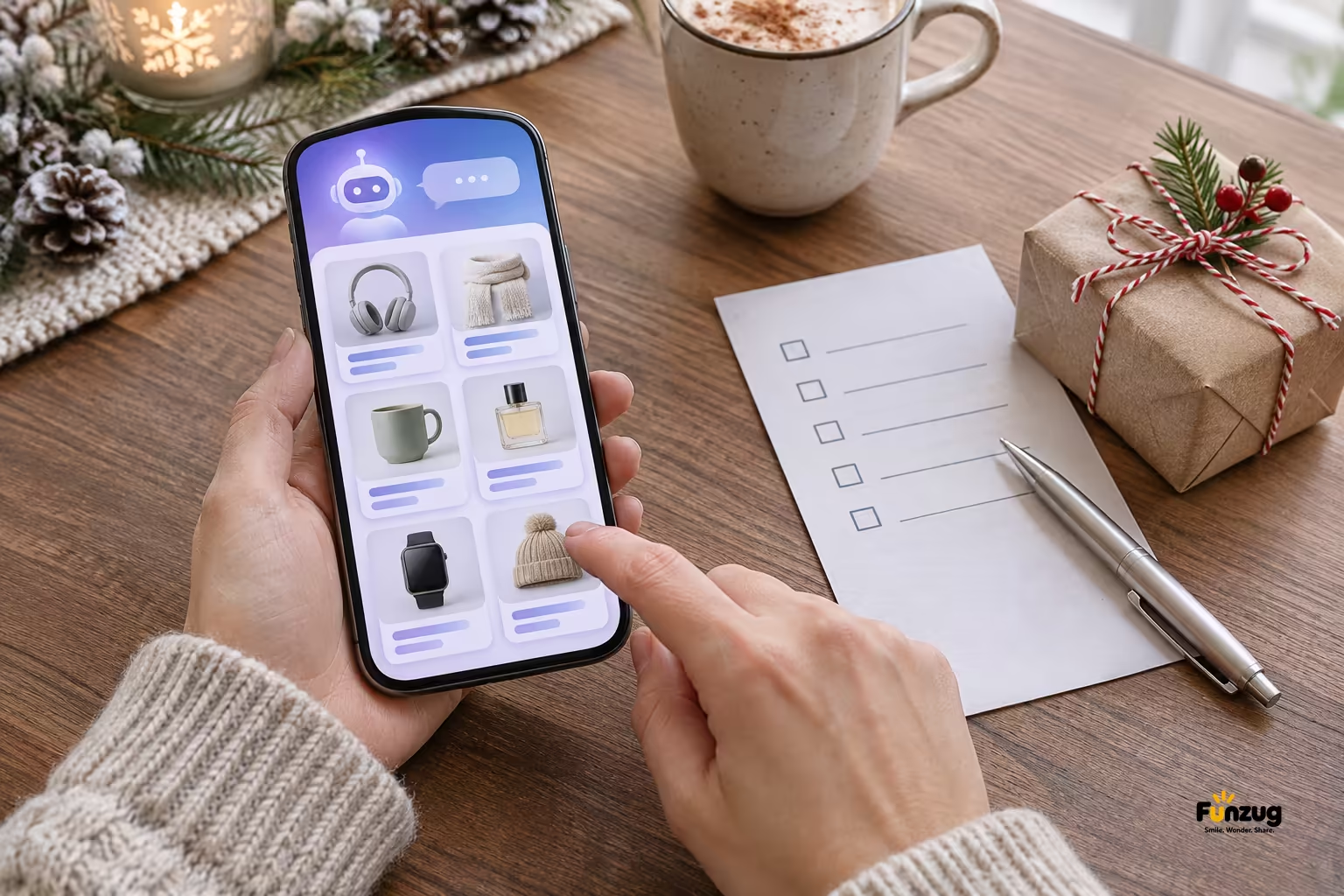
Discovery is easier to trust than payment
The same survey found a gap between getting help and handing over the transaction. Many respondents were open to recommendations, but only 23 percent said they trusted generative AI to handle payment transactions for them. That distinction matters. A tool can help narrow a list while the person keeps control of the final choice, seller and checkout.
That division can also make recommendations more useful. Ask for options and the reasons behind each one, then check whether the product is available from a seller you recognise. Compare the full cost, including shipping and any subscription or accessory the listing requires. A recommendation is a starting point, not proof that an item is the best value.
A safer way to use an AI gift finder
Give the assistant non-sensitive context: the recipient’s interests, the occasion, a spending limit and whether you need a physical item or an experience. Avoid entering passwords, payment details, private account information or information the recipient would not expect you to share. If a tool sends you to an unfamiliar seller, leave the link and search for the retailer independently.
It helps to ask the tool to separate facts from guesses. A useful follow-up is: “Which details should I verify on the seller’s page?” That can surface questions about size, compatibility, shipping and returns before you buy. For products with safety, health or age requirements, check the manufacturer’s instructions and relevant official guidance rather than relying on a generated summary. The US Federal Trade Commission’s online shopping advice also recommends checking sellers, product information and refund policies before placing an order.
The human part still makes the gift
AI can reduce the blank-page problem, but it cannot know a person as well as someone who spends time with them. A list becomes more personal when it reflects a shared memory, a hobby they are actively pursuing or a small problem they have mentioned. Use the assistant to widen the options, then choose the one that shows you were paying attention. In that role, AI gift ideas can save research time without replacing the thought behind the present.

Visa’s survey was commissioned by the company and conducted online in late September 2026. Its results describe the surveyed US adults, not every shopper or every country. For Funzug readers, the clearest takeaway is practical: AI gift ideas can help you brainstorm and compare, but verify important details yourself and keep the final purchase in your hands.
A quick checklist before checkout
Before buying, confirm that the listing is on the seller’s real website, check the delivery estimate, read the return terms and compare the total cost with another retailer. If the AI’s answer includes a product feature or a special offer, verify it directly. Keep the receipt and order confirmation. These small steps help separate a useful suggestion from a purchase that only looks appealing in a chat window.


