

Euclid: 3 Powerful Clues Hidden in Its New Galaxy Map
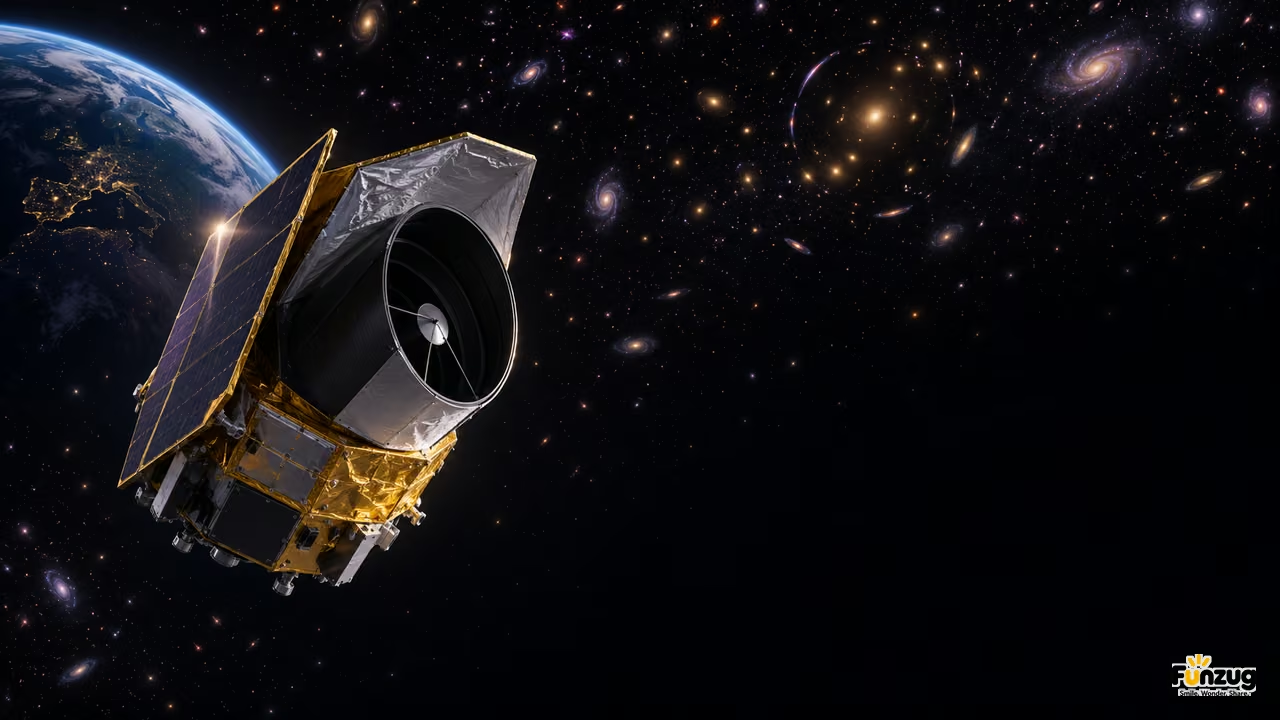
Euclid, the European Space Agency’s space telescope, has released a first major set of survey data, laying groundwork for a three-dimensional map of the distant universe. The release includes observations of about 900 million galaxies and roughly 15,000 strong gravitational lens candidates, giving researchers a much larger field of view than earlier deep surveys.
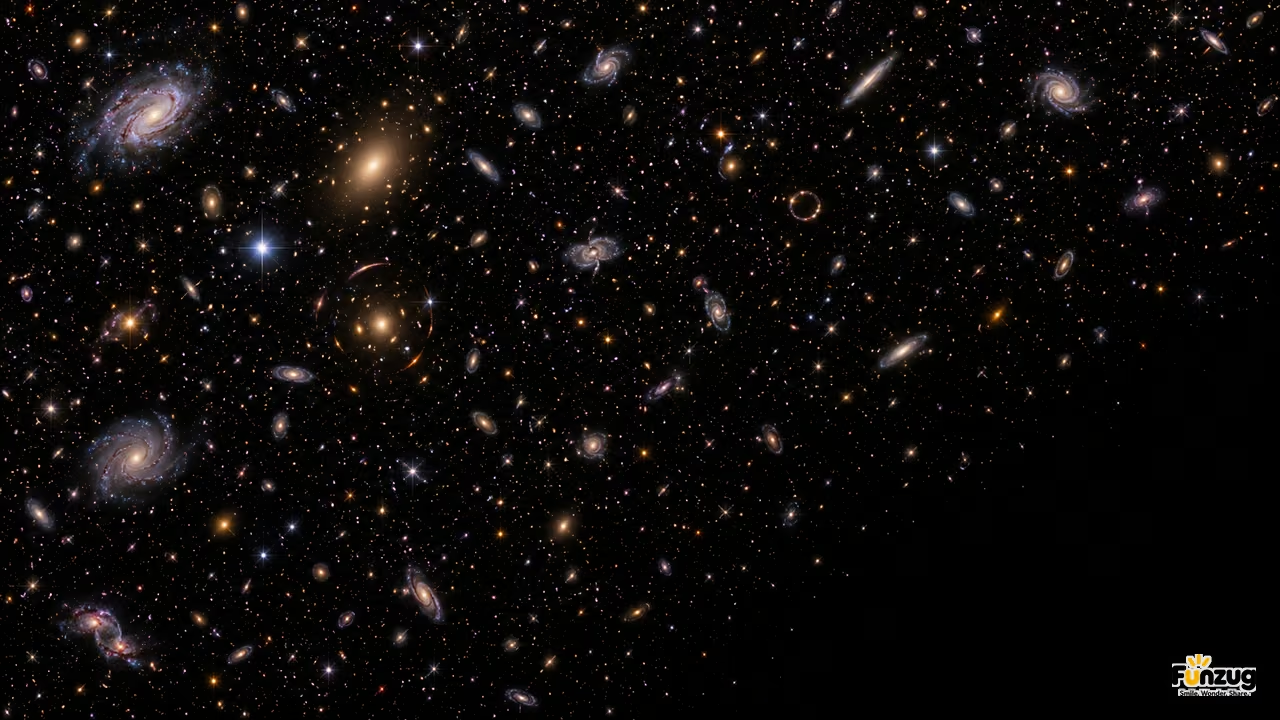
Euclid is not simply taking a few spectacular pictures. It is repeatedly measuring the shapes and distances of enormous numbers of galaxies. Over its planned survey, those observations will help scientists trace how matter is arranged across space and how that structure has changed over cosmic time.
Looking deep into space also means looking back in time. Light from a remote galaxy may have travelled for billions of years before reaching the telescope. When researchers combine a galaxy’s position with an estimate of its distance, they can place it in a broad three-dimensional view of the universe as it appeared at different eras.
The map is designed to investigate two of cosmology’s biggest puzzles: dark matter and dark energy. Dark matter does not shine, but its gravity affects the way galaxies move and the way their light bends. Dark energy is the name given to the observed acceleration of the universe’s expansion. Euclid does not photograph either one directly. Instead, it measures their influence on visible galaxies.
Gravity turns galaxies into lenses
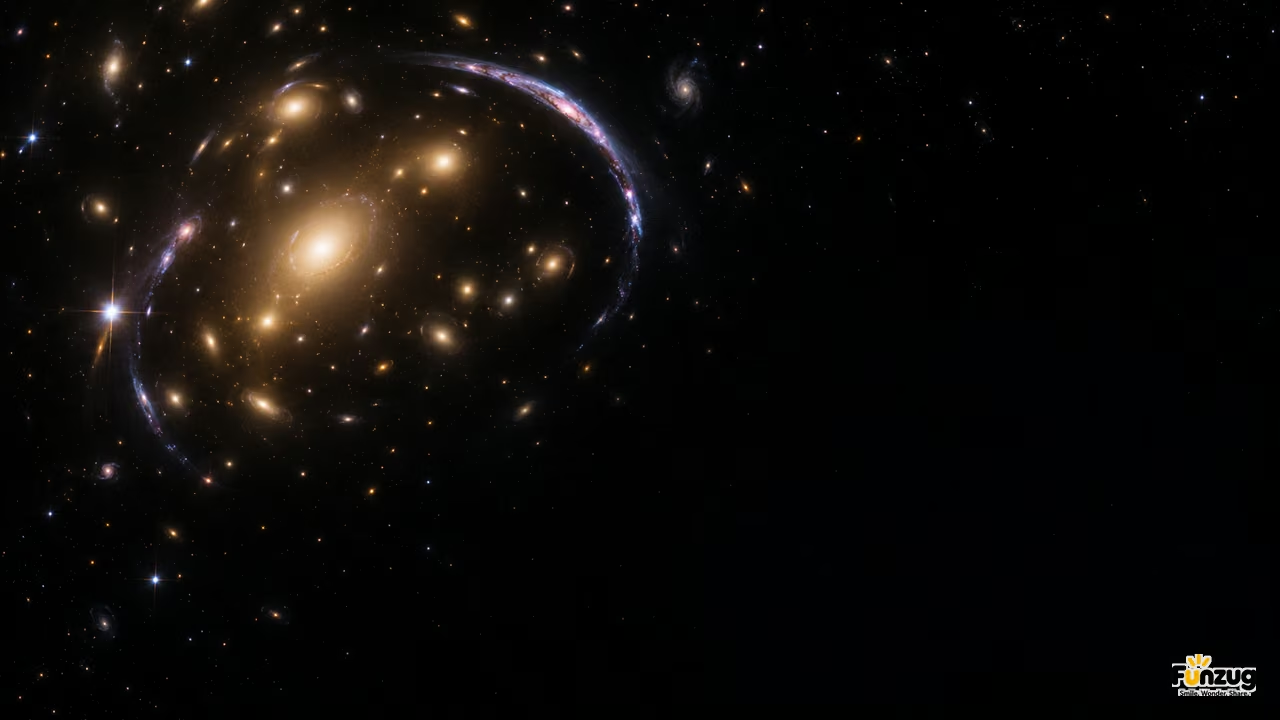
A massive galaxy or cluster can warp space around it. When light from a more distant galaxy passes through that region, the foreground gravity can stretch or distort the background image. These effects, called gravitational lensing, provide a way to estimate how mass is distributed along the line of sight.
Strong lensing is visually dramatic, producing arcs, rings or multiple images. Weak lensing is subtler: astronomers compare the slight average distortion of many galaxies to infer the distribution of otherwise invisible mass. Euclid’s sharp imaging and wide survey design are built to find both kinds of clues across large areas of sky.
Why the first release is a starting point
The early catalogue contains a remarkable number of objects, but it is not the mission’s final map. Researchers still need to validate detections, refine distance estimates, compare the observations with other surveys and account for the ways a telescope can affect a measurement. The lens candidates are promising objects for follow-up, not a final verdict on every cosmic question.
ESA’s release describes the observations as a foundation for later survey work. That distinction matters. A large data set becomes scientifically powerful when teams can measure it consistently and understand its limitations. The mission’s science teams will use later observations to build a more complete view of cosmic structure.
A new way to picture the unseen
Euclid will not settle every debate about the universe in one announcement. It gives astronomers a broad, carefully measured sample with which to test competing explanations. If the shape of cosmic structure differs from predictions, that may point to missing details in our understanding of gravity, dark matter or the expansion of space.
The European Space Agency’s data release explains the scale of the first catalogue and the lens candidates identified so far. For Funzug readers interested in what can be spotted from a backyard rather than a space telescope, our guide to the Mars and Jupiter conjunction in India follows a much closer celestial event.
The appeal of Euclid’s work is partly visual, but its deeper purpose is measurement. Each galaxy becomes one point in a growing survey. Together those points can help researchers ask how the universe is structured, what it contains and why its expansion appears to be speeding up.


