BepiColombo Reaches Mercury: The Spacecraft Arriving in Pieces
After eight years crossing the inner Solar System, Europe and Japan’s BepiColombo mission is approaching its destination in a way that sounds almost impossible: it must slow down enough for Mercury’s gravity to capture it. The spacecraft is expected to enter orbit on November 21, 2026, but that is only the beginning of a carefully staged arrival.
Table of Contents
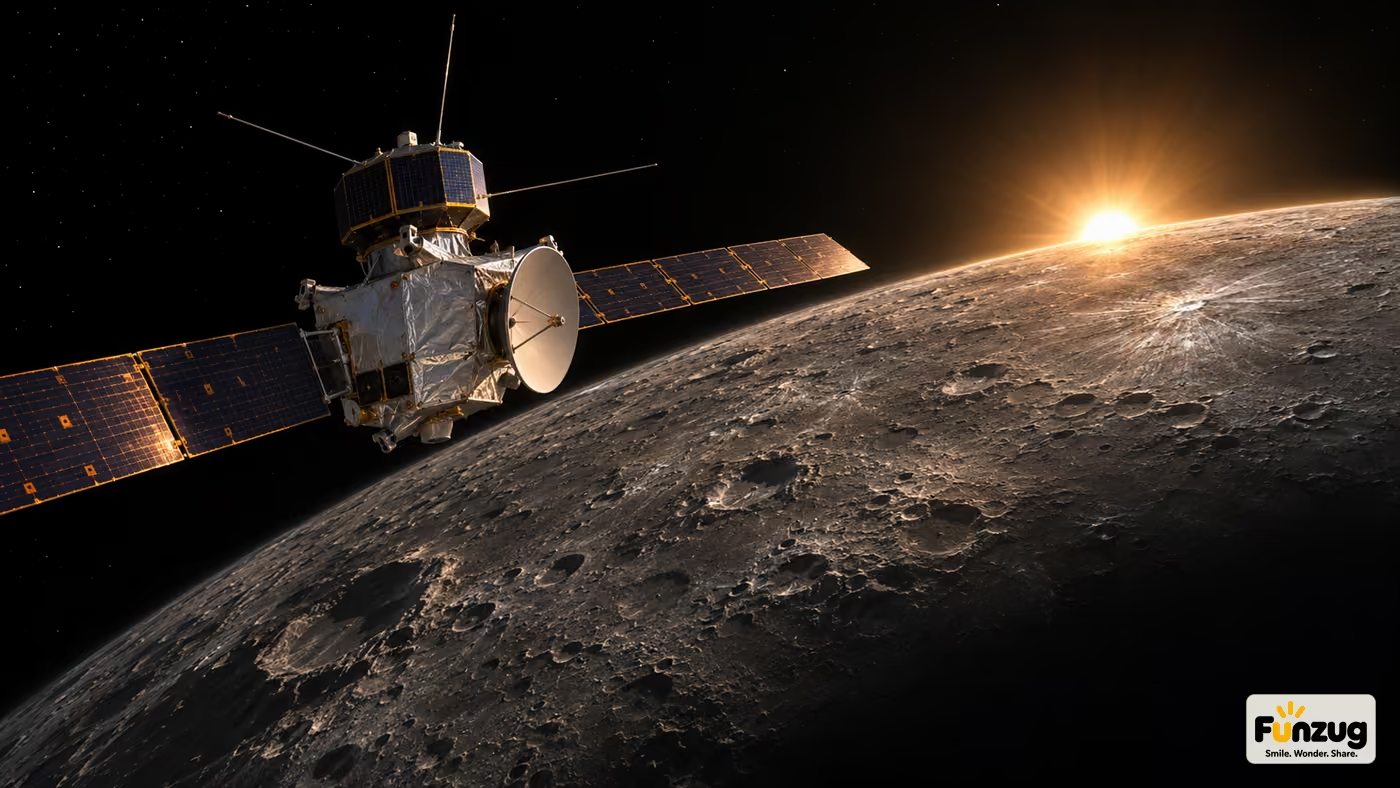
BepiColombo is travelling as a joined stack. The European Space Agency’s Mercury Planetary Orbiter and Japan Aerospace Exploration Agency’s Mio orbiter are still connected, with a sunshield protecting Mio. Their long trip is not a straight sprint. The team used planetary flybys and years of solar-electric propulsion to shape the route, then switched to chemical thrusters for the final approach.
Why Mercury is difficult to reach
Mercury is close to the Sun, which makes it a demanding destination. A spacecraft arriving from Earth carries a great deal of speed. It cannot simply point toward the planet and stop. The mission has to shed enough energy to become gravitationally bound to Mercury, while keeping the spacecraft, instruments and power systems within their operating limits.
ESA’s arrival updates describe orbit insertion as one step in a sequence rather than a single finish line. The current plan calls for the two science orbiters to separate on December 9 or 10. The European orbiter will then continue adjusting its path, while Mio moves toward its own polar orbit.
Two orbiters, two views of the planet
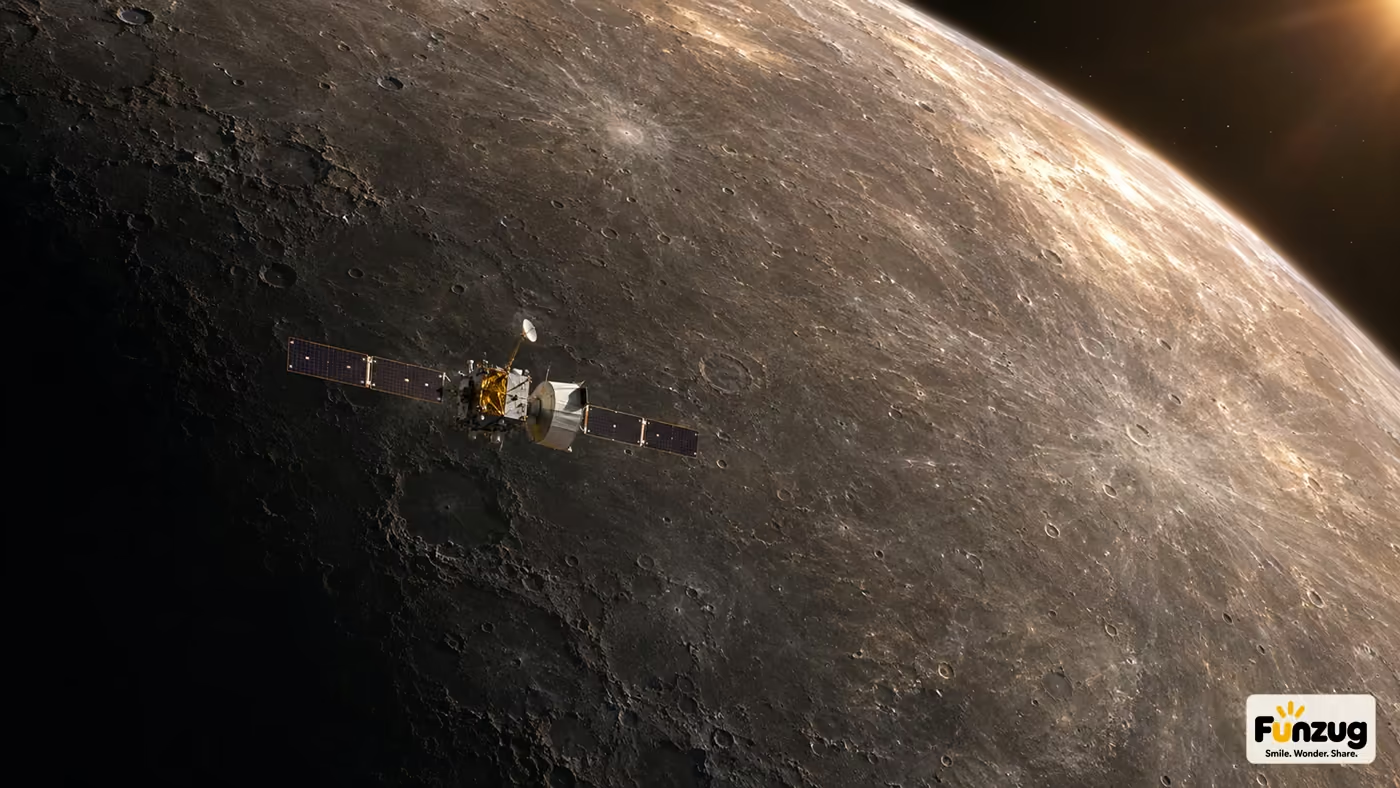
The spacecraft carry different instruments and will study complementary parts of Mercury. The European orbiter is designed to examine the planet’s surface, interior and magnetic environment. Mio will focus on Mercury’s magnetosphere, the region shaped by the planet’s magnetic field and the solar wind. Together, their measurements can help scientists understand why a small rocky world has a large iron core and how it interacts with the Sun.
That science will not begin the moment the spacecraft is captured. ESA’s timeline lists additional separation and orbit-adjustment milestones through March 2027, with science operations expected to start in April. These dates are plans and can change as mission teams respond to spacecraft data.
What happens next
For now, the story is about navigation and timing. At Mercury, a small error in speed or direction could mean missing the planned orbit. Controllers send commands from Earth, but the spacecraft is far enough away that the team cannot steer it in real time. They prepare, check and transmit the sequence, then wait for telemetry to show how the maneuver went.
ESA’s arrival plan breaks the work into several milestones. MPO and Mio are due to enter orbit together on November 21, then separate in December. MPO will make further adjustments to reach its final science orbit in March 2027, before routine science operations are expected to begin in April. That gap matters: capture puts the spacecraft around Mercury, while separation, commissioning and orbit changes prepare each orbiter for its own measurements. The timetable can still change as the mission team responds to flight data.
Readers who enjoy following spacecraft milestones can compare this arrival with Voyager 1’s journey into interstellar space. The missions pose very different engineering problems: one is leaving the solar system, while BepiColombo is trying to settle into orbit beside the Sun. Funzug’s guide to the clues in Euclid’s new galaxy map offers another look at how spacecraft observations become evidence about the universe.
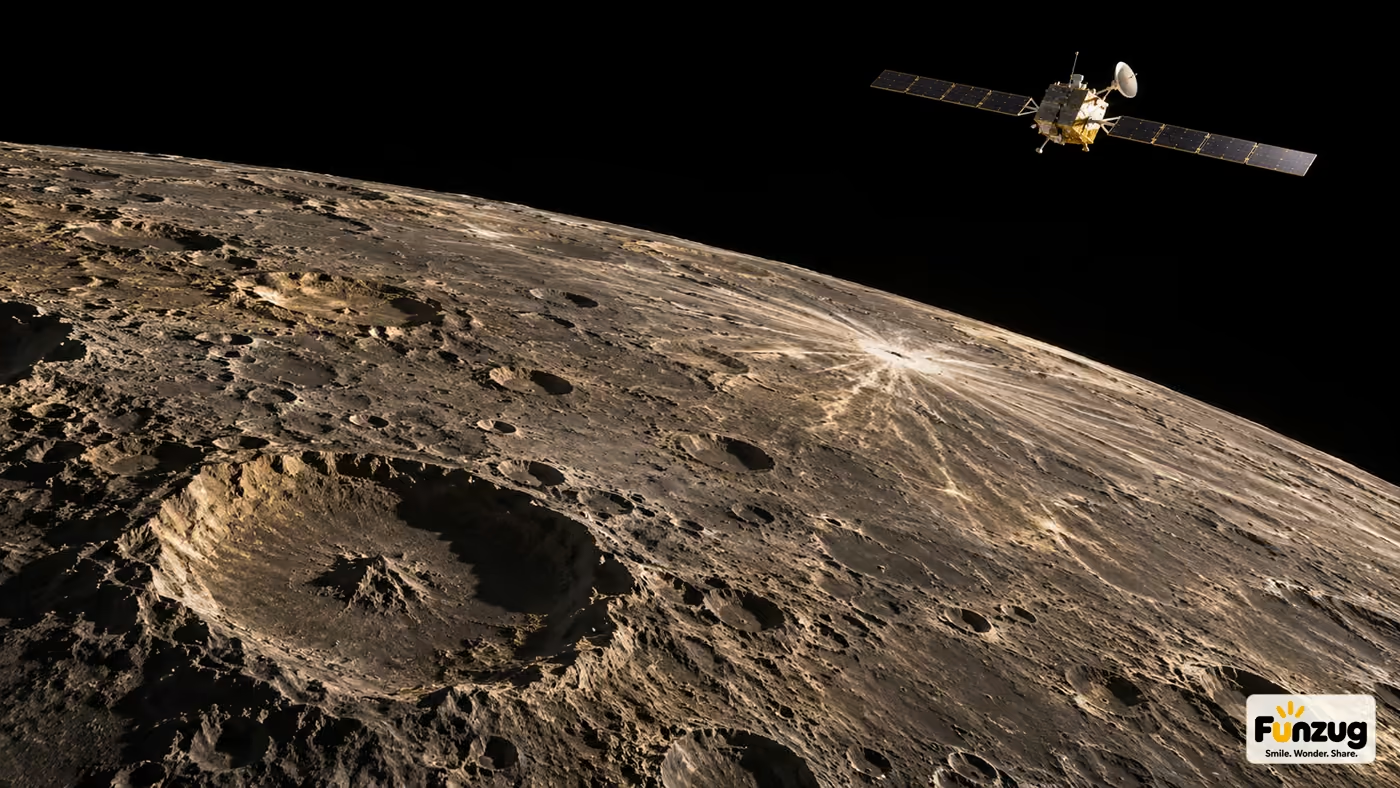
BepiColombo’s arrival is not a landing or a dramatic touchdown. It is a sequence of precise orbital changes that will eventually give two spacecraft a close, sustained view of a planet that has been difficult to study. If the plan holds, the mission’s most important science is still ahead.