Europa Clipper Is Coming Home Before Its Journey to Jupiter
A spacecraft headed for one of Jupiter’s moons is about to take a brief detour back toward Earth. NASA’s Europa Clipper will swing past our planet in December 2026, using Earth’s gravity to reshape its path and build the speed it needs for the outer Solar System. The return is part of the plan, not a course correction gone wrong.
Table of Contents
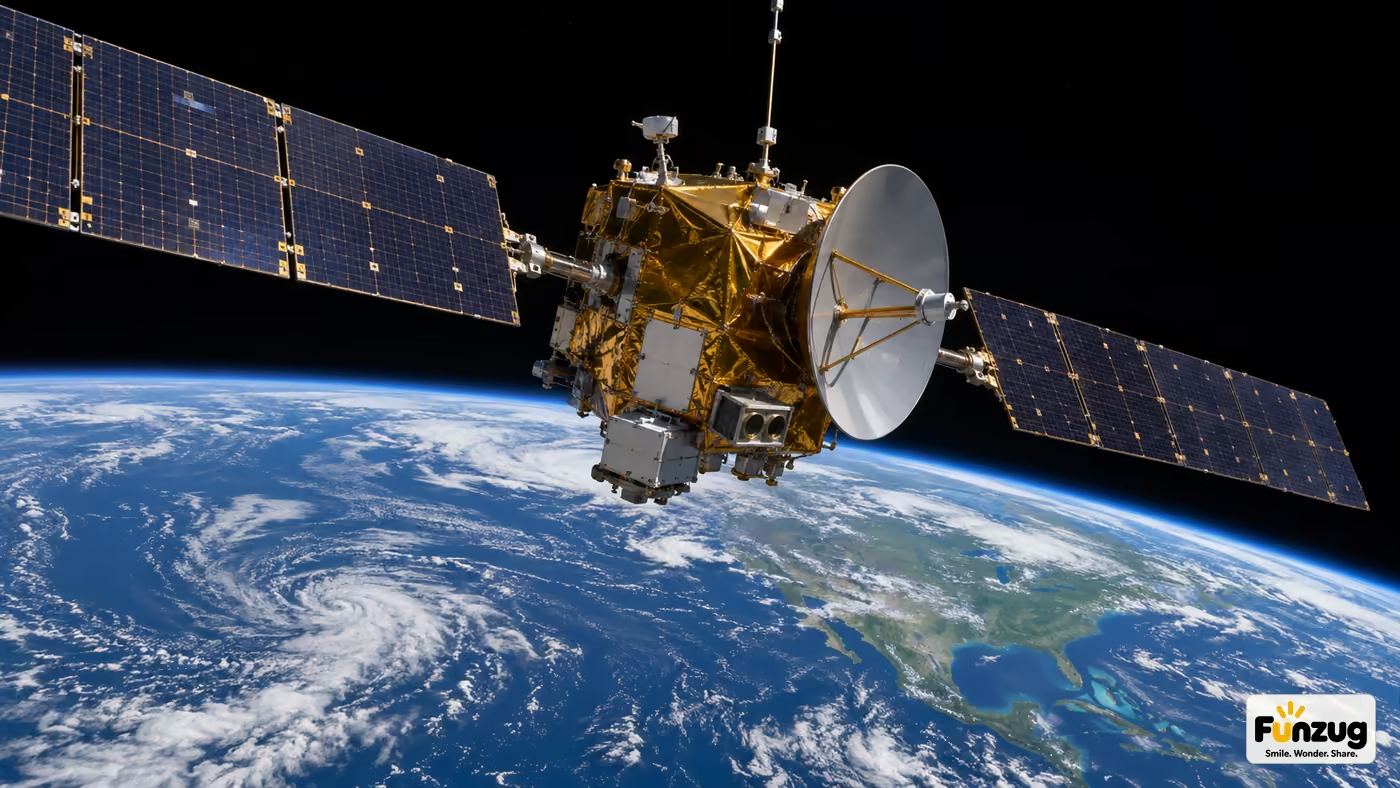
The maneuver is a gravity assist, sometimes described as a slingshot. A spacecraft flies close to a moving planet and exchanges a tiny amount of momentum with it. The planet’s motion changes by an immeasurably small amount, while the spacecraft gains or loses speed relative to the Sun. Mission planners use the geometry to send a probe farther out without carrying enough fuel to do all the work itself.
NASA’s mission timeline lists an Earth flyby in December 2026, Jupiter arrival in 2030 and Europa flybys after that. Europa Clipper will not stop at Earth or enter an Earth orbit. It will pass through on a carefully planned path, taking a small change in speed and direction from Earth’s motion around the Sun. NASA’s mission overview explains that the gravity assist helps build momentum for the Jupiter leg. Dates can change as the mission progresses.
Why fly by Earth again?
Europa Clipper launched in October 2024 and passed Mars in March 2025. NASA’s mission timeline says it will return to Earth in December 2026, passing roughly 2,000 miles (3,200 kilometres) above the surface. A mission press kit gives a planned flyby window of December 2 to 7, with the exact geometry tied to the launch date.
That Earth encounter combines with the Mars flyby to provide the energy needed for the journey to Jupiter. Europa Clipper is not taking a direct route because the spacecraft must arrive with the right speed and direction. It has to enter Jupiter’s orbit in 2030, then begin a series of close passes by Europa, an icy moon thought to hold a global ocean beneath its crust.
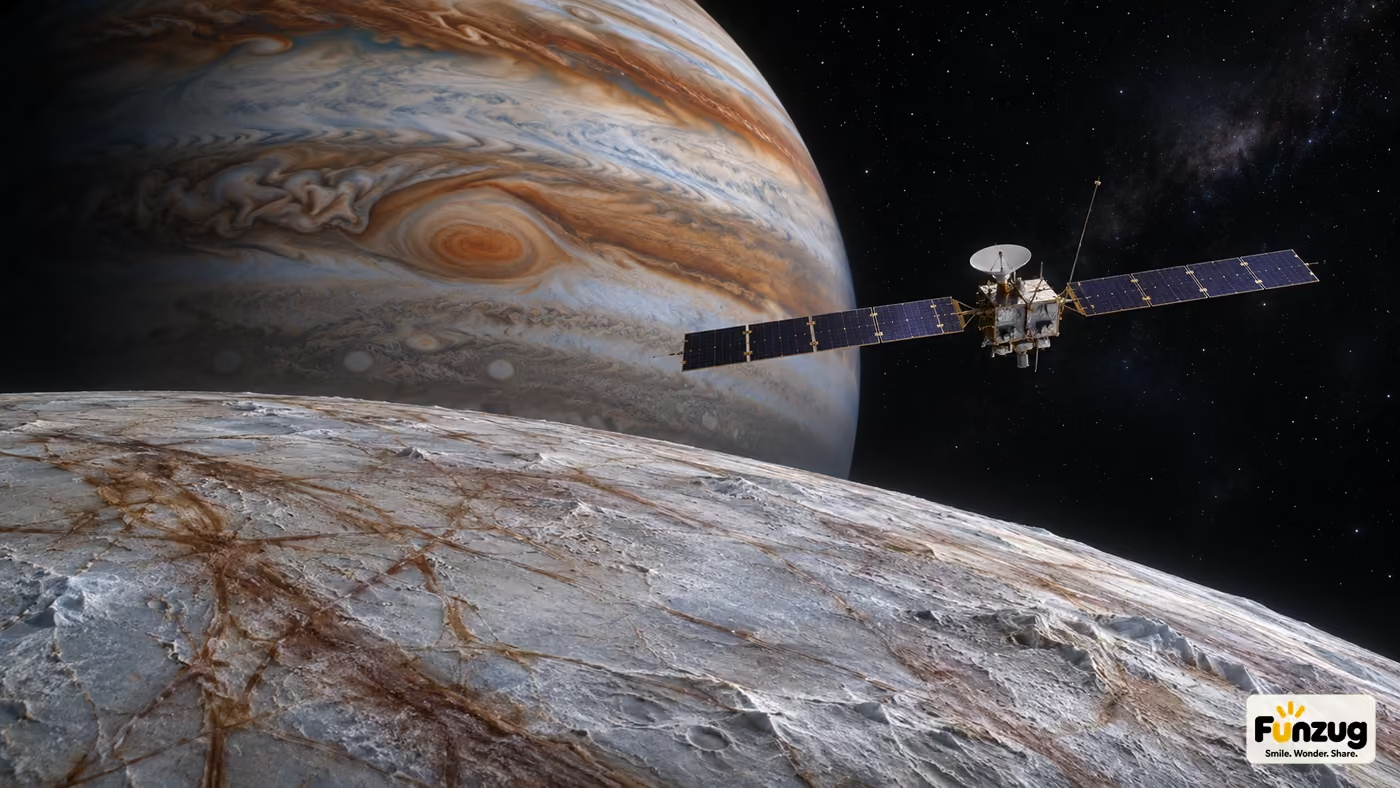
The target is an ocean world
Europa is smaller than Earth’s Moon, but its hidden ocean makes it one of the Solar System’s most intriguing places to study. Clipper is not designed to land or search directly for life. Instead, its instruments will measure the moon’s ice shell, composition, geology and environment as the spacecraft flies past it. The goal is to determine whether Europa has conditions that could support life, not to claim that life has been found.
NASA’s mission overview explains that the spacecraft will make dozens of close flybys after reaching Jupiter. The route lets it repeatedly observe different regions of Europa while managing radiation exposure in Jupiter’s intense environment. The December Earth pass is therefore one piece of a longer navigation puzzle.
What people on Earth might notice
The flyby is not expected to look like a bright object streaking across the night sky. Europa Clipper will be far too small and faint to spot without specialised equipment. Its importance is in mission operations: engineers will track the spacecraft, confirm its position and use the encounter to set up the next leg of its route.
Funzug’s explainer on how long Voyager 1’s signals take to reach Earth shows why deep-space missions rely on careful planning instead of instant steering. You can also read about the observations behind Euclid’s map of the universe for another example of a spacecraft turning remote measurements into a larger scientific picture.
When Europa Clipper passes Earth, it will be briefly close to home on a journey that ultimately ends near Jupiter. That contrast makes the maneuver easy to remember: the spacecraft is borrowing a little momentum from the planet it is leaving so it can reach a moon it will study years later.