

How a Victorian Market Became the New London Museum
London Museum Smithfield is set to open with an unusually strong supporting character: the building itself.
When its new free permanent galleries open on 28 November 2026, visitors will enter through a restored Victorian market whose ironwork, dome, shopfronts and hidden vaults still carry traces of its trading past.
The opening completes a decade-long transformation of the General Market, which had been closed for more than three decades. The museum’s opening announcement sets out how the historic structure will frame the new galleries.
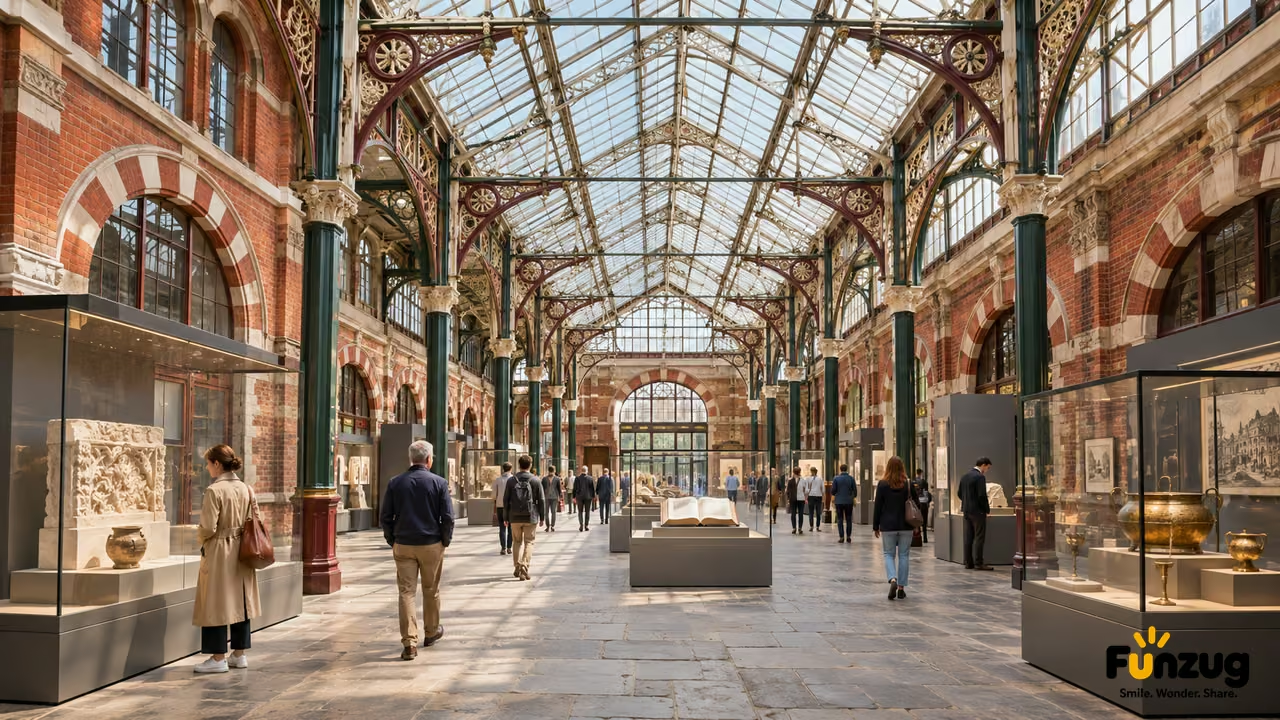
London Museum Smithfield: A market hall built for the city
The General Market opened in 1883, designed by Sir Horace Jones, the architect also associated with Tower Bridge and Leadenhall Market.
Smithfield had served as a centre for trade and exchange for centuries, and the market hall was built to support that working life.
After it shut in the 1990s, the building stood unused as its roof, masonry and decorative details deteriorated.
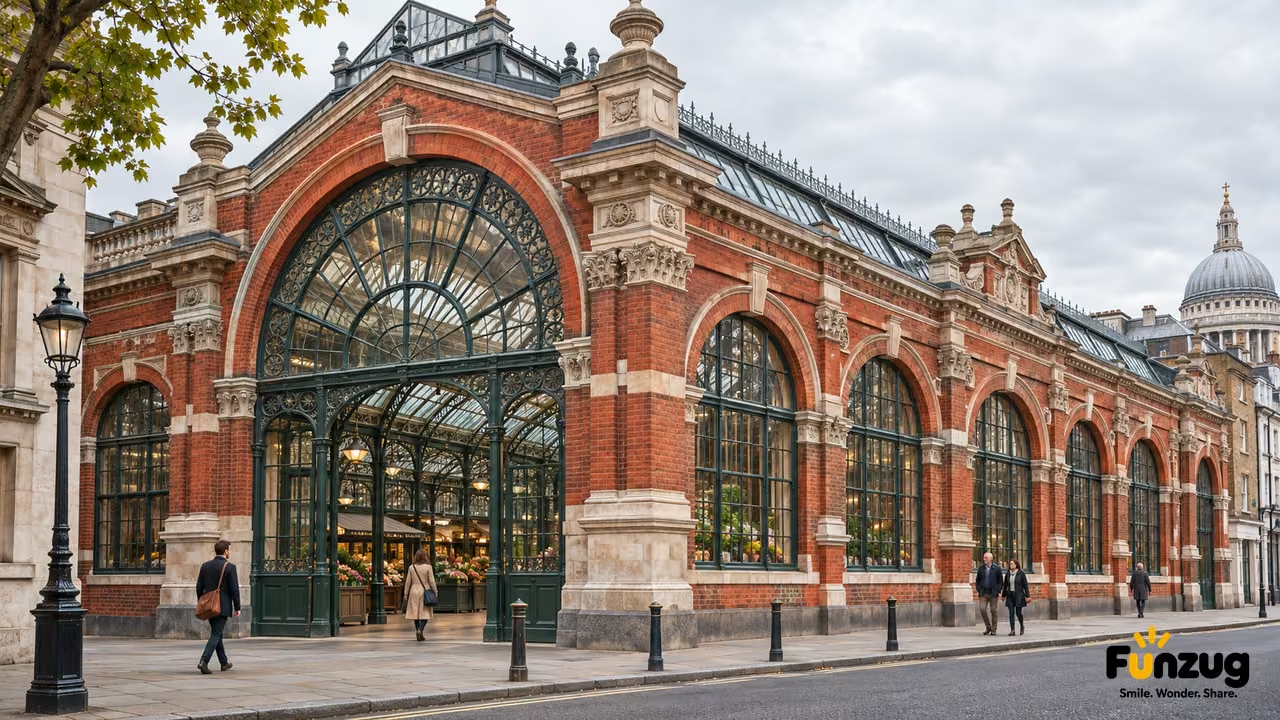
The restoration team brought together Stanton Williams, Asif Khan and conservation architects Julian Harrap.
At London Museum Smithfield, their task was to make the large, complex building useful again without stripping away the features that tell visitors what it had been.
The perimeter heritage shopfronts remain part of the experience. Welsh blacksmiths restored the decorative ironwork. Specialist coppersmiths and stonemasons worked on the historic fabric.
A network of underground vaults, covering about 800 square metres, was rediscovered beneath the market and incorporated into the project.
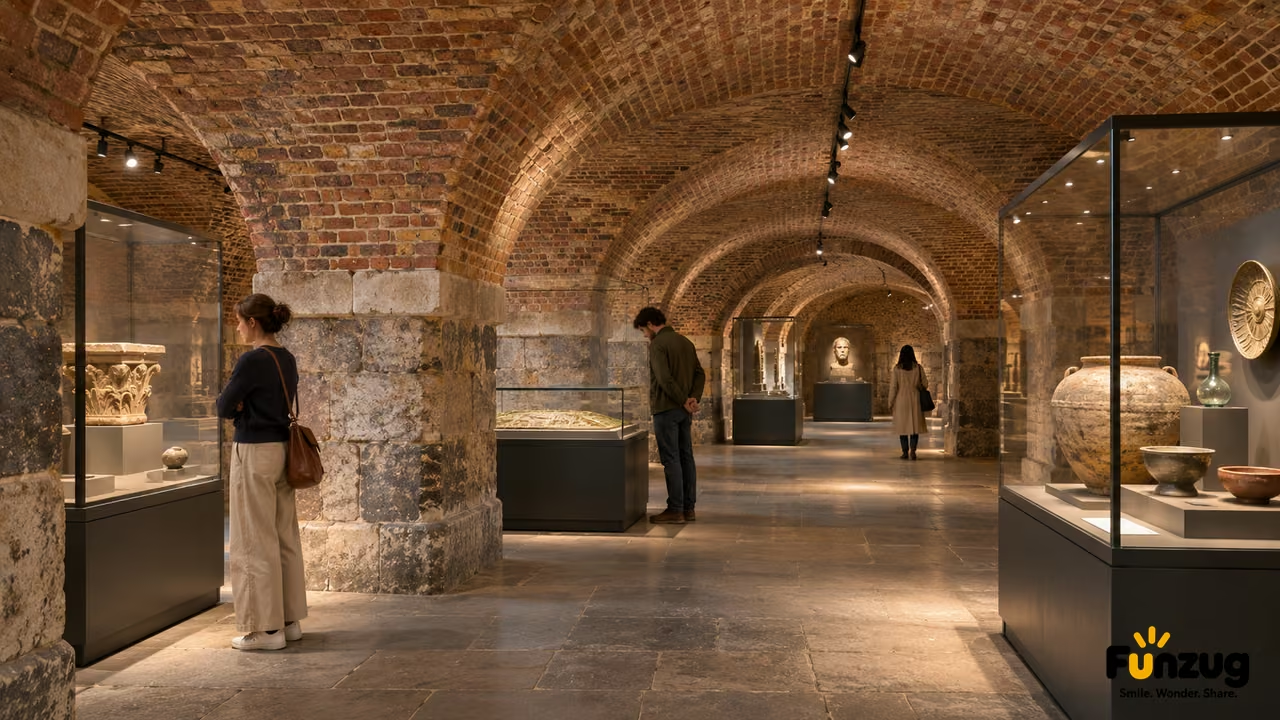
That balance between old structure and new use gives Smithfield a different architectural story from a purpose-built gallery.
Funzug’s architecture archive covers more striking designs in its feature on strangest buildings around the world. Smithfield’s story is quieter: a civic building adapted for modern use while its market character stays visible.
Three spaces, one journey through London
The museum’s layout follows three connected spaces. Real Time begins on Heritage Fund Street, a covered former market street now used as the main entrance. It is designed to bring the present-day city into the visit.
From there, visitors move into Our Time, set beneath the restored dome in Linbury Hall.
The hall acts as a social centre for events and activities, with 13 anchor displays drawn from London life, including Syd’s Coffee Stall and the Lord Mayor’s Coach.
Past Time occupies the subterranean galleries, where chronological and thematic displays trace the city’s history.
The announced objects range from Roman writing tablets and the Cheapside Hoard to the Whitechapel Fatberg, a suffragette hunger-strike medal, Anna Pavlova’s Dying Swan costume and the vest believed to have been worn by Charles I at his execution.
A six-metre viewing window adds a particularly London detail: Thameslink trains will pass through the view as visitors move through the galleries.
The visitor route at London Museum Smithfield lets the architecture do more than provide a dramatic backdrop.
The covered street gives visitors a transition from the city into the building; the domed hall offers a pause before the history galleries descend below ground. That sequence also makes the market’s scale easier to read.
Instead of treating the shell as a neutral container, the museum is using circulation, light and the change in level to connect the historic structure with the stories on display.
What visitors can expect when it opens
The Smithfield galleries are scheduled to open on 28 November 2026, with free permanent exhibitions. The building is also intended to work as a public gathering place, with food, events and activities around its central hall.
The museum says the project includes rainwater-powered toilets, geothermal energy and a lower-carbon concrete mix, bringing environmental upgrades into a historic shell.
The change is not yet the end of the larger Smithfield project. The adjacent Poultry Market is expected to open in 2028 with temporary exhibition spaces, a learning centre and collections storage.
As London Museum Smithfield opens, the draw is already clear: a Victorian trading hall returning to public life as a museum, with its architecture shaping how London’s past and present meet.


