

Inside Powerhouse Parramatta: Five Exhibitions Shaping a New Museum
Powerhouse Parramatta opened on November 7, bringing a major new museum to the banks of the Parramatta River. Its first program moves between aerospace, First Nations knowledge, design, art and playful spaces for children. The scale is striking, but the more interesting question is how these very different stories share one building.
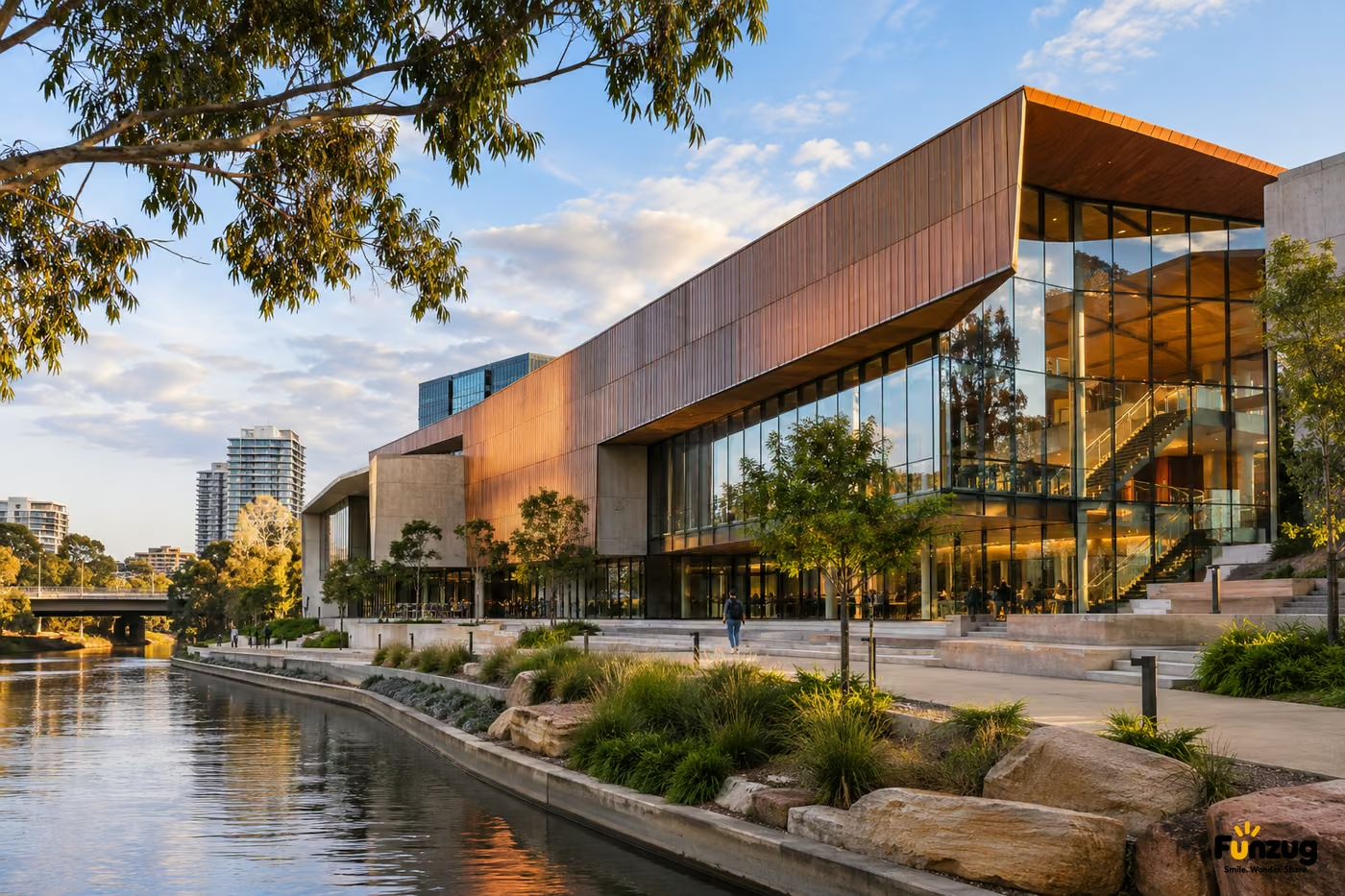
A museum built around more than objects
The museum’s opening program brings together five exhibitions and more than 3,000 objects. More than 1,600 come from the Powerhouse Collection, with others loaned from collections in Australia and overseas. The museum says four exhibitions are free to enter, while Task Eternal is ticketed for adults and free for visitors under 16.
That mix gives the building a broad role. It is a place to look at historic objects, but also to encounter commissioned work, local knowledge and questions about how technology shapes daily life. The opening festival runs through November 29, with talks, performances, workshops, music and food events alongside the exhibitions.
Five exhibitions, five different ways in
Task Eternal follows humanity’s efforts to fly and reach space. Its more than 850 objects include a Qantas Avro 504k aircraft, Leonardo da Vinci flying-machine drawings, a NASA Moon rock and an immersive light work by James Turrell. The exhibition connects engineering history with the design ambitions behind exploration.
Overflow is led by First Nations perspectives on the care of salt and freshwater systems. Developed with seven Aboriginal organisations, it brings together stories about species protection, flood mitigation, fishing, water monitoring, language and cultural water rights. Filmmaker Ivan Sen shaped the exhibition’s cinematic presentation.
The Mall, created with architecture firm OMA/AMO, looks at shopping centres as designed environments that influence how people move, meet and buy. Its objects include architect Victor Gruen’s archive, early barcode designs, Levi’s 501 jeans worn by Steve Jobs and a contemporary reworking of the Roselands Raindrop Fountain.
Es Devlin: The Turning presents five immersive works by the British artist, including a mirror maze that links the branching structure of lungs with trees and a collaborative portrait installation. The Dark turns a bedroom, crystal tunnel and forest into an imaginative journey for children aged four to twelve, using more than 800 objects and stories contributed by children from Western Sydney.
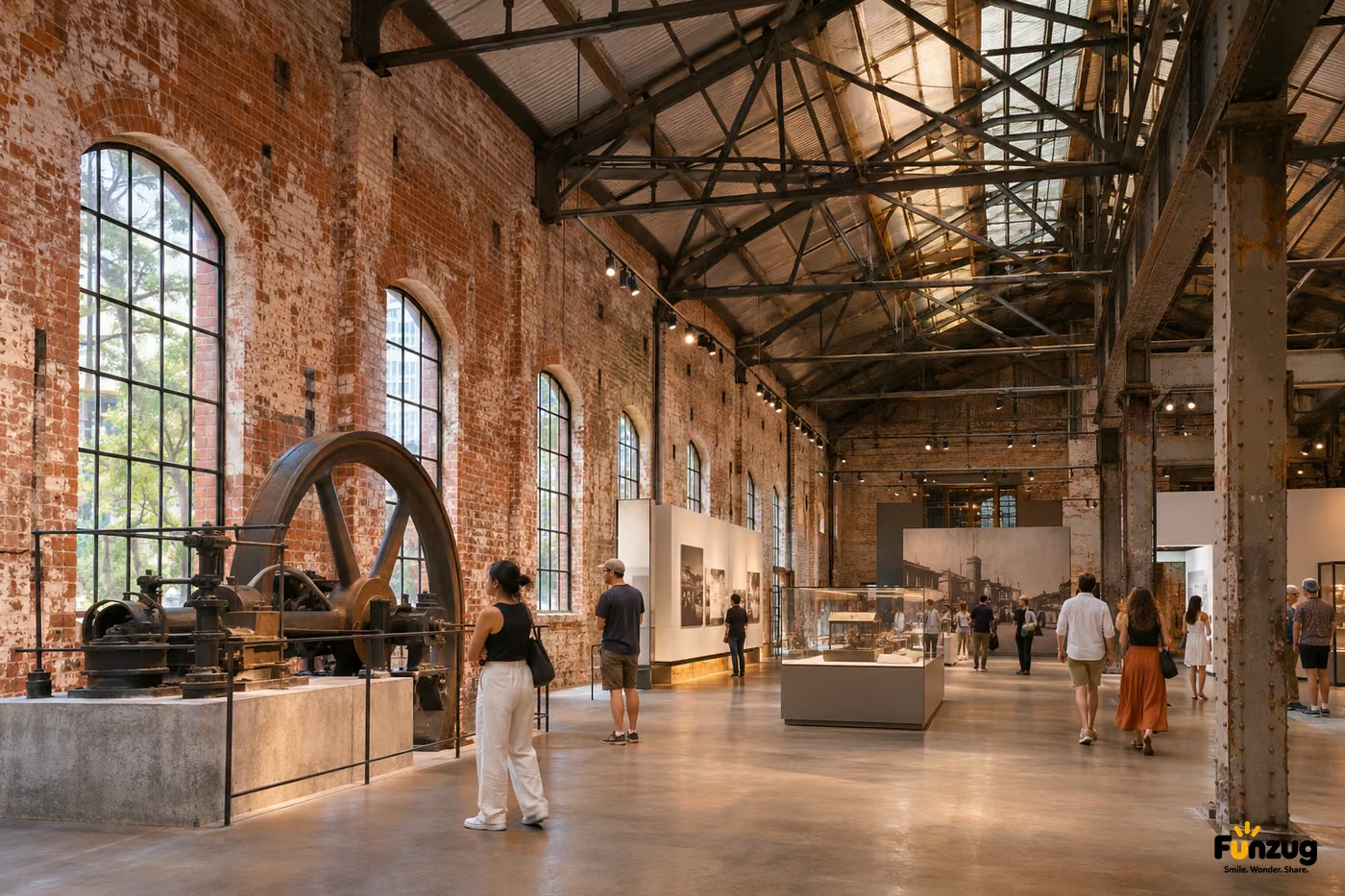
What visitors can expect
The strongest reason to visit is the variety. Families can explore a space designed for children, while design and science enthusiasts can spend time with aviation, spaceflight, architecture and industrial innovation. Visitors interested in local history and culture will find community stories woven into the exhibitions rather than treated as a separate add-on.
The Powerhouse describes the project as a $915 million investment that also includes a collection storage facility at Castle Hill and the digitisation and preservation of more than 371,000 objects. For Parramatta, the opening adds a new cultural destination in Western Sydney. For the museum, the challenge is to make the collection feel connected to the lives and ideas of people who come through its doors.
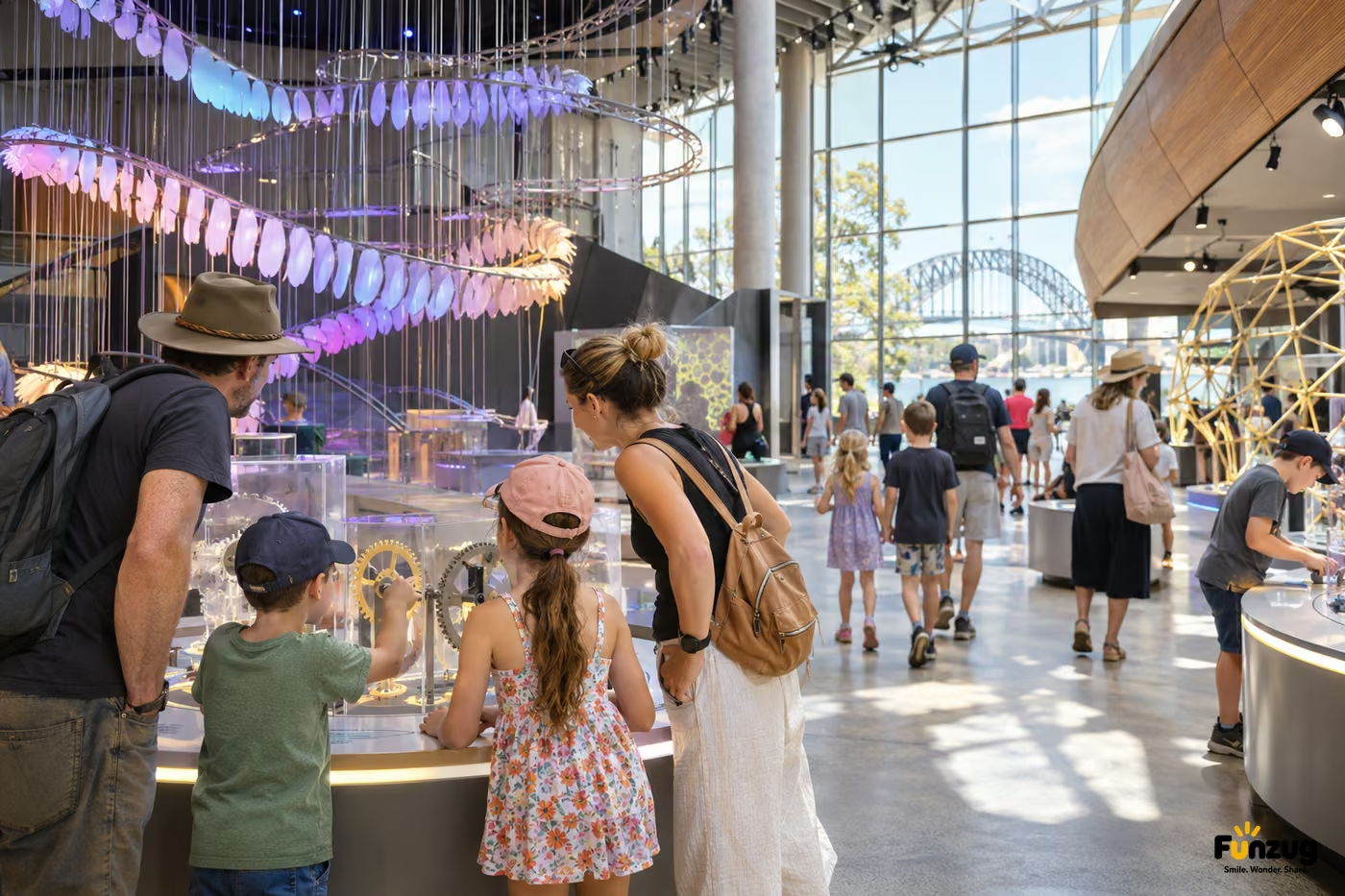
Planning a visit
Powerhouse Parramatta is open seven days a week. During the opening festival, the museum stays open until 9pm from Thursday to Sunday, according to its opening announcement. Check the museum’s visitor page before setting out for current hours, exhibition access and event details.
Readers who enjoy unusual architecture can also explore Funzug’s guide to striking buildings from around the world. Powerhouse Parramatta belongs in that conversation for a different reason: its identity comes as much from the stories and public programs inside as from the structure itself.
With the opening festival continuing until November 29, the museum offers an unusually full first look at its ambitions. Start with the exhibition that interests you most, then leave time to discover the others. The five shows range widely, yet together they make a clear case for a museum that treats science, culture and design as parts of the same story.


