



Spread over 12 countries and continue to expand their territory
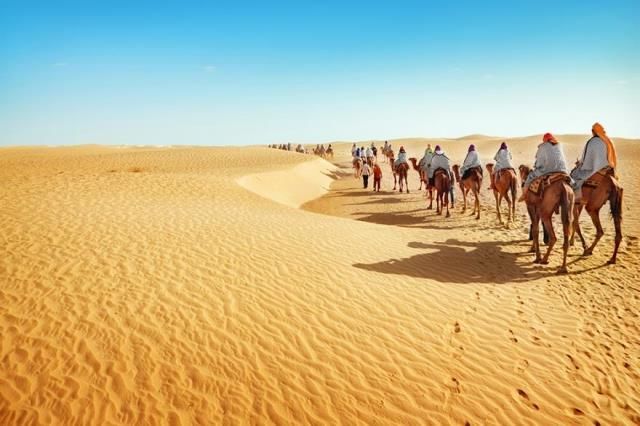
The word Sahara in the Arabic language means the Great Desert, there are many outstanding features that give this special name. The Sahara Desert is like a giant sand dune, with rivers, streams, rocky plateaus, arid valleys, lush green oases and diverse flora and fauna and reptiles. The Sahara Desert covers an area of over 9 million square kilometers, approximately the size of the United States and China. The desert covers most of North Africa, covering large areas of 12 countries: Algerie, Chad, Egypt, Libya, Morocco, Mali, Eritrea, Niger, Sudan, Tunisia, Western Sahara. Scientists discover the Sahara desert is expanding. From 1962 to the present, this desert has expanded nearly 650,000 km2. Despite its vast terrain, the Sahara Desert is not the largest desert in the world. If placed together with Antarctica and the North Pole, the Sahara only ranked 3rd
At the end of the Ice Age, the Sahara Desert was once a wet area with many trees and many animal species.. Dinosaur fossils have also been found in the heart of the Sahara desert.
About 4,000 years ago, this was still a rich area with many plants and animals. However, the earth changes its angle from 22.1 degrees to 24.5 degrees over a period of 41,000 years (currently 23.44 degrees and descending). It was the fluctuation of the planet’s orbit thousands of years ago that affected and ended the fertility in this land, instead of a dry, barren desert.
1. MOST SUSTAINABLE PLACE OF EARTH
The Sahara Desert is located near the North Regression line, 23 degrees 27 ‘North from the equator, 23 degrees 17’ South. Surrounded by tropical high pressures and the northeast monsoon, the northeast winds reduce airflow and wind from the continent. The condensation of the steam makes the climate extremely dry, the average rainfall is usually less than 100mm / year. There are even places where there is no rain for many years.
Drought desert area, less cloudy, bright sunlight, swirling heat waves all year round, hot dry heat. The record high temperature of the Sahara desert was recorded in 1922 to 57.7 degrees C. But at night, the cold wind cut the skin. The change in temperature makes the living conditions more severe here.
2. THERE ARE ABOUT 500 PLANT SPECIES
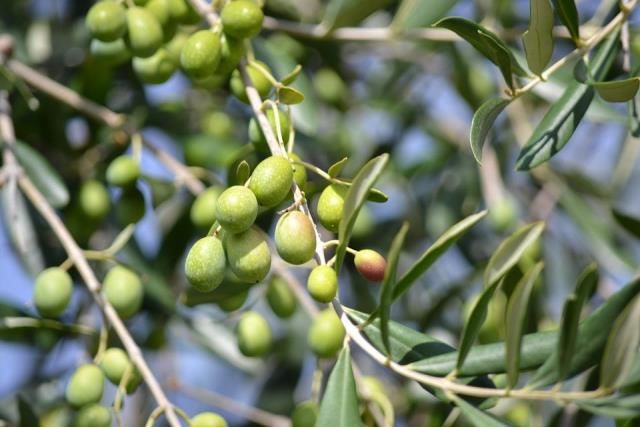
These are fast growing and drought tolerant plants such as cacti and paper grass. Some species can sprout after 10 minutes and root after 10 hours. In the immediate vicinity of the Mediterranean, olive trees are a common species.
The central part of the desert has extremely limited vegetation. The north and south poles of the desert along with the highlands are sparse grasslands and scrub deserts.
3. ATTRACTION 2% OF THE AREA
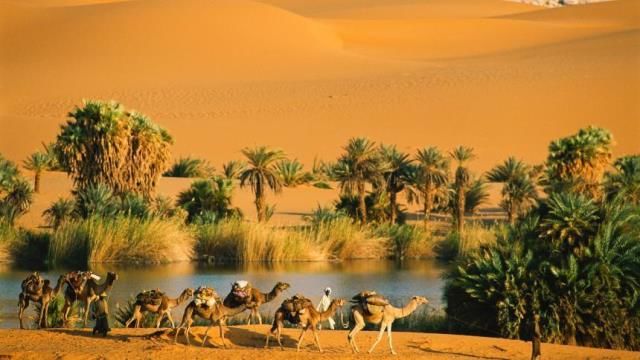
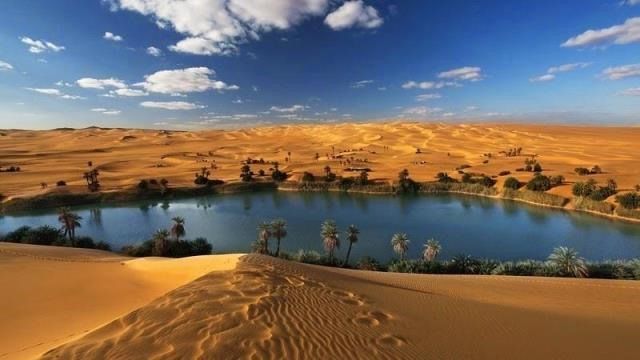
Despite the extreme temperatures, there is an underground spring in the desert. Underground rivers flowing from the Atlas Mountains rise to the surface, creating oases, accounting for more than 2% of the total area. In the oasis, the rows of dates are soaring, which both prevent sand intrusion and create food sources for residents.
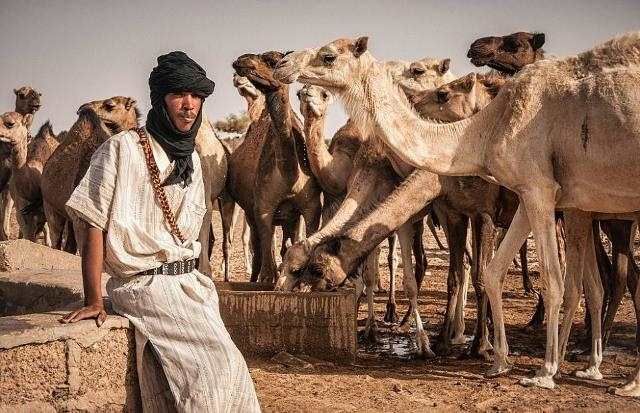
Oasis plays a central role for economic activities in the desert. But the people who settled in the oasis were engaged in agriculture, called the date dwellers. Particularly nomadic groups such as Arabs, Berbers in Northern Sahara have to live in tents, looking for places with water and grass so called camel residents.
4. PLENTIFUL ANIMAL SYSTEM
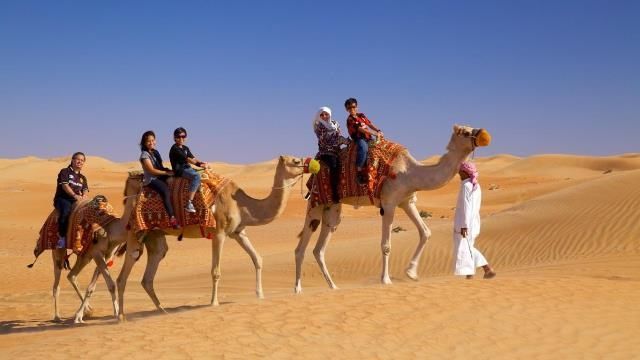
The fauna of the Sahara is richer than we can imagine. There are about 70 species of mammals, 90 species of birds, and over 100 species of reptiles living here.
Camels are the most suitable animals to live in the Sahara because they can adapt to the harsh living conditions and are the main means of transportation through this vast desert. The Sahara is also home to the Deathstalker scorpion. This is the most unique species of scorpions.
5. THERE ARE MANY LOTS OF LIVESTOCKS IN SAHARA
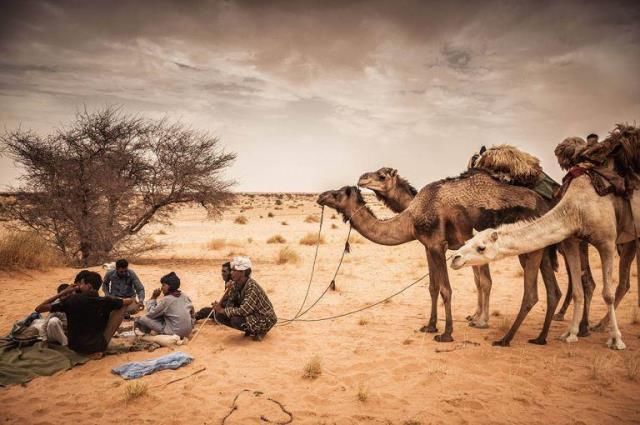
The Sahara Desert is home to about 2.5 million people. Primarily concentrated in Egypt, Morocco, Algerie and Mauritania. The largest city on the desert is the Sahara, Cairo – the capital of Egypt, located in the Nile valley.
There are even big cities growing day in the desert. Located on oil wells or arterial roads, many cities in the middle of the desert have conditions to grow.
6. BOOKS IN THE ARGENTICITY
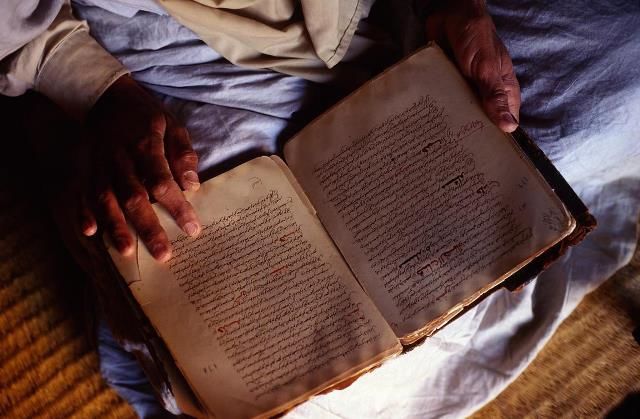
The city of Chinguetti, located in West Africa, Mauritania is a huge bookstore in the middle of the vast desert. The city was once one of the bustling and wealthy trading centers of traders from Africa and North Africa.
The Sahara is known for its huge sand dunes. However, the Sahara possesses diverse terrain, the desert surface expands various terrains such as boulders plateau, plain covered with gravel, valleys and even salty soils. Scientists have spent many years explaining these types of terrain.
There are a huge number of books here with over 6000 books and rare manuscripts. This is a UNESCO World Heritage site that needs to be preserved.
7. SAHARA IS ONLY 30% IS SAND
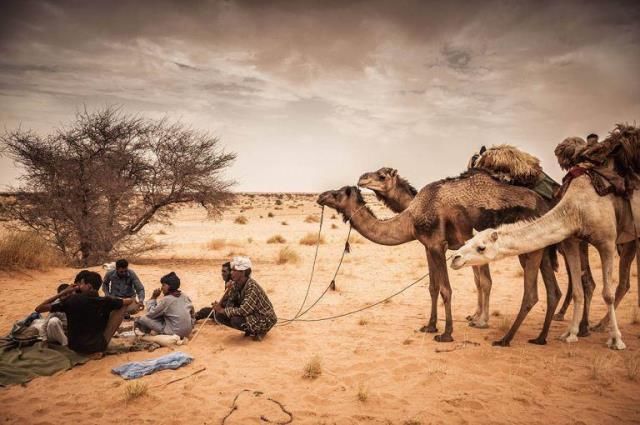
The Sahara is known for its huge sand dunes. However, the Sahara possesses diverse terrain, the desert surface expands various terrains such as boulders plateau, plain covered with gravel, valleys and even salty soils. Scientists have spent many years explaining these types of terrain.
8. SAHARA DESERT IS HAPPY
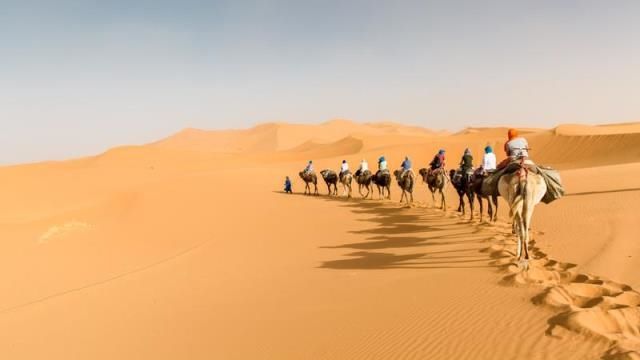
In early 2018, unusual snowfall in the desert created a spectacular sight. White snow dunes cover the Sahara region of Ain Sefra, Algeria. Winter 2017 is the first time in nearly 40 years that this desert has welcomed snow.
In December 1979, snow fell in the Ain Sefra area, when a blizzard appeared and lasted half an hour, causing many vehicles to be stuck and traffic difficult.