

Hera Is Closing In on the Asteroid DART Hit. Here’s What It Needs to Find
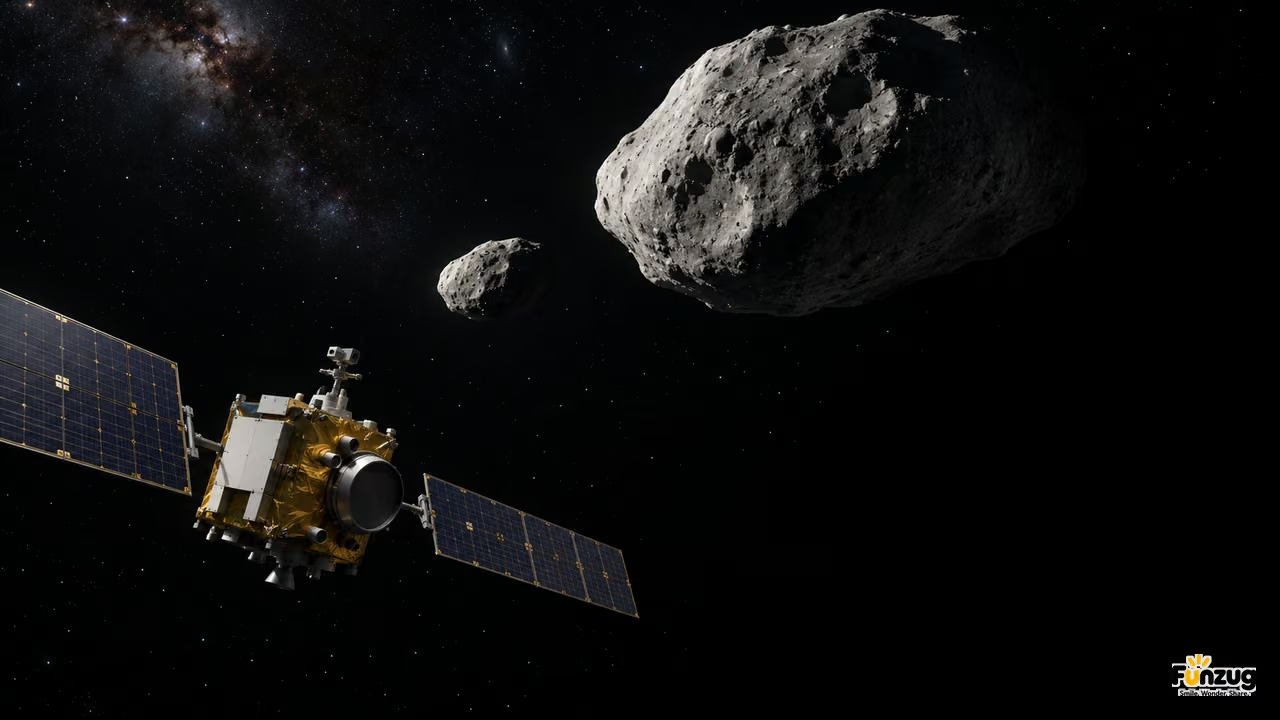
ESA’s Hera spacecraft is approaching the Didymos asteroid system, where NASA’s DART mission deliberately struck the smaller moonlet Dimorphos in 2022. The collision changed Dimorphos’s orbit around Didymos. Hera’s job is to study the aftermath up close and turn that demonstration into a better understood planetary-defence technique.
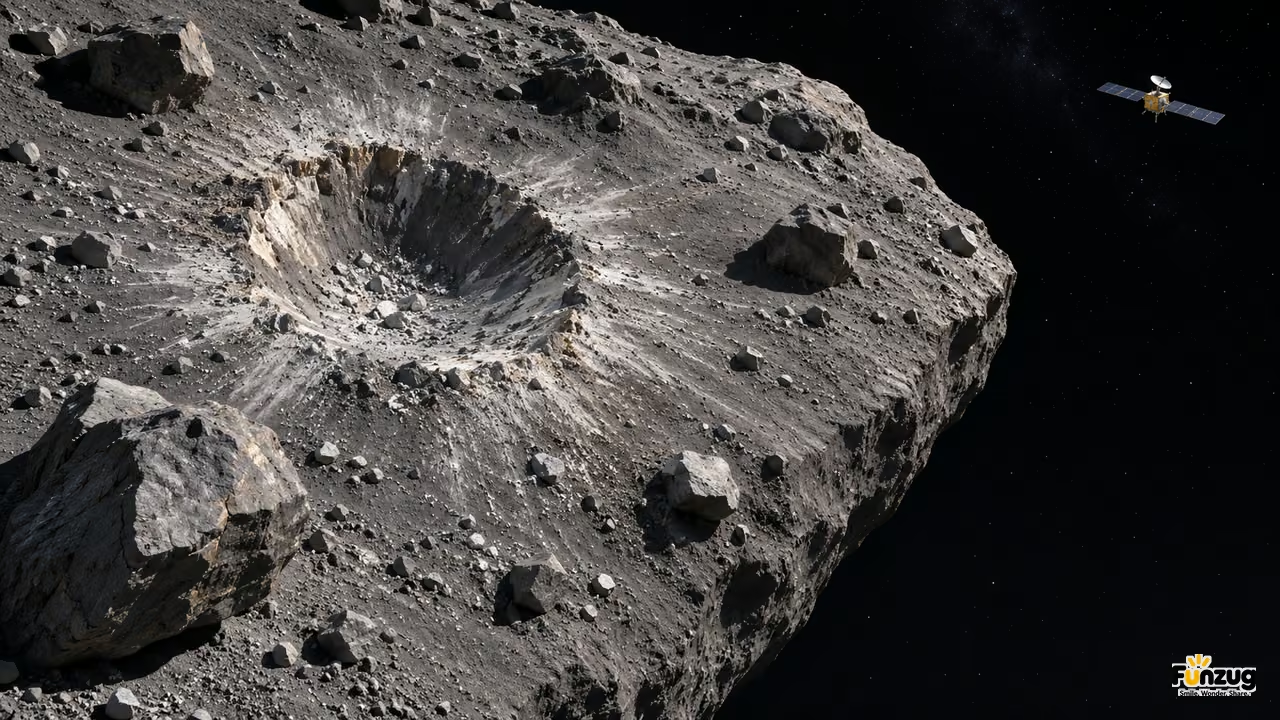
NASA reported that DART shortened Dimorphos’s orbital period by about 33 minutes. That was a measurable change, but the number alone does not explain how the impact worked. Scientists still need to know the crater’s size, how much material was thrown into space and how the asteroid’s shape and internal structure affected the result.
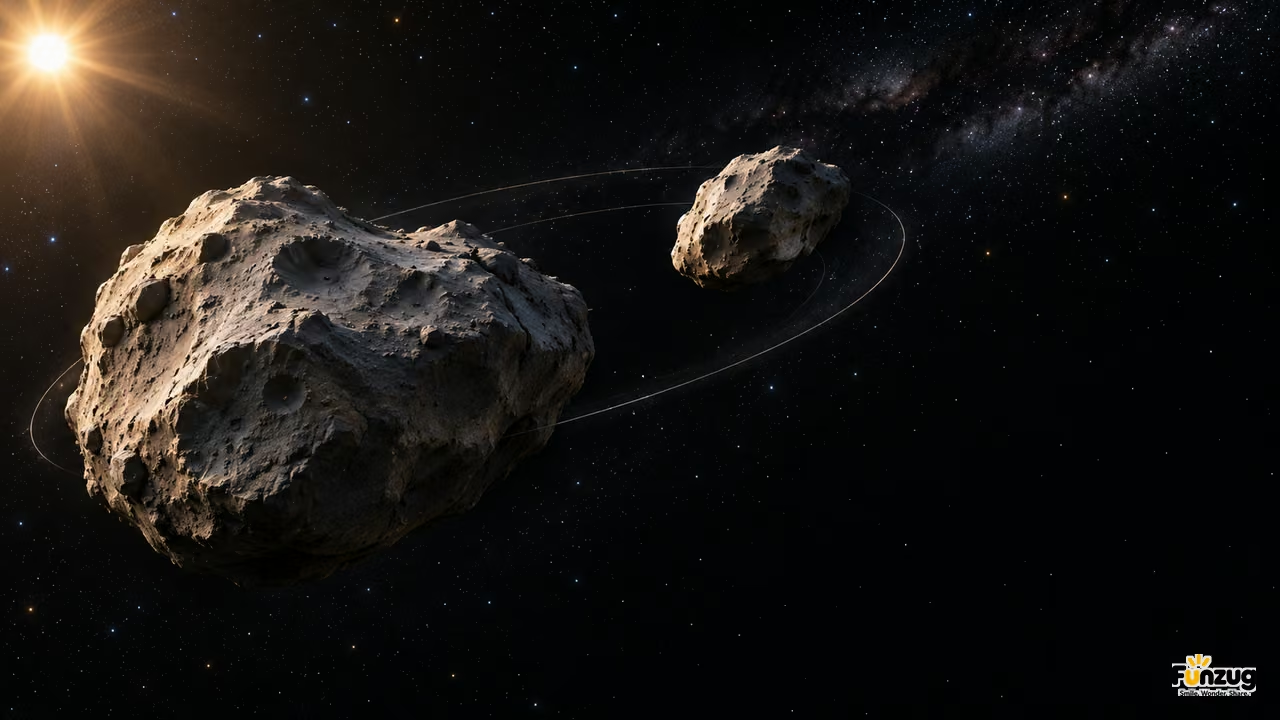
DART proved that a spacecraft can alter the motion of a small asteroid. A future response to a real threat would require much more than proof of principle. Teams would need a reliable estimate of the object’s mass, composition and surface, then calculate how an impact would change its path. Hera is intended to gather those details at the target itself.
After arriving at the system, the mission will study both asteroids. Didymos is the larger body, while Dimorphos is the moonlet that DART hit. Their close relationship gives researchers an opportunity to examine how the pair moves and how the impact changed the smaller object’s orbit.
The evidence is written on a small world
At asteroid scale, the impact is not a neat dent in a uniform rock. The surface may be covered with loose blocks and dust, and the interior could be a loose collection of material held together by gravity. If the impact threw out a substantial plume of debris, that material may have contributed to the change in motion. Hera’s images and measurements can help distinguish among these possibilities.
The spacecraft will also test autonomous navigation around a small body. A tiny asteroid has weak gravity, so maintaining a stable orbit and interpreting its terrain requires careful planning. The mission includes smaller companion spacecraft designed to extend the close-up investigation.
What to expect from the mission’s images
Hera’s approach observations are already helping mission teams refine their understanding of the target. ESA says the spacecraft is expected to reach the system in late 2026, with the first close images and surface observations arriving after the rendezvous. Those images should help show how the impact altered the moonlet, but the science analysis will continue after the first photographs arrive.
The European Space Agency’s Hera mission updates describe the approach and the spacecraft’s path toward its target. NASA’s DART mission overview explains the original impact and the orbit change measured afterward.
A test for planetary defence
Hera is a follow-up investigation, not a warning that an asteroid is headed for Earth. The Didymos pair poses no threat to our planet. Its value is that researchers can safely examine a real impact experiment and refine the methods that might one day be needed for planetary defence.
The result will be more than a dramatic picture of a crater. By comparing the measured damage with the change in orbit, scientists can estimate how much of the push came from the spacecraft and how much came from material blasted away. That information is what turns a one-off collision into a technique future missions could plan around.
Readers following other celestial events can also look closer to home in Funzug’s guide to the Mars and Jupiter conjunction in India. Hera’s target is far too faint for casual viewing, but its investigation may help make our future encounters with near-Earth objects more predictable.
Scientists will compare the measured shape and movement of Dimorphos with observations made before the collision. Those comparisons can show whether the impact changed the asteroid system’s orbit and help refine models of how a kinetic impact transfers momentum. Hera’s close measurements are valuable because the same techniques may inform future planetary-defence planning, although no single mission can remove every uncertainty about a different asteroid.


