

Voyager 1 Is About to Reach a One-Day Light Journey From Earth. Here’s What It Means
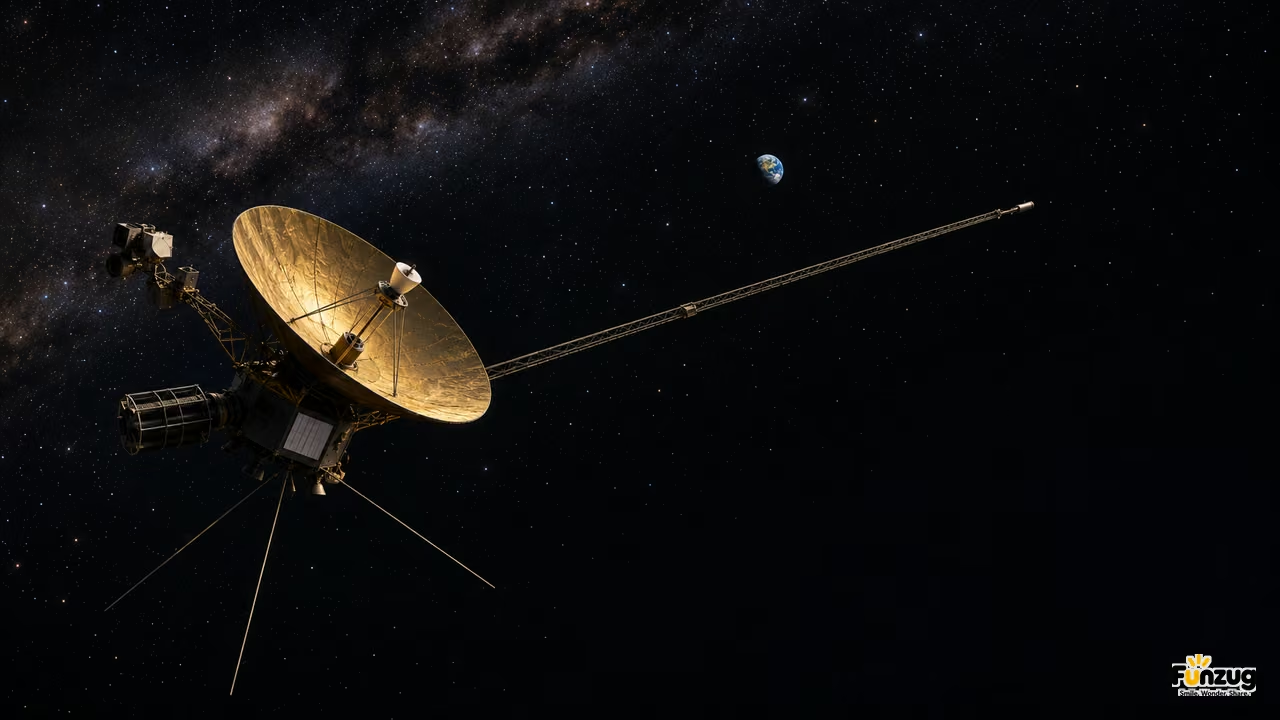
On November 18, 2026, a radio signal sent from Voyager 1 will need about 24 hours to reach Earth. The spacecraft is still operating far beyond the planets, and the milestone offers a striking way to understand just how distant its journey has become.
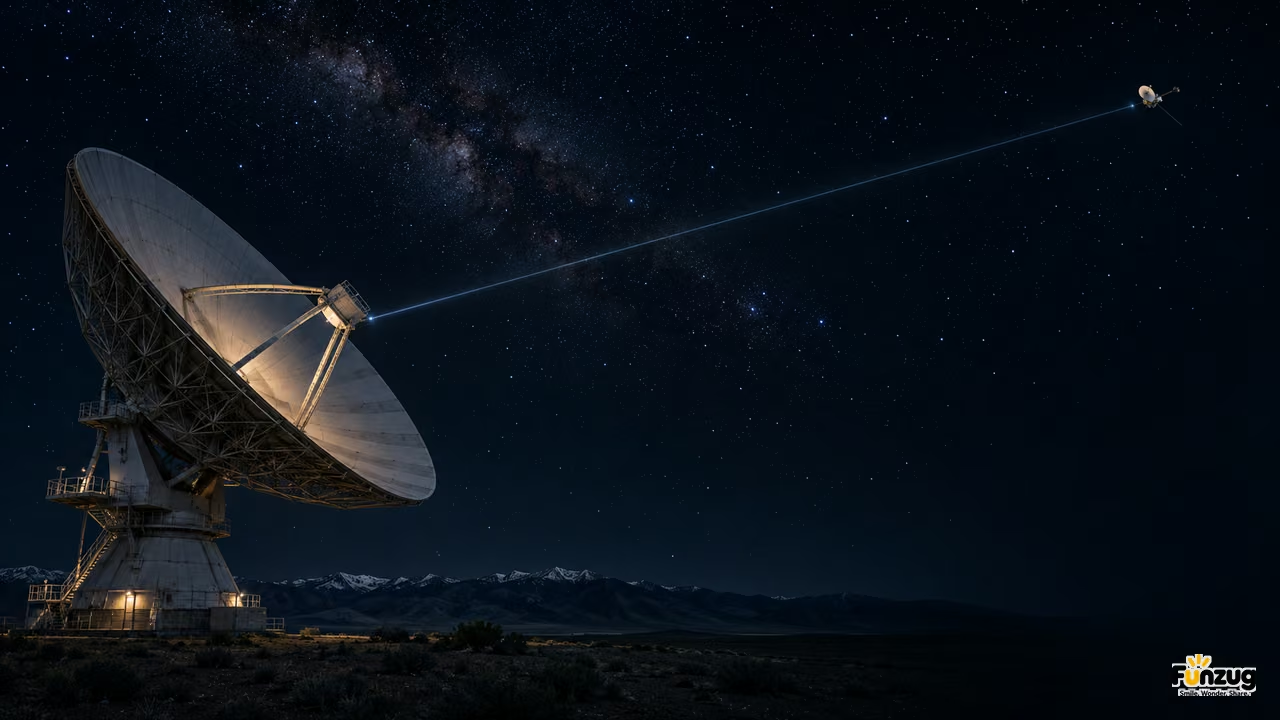
A light-day is a measure of distance, not a change in how quickly light travels. Radio messages move at light speed, so a one-way signal time of 24 hours means Voyager is roughly one light-day away. A reply from Earth would take about another day to arrive, making even a short exchange a two-day round trip before accounting for the time needed to plan and transmit it.
Voyager 1 launched in 1977 and flew past Jupiter and Saturn before continuing outward. NASA identifies it as the most distant human-made object from Earth. Its long voyage has turned a routine engineering problem into an extraordinary one: the team must make decisions knowing that instructions and responses take many hours to cross the gap.
The spacecraft does not send messages like a phone or a modern broadband connection. It uses a low-power radio transmitter, and its signal arrives extremely faint. NASA’s Deep Space Network listens with large antennas, while engineers carefully manage what the aging spacecraft can still do. Distance, limited power and the spacecraft’s age all shape the work.
What the 24-hour delay looks like in practice
Suppose engineers notice a reading that needs attention. They first review the data already received, prepare a command and transmit it. The command travels for almost a day. Voyager then carries it out, and the result takes almost another day to return. The team cannot react instantly to a new measurement, so every command has to be planned and checked with unusual care.
The timing is also a useful scale for the solar system. Light crosses the distance from Earth to the Moon in a little over a second. From the Sun, it takes about eight minutes to reach Earth. Voyager’s approaching one-day separation is a reminder that interstellar space is vast even when measured by the speed of light.
Still sending science home
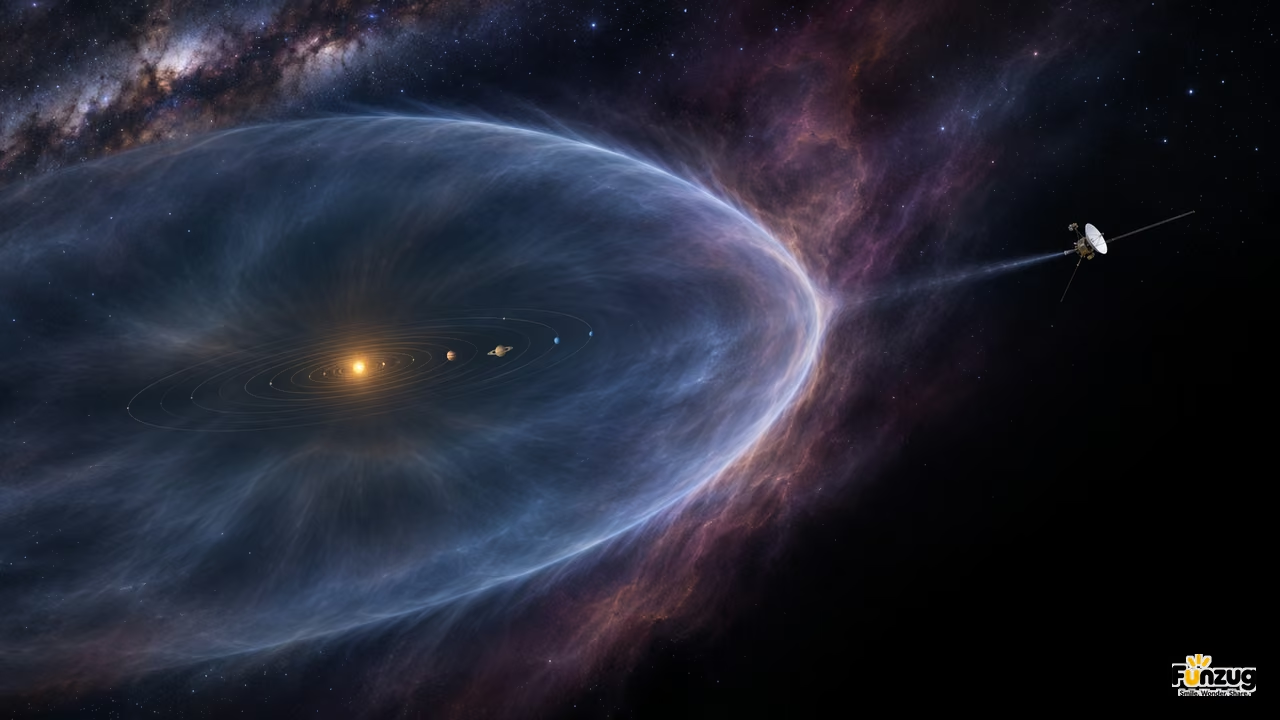
Voyager 1’s scientific instruments have been switched off selectively over the decades to conserve power. A smaller set continues to return measurements from the space around the spacecraft. Those readings help scientists study the region beyond the Sun’s protective bubble, where the solar wind gives way to the broader environment of the Milky Way.
The craft’s age makes each year a balancing act. Engineers preserve power and keep the communications link usable while prioritizing the measurements that can still be sent. The NASA Voyager mission tracker provides the current distance and signal delay, while the mission team explains the light-day milestone.
A message that takes a day
Voyager 1 is not suddenly entering a new region on November 18. The date marks a communications threshold that helps people picture the scale of its distance. Its location changes continuously, but a one-day radio journey makes that movement easier to grasp than a number with many zeroes.
It also connects with the kind of planetary observing that readers can do closer to home. Funzug’s guide to the Mars and Jupiter conjunction in India looks at a very different scale of skywatching, from bright points visible in the night sky to a spacecraft whose faint signal takes a full day to cross the gulf back to Earth.
For the mission team, the milestone will not mean a dramatic new capability. It will make an already patient operation even more so. Each command, measurement and confirmation will carry the same quiet message: humanity’s first interstellar explorers are still out there, and Earth can still hear them.


